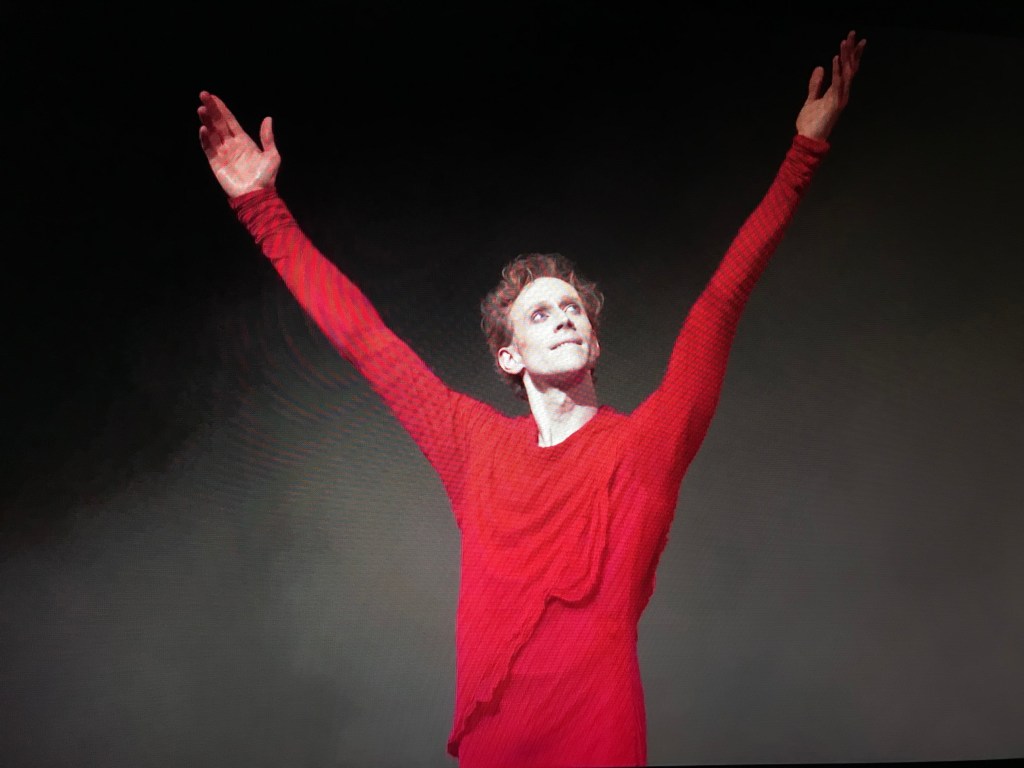
OPINION

THE HOUSE OF WINDSOR

Catherine’s September Message and Her Video,

the “Midsummer Night’s Dream” in Norfolk

Late notes on the margins

By Elena Vassilieva

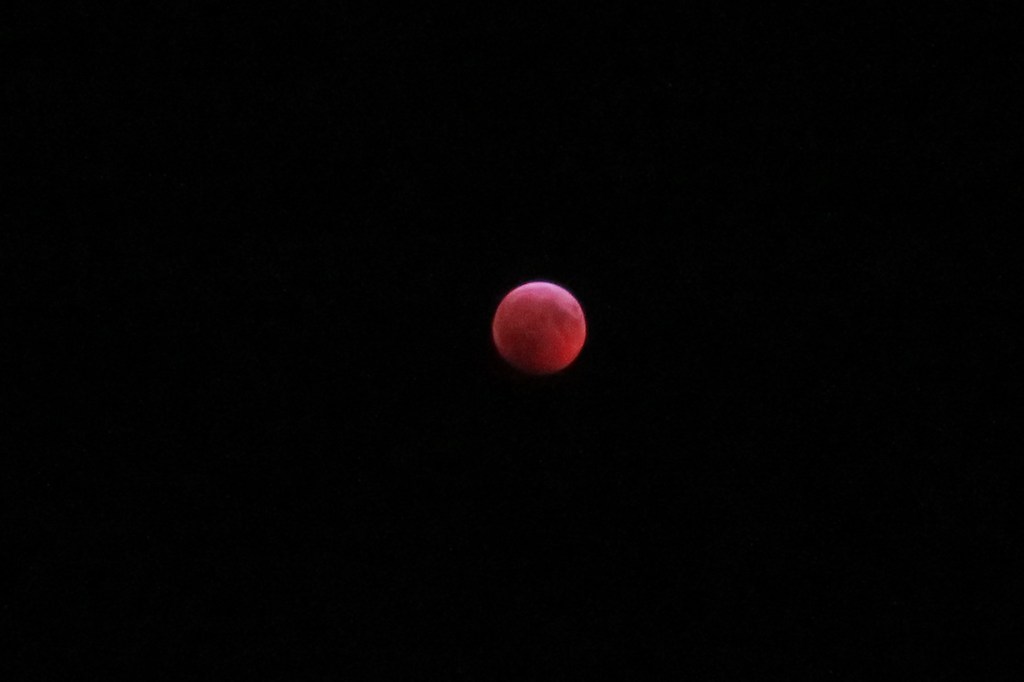
The Midsummer Night’s Love Potion Ingredients. Words and image by Elena Vassilieva

On Monday, September 9, 2024, at tea time, Greenwich Mean Time, Catherine, the earnest wife of Windsor, sent a long-awaited message to the world. Although her supporters had the pleasure of seeing her at Wimbledon this past summer, they didn’t think they would hear from her again that soon. On July 14, 2024, to everyone’s delight, she radiated joy and freshness, smiling and waving to the Wimbledon crowd which in turn greeted her with standing ovations. Her purple tailored dress flattered her sporty figure, and she seemed to have gained weight, but that was only to her advantage. Her long chestnut locks framed her tanned face in her usual fashion. So, when, in September, her lengthy message arrived, it was expected that she would be as fit as in July, and she didn’t disappoint.

Catherine’s recent message on Twitter/X was accompanied by a three-minute video which came as a great surprise and, to some, as a bit of a shock. The good news was: she had just finished her chemotherapy and from now on planned to stay focused on being cancer-free. It was not quite clear whether she got rid of cancer altogether. But the ambiguity around it had been there from the very start. In March, she announced in her first video that she had cancer, yet, the chemotherapy was preventive, she said. Now, in most languages, the word ‘preventive’ is used in the context when something dangerous is still not there, but there is a risk that it might come unless some preventive measures are taken. So, let’s hope that was exactly the case.

Her March video message was filmed in the sunny garden at their Windsor home. She was sitting there alone, on the bench, with chirping birds and blooming flowers in the background. Life in her garden went on as usual, according to the rhythm of springtime. Her pale and makeup-free face betrayed wistfulness, and her casual striped jumper signaled to the viewer that she cared little how she looked and that more serious things were on her mind. The March video struck and saddened everyone. I don’t think there was a single soul who was left untouched. Many thought, myself included, that delivering the sorrowful news directly and by herself was very brave, let alone unprecedented. However, I wondered why she would do that, what for? She could have just followed the usual Royal, ‘never complain, never explain,’ tradition, and that would’ve given her more air to breathe and made her less anxious. The video announcement must have added even more stress to already a very stressful situation, especially because she makes an impression of being an introvert, who is a rather shy public speaker.

The decision to disclose her malady this untypical for the Royal Family way was very likely dictated by her PR team, who may have believed that this tactical move would be an appropriate antidote to the insanity of some vicious cliques on social media, who kept themselves busy circulating falsehoods. Alas, it didn’t stop all the fantastical theories about her which continued to trend on Twitter/X. Therefore, it was her PR team’s huge miscalculation, in my view. They should have known better, but, alas, it seemed like the biblical wisdom, “Answer not a fool according to his folly, lest you be like him yourself,” had escaped their minds completely at that particular moment. Another peculiarity was that she didn’t say what type of cancer she had, while mentioning her preventive chemotherapy treatment. Privacy is everyone’s right, of course, and she stood her ground.

I assumed then, she would give a more detailed account of what has happened to her after she will have finished her treatment, otherwise her disclosure about the illness would make no sense at all, not on a large scale, anyway, other than to satisfy public curiosity about her whereabouts for one minute and to give the bloodthirsty hyenas on social media more food for speculation and fabrication, which should be of no importance to her at all. But having a social media platform with millions of followers from around the globe, and since this, however agonizing, circumstance presented itself, she shouldn’t shy away from it, as this is about the most significant and far-reaching public service she could ever do. Her first-hand experience and her insights would be invaluable to all other sufferers who look for hope and moral support.

Considering this, even her main project about the importance of early years of childhood appears to be rather redundant, especially if one takes into account the material side of her own personal circumstances. Growing up in a sufficiently well-off middle-class family, and, unlike Princess Diana, not working a day in a kindergarten or any other child care facility, and marrying into one of the most prominent families on Earth who can afford a nanny or two and who can invest into their children par excellence, all this makes her very poorly qualified for propagating the idea of a happy childhood for every child. In its hypocrisy, it is malodorous at best and no more than a hollow sound whose only purpose is a glossy presentation. Had she run an experimental school for poor children, the way Count Leo Tolstoy did for all the peasant children on his estate at Yasnaya Polyana, for instance, where she, like Count Tolstoy, would implement all her ideas about happy childhood, it would be different and it would be more than just words. Right now, her project might resonate with the upper echelons of the middle class and well-to-do aristocracy, who traditionally send their children to boarding schools and not rarely leave their offspring scarred for life with this, just read Earl Spencer’s recent memoirs about his harrowing childhood experience. However, ordinary people wouldn’t buy into a single word of the emptiness of her message unless it is solidly grounded. Shortly after she launched her campaign on January 30, 2023, at the BAFTA, in London, she published her op-ed article on the subject in the Financial Times, in March of 2023. I had to read it at least three times in order to fully comprehend the message, and I was still left guessing what it was all about.

Despite the good news that her chemotherapy dark days are behind her, Catherine’s message didn’t contain a single word as for what type of cancer she was fighting and what remedies she used. It must have been very disappointing to all the cancer fighters who have been following her and who have hoped to hear something more concrete for themselves than just the abstract “to love and being loved” and “I remain with you, side by side, hand in hand. Out of darkness, can come light, so let that light shine bright.” Although doubtless good words, those are not enough to win the battle. After people had watched the video, bewilderment was added to their disappointment. With the accent of the pU(r)fect pU(r)son (perfect person), she read her message with care and labor of the Matron of Great Britain, as if her only mission had been to dress all the words into her posh-accented pronunciation, as if it mattered much to cancer sufferers. While she read it, a pleasant music was playing in the background, and one was offered a rare glimpse into an absolute euphoria of the Waleses’ private life in the countryside, or shall I rather say, an idyll? Their jolly children provided the loveliness of the captured moments, but, oddly enough, they weren’t the pièce de résistance. The camera focused on Catherine instead. As if she hadn’t been going through the hardship all this time, she appeared in the movie as a fresh-looking and dazzling star, with her ever infectious laughter and her gorgeous hair flowing in the wind. If only everyone came out of the woods, I dare use her own words, as rejuvenated as she did.

The euphoria that may have overpowered her after, I assume, a successful treatment and nine strenuous and hardest months of her life, is perfectly understandable and justifiable, but nevertheless if one views it in the context of her job as a princess whose main and primary purpose is public service and whose husband’s motto, Ich dien, implies the same meaning, the movie is somewhat bold and transgressive, given all the intimacies thrown into the public eye. And, à propos, the Prince of Wales’ Ich dien should also be considered in the context of the Royal hierarchy, which goes as following in this case: Their Majesties the King and the Queen Consort (thank goodness, they didn’t take part in the movie, either turning down the roles or not being invited), the state and the public, and only then his immediate family and his in-laws who played an important role in the film and, undoubtedly, in the process of Catherine’s healing. Only Uncle Gary, крикун и хвастун, was missing there, at the game table. The in-laws have no formal role as such within the hierarchy of the Royal Family, unlike his wife, with whom the Prince shares his public service and duties.

By no means, Their Royal Highnesses are obligated by their official duties to open the curtains and make the set of their private life bare, and there is no need in it, in fact, not even when illness strikes. Not for fear of losing the Royal mystique, as some would argue, not at all, but for the simple reason of showing poor manners and being inconsiderate. After all, there are so many out there who also suffer from the same illness, but can’t afford the same care, and, very often, have to be waitlisted. Aside to this sensitive issue, isn’t it deemed rather disrespectful and even rude towards their supporters and well-wishers to display their affection for each other in public in such a way that they appear rather exhibitionistic, making, in turn, their viewers almost voyeuristic? No, no, no, Your Royal Highnesses, we do not need your invitation to your private party, thank you very much. Enjoy yourselves, but please be kind, do not involve us!

I also felt quite sorry for all the Prince of Wales’ admirers who had always flirted with him, that is, with his images on social media. I doubt very much that his fans felt particularly good about seeing their beloved prince in such intimate, nearly erotic, scenes, even if he was there with his wife. The Prince of Wales has been playfully, with lots of affectionate emojis, regarded as ‘handsome’, ‘cute’, ‘adorable’, ‘hot’, ‘sexy,’ etc., in the comments on social media. Of course, he wouldn’t know about it and he wouldn’t care about it, but his PR team would and should. How on earth would they not warn him that it’s not princely, but ungentleman-like to offer something like that to his admirers? Not noble at all and rather cruel, I’d say, neither Princess Diana’s boy nor His Majesty the King’s, but whose then? Mrs. Middleton’s, perhaps? It is being often reported how dearly she has ‘mothered’ him throughout the years (for more details see Robert Jobson and Richard Eden). And why wouldn’t Catherine herself think about his fans, and hers as well, especially when she is using the words ‘with humility’? What does she think humility is? Making their well-wishers jealous and even belittled? Or was she trying to tell her husband’s fans that they’d better not forget that he is a married man before they allow themselves such an impossible frivolity on social media? But who would take their perfectly harmless and lighthearted flirting with their own imagination seriously? I bet not even they themselves, yet, the Prince must have hurt their feelings considerably, shutting down their imagination but also love for him, because Love goes hand in hand with imagination, remember?  

Isn’t it in the Royal Family’s best interest to keep their private life well-hidden from their fans, in order not to irritate or hurt them? And the monarchy needs its supporters quite badly, more, in fact, than Royal movies filled with distasteful bourgeois intimacies. I didn’t think there was a threat, other than the illness, to the Waleses’ marriage, did you? And if there were, what might it be? Who would dare to break into the golden cage that is under seven locks? Hardly anyone, unless it is Love, of course, as l’amour force toutes les serrures. Or would either of them dare to escape from the golden cage? I don’t know about Catherine, but I think this Prince of Wales wouldn’t even contemplate the nonsensical idea, as the former ones did dare to break free from the cage, but they didn’t fare very well afterwards. Or is the situation, despite Catherine’s healthy appearance, this dire that they have to hire William Warr to document their relationship for posterity? But, happy with the results, on a whim, they decide to let the public see the film now, so that everyone would sigh and say, weeping: “Oh, poor things, oh, poor sweethearts, how much in love they are! Twenty (more or less?) years together, and they are still such lovebirds, as if they were just married”? Releasing the video now, instead of fifty years later, they did quite a disservice to themselves. Today, it just doesn’t feel authentic and, above all, doesn’t make much sense. One can’t stop wondering: what was the reason for staging it all? Why? Maybe they found inspiration in Shakespeare’s “A Midsummer Night’s Dream?” Others on social media thought whoever directed the film had watched quite a bit of “The Gladiator” and “The Twilight Saga.” I haven’t seen those, so I can’t comment on the accuracy of their intertextual relationship. 

But it doesn’t matter who or what inspired them, because what matters more is modesty which seems more and more to be missing from the arsenal of virtues and values of this princess. Or maybe she just let all the Royal restraints go away and let the public see her casual Kate Middleton’s side, again? And why not, one cynical voice would say, she is human, after all, isn’t she? Everyone does it, you do it, too, even if only occasionally, don’t be such an insufferable prude, it’s the age of selfies and ‘me-me-mes,’ even in the Royal circles, and sexiness sells better than primness, don’t tell me, you don’t know that. The Royals are free to do whatever they please, especially when the Queen Elizabeth II’s time with her moral compass seems to be an era long gone. Hardly convincing an argument, I would say, because that’s the opposite of what is expected from the Royal Family as guardians of traditional values. They aren’t supposed to follow trends of any kind. How about creating trends? And that depends on the trends.  

It is Catherine’s phrase ‘with humility’ that is particularly bothersome, because this Norfolkian idyll and Kate Middleton’s euphoria do come across as a slap in the face for all those who are still going through hell and maybe aren’t seeing the light at the end of the tunnel. Modesty, humility, and kind reservation would’ve been more appropriate than the flowing hair that evoked an herbal essence shampoo advertisement in some viewers, let alone the laughing-their-heads-off scene in the movie, the very scene that boldly adorns Their Royal Highnesses’ Twitter/X account now. And I wish I didn’t see that clumsiness in the scene where the Prince of Wales is, in a sort of religious ritual, finding himself on his knees and kissing his wife, as it appears, on the neck (!), with their confused children sitting around. Those are especially tone-deaf and incongruous with the circumstances, but also aesthetically not very eye-pleasing scenes, as this kind of romantic scenery is traditionally reserved for a certain age, say, Romeo and Juliet’s age, shall one wish to go public.

The best thing they could do was making their children the focal point, as they both seem to excel as parents. They would let the viewers feel the love through their children while showing us how much they enjoy parenthood. Had they done it, I would’ve been the first to admire and praise them immensely. To other parents, their parental experience is of greater interest than their intimacy, as there is nothing trickier than to rear a child in these difficult times, whereas the quasi-erotic desire filmed in the dunes is not only superfluous, but also very immodest and, frankly, quite laughable. Love, if it lives in a family or between two people, doesn’t have to be on display at all, as Love can be seen and heard and felt without it. But if it’s not there, nothing, not even a midsummer night’s love potion, and definitely not a movie that advertises a certain lifestyle, would bring it back for one. Had they posted their video on their private social media account, however, I would’ve just said: “Wonderful news! Congratulations to Catherine on completing her treatment successfully! What a cute movie! Great and audacious (!) acting in front of the camera! It’s a true idyll, isn’t it?!” And as a postscriptum I would add: “Hmm, apparently the matrimonial idylls exist in this world, and I thought that all marriages happen in Heaven. In Heaven only.”

Written on September 24, 2024 in the Sky Control Room, on Little Harbor, on Cape Cod.

Copyright © 2024 by Elena Vassilieva. All Rights Reserved.

Brigitte Bardot’s Selfdom and Bliss at Ninety

By Elena Vassilieva

«O mon âme! Il faut vous égayer.» Image and words by Elena Vassilieva. The photo of Brigitte Bardot used in the readymade is by © Douglas Kirkland.

When the world caught a glimpse of Brigitte Bardot for the first time, both men and women alike thought that a goddess appeared before their eyes. It didn’t happen by chance that Roger Vadim, a French screenwriter and director, Bardot’s first husband and friend, would choose the following opening sentence for his memoir: “The goddess of love had not been seen emerging from the sea since Botticelli painted Venus floating on a mother-of-pearl shell. But this was the spectacle that two thousand American marines witnessed on May 12, 1953, at 11:30 A.M. from the aircraft carrier Enterprise, anchored in the Bay of Cannes. […] The sailors of the Enterprise knew a goddess when they saw one even if they didn’t know her name.” (Vadim, 1986, p. 13) He then recounts how at that time Brigitte Bardot already held photographers and reporters spellbound, they would abandon other movie stars and would instead follow her everywhere. “I remember one afternoon,” he recalls, “when I was one of the few journalists interviewing Lollobrigida, Kim Novak and Kirk Douglas in a conference hall of the Palais du Festival. All the other journalists were out chasing my wife.” (Ibid., 14f) She co-starred with Kirk Douglas in “Act of Love” (1953), and that made her visible to American moviegoers. Although Brigitte Bardot was much admired in France ever since she started her modeling and film career in her teenage years, but, as Roger Vadim writes, it was that spring of 1953 in Cannes that the Bardot ‘phenomenon’ took on international proportions. Instantaneously she became an object of desire and obsession, “an impossible dream of every married man.” (Ibid.)

And if dream(ing) is an essential part of the mythologizing process of any exceptional human being, then Brigitte Bardot’s phenomenon can’t be explained through mere sex symbolism. Both processes of conscious dreaming and mythologizing are deeply rooted in creativity. Hence, Brigitte Bardot, simultaneously a divine object and a goddess-like subject, actively stimulates both processes in her admirers’ consciousness. The divine, Bardot’s natural beauty, that is, evokes not only curiosity, but foremost adoration. In this case, Brigitte Bardot is not simply a passive icon or symbol, she is an artist who transforms her admirers into active participants in this imaginative performance art. Together they create the myth, hence it’s a highly collaborative process, which happens spontaneously, and both consciously and subconsciously. Interestingly, her favors and temporary protection don’t guarantee all those fortunate ones, who felt her touch, say, her spouses or close friends, would be able to solve her mystery. Ironically, they are all left defeated. One wonders why? And I believe that the key cannot be found that easily if at all. One possible solution could be, what she herself has implied from early on and to this day, her selfdom. It is a recurring theme for her, and one encounters it in many of her interviews.

In 1971, Brigitte Bardot was interviewed on the set of “The Legend of Frenchie King” (Les Pétroleuses), directed by Christian-Jaque and filmed in Spain. The enthralled interviewer said to her: “One thing struck me watching you work, and I was prepared to look at you, you know, as a sex symbol, or a sexy lady, beautiful, but what impressed me was a very hard work that goes into it. And also that you live on several different levels: your private life, your public life, your film life. Just how do you want me to look at you? How should I look at you?” Brigitte Bardot, in turn, found his question rather confusing: “Well, I don’t understand. It’s very difficult for me. You are speaking about different lives I have. The job, the private life, and the public life. For me, it’s nearly the same, because I’m always myself, really myself, even when I’m playing, I don’t play, I am myself. In my private life, I am myself, too. And in public life I am myself, too, so, for me, it’s nearly the same.” She makes clear that she doesn’t separate her private and public personae, therefore the question of many different selves in Brigitte Bardot’s personality seems highly irrelevant. There is only one essential Brigitte Bardot who stays true to herself no matter what. It doesn’t mean, however, that the characters she plays in her movies should be directly identified with the real Brigitte Bardot or be the same all the time. Far from it, what she very likely means is the way she imagines and interprets them.

It is all about her loyalty to the moral, aesthetic, and cultural values she has been exposed to whilst growing up and maturing. She is monolithic in both expressing her personality and in guarding her individuality, for as much as people wanted her to be a goddess, as much as they have perceived her as such, she herself has never believed it for a second, on the contrary, she has always tried to let the world know that she is as human as everybody else, as imperfect and mortal as everyone else. Had it been not the case, she would have lost her originality, authenticity, dignity, and self-confidence of a creator in an artistic sense on and off screen, and without these, the true star power and divinity are unthinkable. Even years later, in 2012, in her interview for Vanity Fair, she repeated the idea of staying true to herself: “I wanted to be myself. Only myself.” She alluded that, by no means, she is perfect, far from it, but she is trying to bring out the best in herself every single day, underlining the qualities she has always strived to cultivate and preserve in herself throughout her life: sincerity, honesty, and genuineness. Her quest for her selfdom and its preservation has been as successful as her film career, I believe.

She left the movie industry in 1973 and never looked back. As an ardent and passionate animal rights activist, she found her bliss in her pursuit and cause. To be herself, it also means to her to be free. Freedom is an essential part of her selfdom. She said she sold all her clothes, all her expensive jewelry, unburdening herself of these ephemeral pleasures of life. Material pursuits are of no interests to her, unless they are beneficial for her cause. She found her stardom burdensome from the very beginning, so a modest life that would seem like a seclusion to many is a happy life for Brigitte Bardot. And inner freedom coupled with her desire to help animals is the formula for her happiness and her bliss, speaking with Joseph Campbell, whose authority on myth is surpassingly excellent even today, or, perhaps, especially today. He said once: “I have suggested for people who are trying to find their way is to follow your bliss. When you follow your bliss, and by bliss I mean the deep sense of being in it, and doing what the push is out of your own existence – it may not be fun, but it’s your bliss and there’s bliss behind pain too. […] There’s something about the integrity of a life. And the world moves in and helps. It really does. And so I think the best thing I can say is follow your bliss. If your bliss is just your fun and your excitement, you’re on the wrong track. I mean, you need instruction. Know where your bliss is. And that involves coming down to a deep place in yourself.” (Campbell, 1990, p. 214) I have included this long quote from Joseph Campbell’s conversations on purpose, as I do see how absolutely wonderfully Brigitte Bardot exemplifies his wisdom. The only thing I could add is that it is a huge achievement in life, perhaps more valuable than her stardom and her divinity, which she will never be able to purge, by the way, as this is an essential part of her persona, part of her divine Self even, and that is not a bad thing at all. This is also something to pride oneself on, particularly in the glorious age of ninety. But I know she still wouldn’t do it, because if she would or if she did, she would betray her good old Self, and with it, her bliss. And this is Brigitte Bardot at her finest. Or should I rather say at her divinest? 

Sources

Cousineau, Phil and Stuart L. Brown (eds.). The Hero’s Journey. The World of Joseph Campbell. On His Life and Work. San Francisco: Harper Collins Publishers, 1990.

Servat, Henry-Jean: The Temptress of St. Tropez. In Vanity Fair, the March issue, 2012.

Vadim, Roger. Bardot, Deneuve, Fonda. My Life with the Three Most Beautiful Women in the World. Trans. from French by Melinda Camber Porter. New York: Simon & Schuster, 1986.

Written in the Sky Control Room, on Cape Cod, in the early morning of September 28, 2024. Copyright © 2024 by Elena Vassilieva. All Rights Reserved.

Brigitte Bardot as Desire, and Desire as Brigitte Bardot, Or The Game of Imagination.

On some Brigitte Bardot’s English-language-interviews in the film footage of that time, the 50s and the 60s.

By Elena Vassilieva

La Pomme d’Amour. C’est un effet de l’imagination. Imaginez-vous ! Words and photo collage by Elena Vassilieva. Sam Levin’s photo of Brigitte Bardot was used in the photo collage.

It’s December 16, 1965, and Brigitte Bardot has just arrived in New York City for the premier of her new film, “Viva Maria!”, directed by Louis Malle. The Air France lounge is filled with photojournalists and reporters to the limit, and, as Hugh Lofting would say in such cases, “there isn’t room there to hide a dog,” shall the actress decide to bring her dog along. The space is noisy and busy, like in a beehive, and the waves of hectic excitement and impatience are crashing the air. At last, the Golden Goddess is here in the flesh, so, she will be breathed and eyed greedily, from head to toe, for her divinity. She will be interrogated unceremoniously for her divineness. “Brigitte, Brigitte, Brigitte,” as if chanting, the reporters are yelling, each trying to be louder than the other, the minute she appears in the room, with no dog in her arms. Light as a feather, blonde as the sun, with a twinkle in her eye and a most delightful smile, she is nervously smoking a cigarette, while trying to get through the crowd to the podium, which is closely guarded by the police.

The Goddess may be devoured with the eyes, but she may not be touched with the hands. As if to take a revenge for this lack of fortune, the reporters are given the long-awaited opportunity to start their merciless ordeal, which is going to scrutinize every move made by the Golden Goddess at any given time of her life. She may appear as the most delicate feminine creature on Earth, yet, from the very first question, quite unexpectedly, she metamorphoses herself into a charmingly disarming Sphynx, playing an excellent game of riddles with the reporters, even when giving the answers to them in her heavily accented English, groomed by her impeccable grammar. The reporters are taken aback at once, as they might have thought themselves quite suitable for the role of the Sphynx in this dialogue, while giving the role of the guesser to Brigitte Bardot, who was supposed to make correct guesses in order to be spared. But, sparing no soul, she reverses the roles from the very beginning, to the reporters’ bewilderment and discontent. Brigitte Bardot, the Golden Goddess, turns out to be the wittiest and trickiest Sphynx one could ever imagine. She makes the reporters laugh at themselves.

“Are you happy?” someone is asking. “Yes, of course, look,” answers she, smiling and pointing with her hand at her luminiferous face. “Do people take you seriously as an actress?” is the next spiky question. “Since Viva Maria! – Yes!” She answers with confidence. “You are thirty, but in some way, you said, you are still fifteen.” “I’m thirty-one,” she corrects the reporter. “What do you mean by that?” asks the reporter. “And you?” says the actress, as if throwing a snowball at the nosey reporter. “What do you mean you are still fifteen?” – Someone else repeats the question. “I don’t know,” she says, “I feel young.” “You said ‘you are never going to see my picture when I’m sixty.’ What are you going to do?” “Before she gets sixty, science will find something,” says her interpreter for her. “Are you soured at marriage altogether?” is the question posed by one female reporter. “No, no, no, not at all. [But] I think it’s better without marriage.” “Why better without marriage?” asks another reporter. “Do you understand?” says the actress. “Why?” the female reporter isn’t satisfied with Bardot’s answer. “Try!” says the actress and smiles. “You have to try.” And all the reporters are bursting into laughter. “What do you want to know?” Brigitte Bardot is saying to the reporter who has a follow-up question. “I told the lady she has to try things without a marriage,” says the actress, with her eyes full of mischief. The interpreter is repeating: “You have to try, you have to try.” One of the reporters is asking: “What do you have what the other girl doesn’t?” Brigitte is conversing with her interpreter in French, and the interpreter is translating her words as “she doesn’t know what she has, and she may be having something less than the other girl.” “What is your opinion about the American people? And particularly people in New York?” asks one very serious reporter. “Well, she doesn’t know the people, yet, and she doesn’t have any preconceived ideas about them.” Translates her interpreter.

Alas, the precious nine minutes of this game-like press-conference are flying away with the speed of light, as it seems. Dissatisfied with Brigitte Bardot’s answers and still wanting more, the reporters are told to leave and to come for another rendezvous with her at the Plaza Hotel tomorrow, at 2 o’clock in the afternoon. The nine-minute-and-forty-six-seconds scene was observed by me not that long ago, in the film footage from the Associated Press archives. I ran into other interviews with Brigitte Bardot, while researching, and they are very similar in style as for how candidly and cleverly the actress responds to the interviewer’s questions. The omnipresence of the Golden Goddess presupposes that she is all-seeing and all-knowing, yet, very often, in her interviews, when asked about herself, she would say: “I don’t know,” disclosing the Sphynxian side of her persona.

For instance, in her 1956 interview for Highlight, on the British Television, the interviewer asks her, in a most respectful tone: “You are 22, Ms Bardot, and you are one of the highest-paid actresses in France. What do you think your success is due to?” At which the perplexed Ms Bardot, with touching innocence in her luminous eyes, replies: “I? I don’t know.” The unhappy with her reply interviewer, in a sort of scolding way, dares to make a suggestion: “You don’t think it’s got something to do with the sexy parts you are playing in your films?” “Yes, maybe, yes,” agrees the actress, more out of politeness than certainty that such a statement could be valid. “Do you really enjoy making this kind of film or do you want to be a serious actress?” “Oh, no, I prefer this kind of film. I will be a serious actress when I will be older,” says she wisely. Then, the interviewer asks: “I heard that dogs are the most important thing in your life.” “Dogs? Yes, I think I prefer them.” “I’ve heard you work very hard, you’ve made 15 films in the last three years. And when you get some time off, what would you like to do the most?” “I have to rest, because I’m very lazy,” she answers. “Anything else you prefer?” The reporter asks, not wanting to give up. “Oh, I like listening to records, go and see shows, go for a walk with my dog,” she replies. “You said you like listening to records. What kind of records do you like the most?” “Oh, classical, and rock-and-roll, and jazz, and everything, I like all the records,” she adds enthusiastically. “And now that you make so much money, I think twelve thousand pounds a film or something like that, what are your ambitions?” “To get more!” Brigitte Bardot replies, with pleasure of a child. “Do you ever want to get to Hollywood?” “No, I’m very well in Europe,” says she. “Oh, thank you very much, indeed, Ms Bardot!”

Another notable interview with the French star was conducted by Ed Sullivan on October 1, 1961, inside the Eiffel Tower, in Paris. Brigitte Bardot had just finished shooting her 26th picture, A Very Private Affair (1962), directed by Louis Malle. Ed Sullivan, a legend himself, stands out as an interviewer. He is an American in Paris in the best sense, and there is a good rapport and a friendly bond between the two during the interview. “How do you pronounce your name?” He asks at first. “Brigitte Bardot,” she says with the utmost diligence of the most charming schoolgirl. “When were you born?” is his next question. The actress is thinking for a couple of seconds, then says: “Ah, 28th of September!” At which Ed Sullivan smiles enthusiastically and says that he had ‘always been rooting for her, because they were born on the same day and in the same (!) year.’ Brigitte Bardot raises her eyebrows, protesting: “No, no, I don’t think in the same year!” The audience burst out laughing. After Brigitte Bardot announces that she plans to retire from the film industry in about 10 years, Ed Sullivan also touches on the issue of glamour and being in the limelight all the time. She says that, in fact, “it is a very difficult life, too difficult for me.” His final question is: “When are you coming to America? […] Because Americans, you know, have a very great affection for you.” “I have affection for you, too.” She answers. “Oh, then you have to come over there and express that affection, and we’ll express our affection for you, OK?” “OK.” She says.

There is a paradox in most interviews with Brigitte Bardot. On the one hand, when seen in person, she seems to outdo and to surpass her screen image of the glamorous woman. Clearly, her attractiveness is even more pronounced and more obvious when she is off-screen, due to her personality. Thus, she exceeds all expectations. On the other hand, she doesn’t allow the interviewers to meet their expectations at all. She leaves not much room for any kind of speculation about her persona, making things as clear as possible, baffling her interviewers endlessly. Her sincerity is her main weapon, which should by no means be construed as undressing oneself in public, in the language of modern culture, oversharing. She would rather tell less than more, leaving her interviewers thirsty and hungry for even more answers and clues. She also knows instinctively how to backfire on a reporter because of a tactless question, making the interviewer regret ever asking the question. Obviously, she is a very guarded and private person, and she excels at drawing boundaries between her private and public personae, simultaneously corroborating her status of the cinematographic goddess and wrapping herself with a ribbon of enigma even more this way. But unlike Garbo, for example, she is not a cold enigma, she is always pleasant, polite, funny, and warm. That in turn makes her even more desirable, as nothing excites one’s imagination more than the enigma. This excitement could take all kinds of forms.

It could be erotic, for instance, and this is what happened to Brigitte Bardot before anything else, in those years particularly, because of the ubiquity of her image that relied heavily on her natural allure and a total lack of any pretentiousness and artificialness. By 1965, the French actress was not simply well-known all over the world, she was desired and dreamed of. She became the epitome of desire itself. She impersonated the happiness that is hidden in desire, which could be understood as an unattainable lure that holds the key to enormous personal satisfaction and balance. The wish to make this (al)luring object one’s own is a very strong motive power and it contributes to the dynamic of this happiness a great deal. The British philosopher and idealist, F. H. Bradley, said that “[t]he secret of happiness is to admire without desiring.” And that is quite true, as what he means here is that when one has a quiet, intellectual rather than emotional, admiration for the object, one retains his emotional coolness, self-possession, and distance from the object. There are no dramatic turns if one is able to choose to admire things this way. One doesn’t seek either physical intimacy or spiritual closeness of/with the love object, one is satisfied with the order of things the way they are. This sort of admiration without desire is closer to a purely aesthetical contemplation that somehow manages to restrict the spectator’s emotions. However, Bradley quickly adds, sardonically concluding: “[A]nd that is not happiness.”

Does it mean, then, that happiness goes hand in hand with desire, which can directly be connected to a temporary or permanent unattainability of the alluring love object, depending on the circumstances? In the case of Brigitte Bardot, it is the latter rather than the former, for most, anyway, but she, as a personified desire, lures and even holds captive her admirers, in spite of the physical distance between them. And the way this lure functions might be described as a paradox, where happiness finds one within unhappiness. The desire here plays a crucial role of reaching a happy state of being, even if the end result is not what one wishes for. The happiness is in the process of seeking happiness. There is something quite optimistic in this, obviously doomed, pursuit. It must be noted that I’m talking about more or less stable individuals here. The overly obsessed and possessed ones would behave differently, this sort of happiness would not affect them in the same way it does most people.

Taking into account what I said above, men had lost their sleep the minute Brigitte Bardot appeared on the cultural scene, and women had tried hard, sometimes too hard, to look the way she did, so she became the most-emulated woman on Earth. Yet, surprisingly, it hasn’t made her persona trivial or redundant, or deserted in the world full of her imitations. It must be added that, unlike many other movie stars, she hasn’t been created by Hollywood or by the masses of her admirers; as a cultural phenomenon, she is the product of nature, in a sense of “and God created [the] woman,” speaking with her first husband and director, Roger Vadim. He said that he did only let her blossom, he never made her a star. I wonder whether it is because she herself has never attempted to look or to act as anyone else but herself? Once, in an interview, she was asked whether she had ever tried to be like Marilyn Monroe, and she, utterly surprised by the question, replied that although she admired the American actress a good deal, it had never occurred to her to imitate her, as she believed Monroe was this great that it was virtually impossible to emulate her and, thus, it would be a useless exercise and a terrible waste of time.

My philosopher friend in Cologne, Germany, liked to remind me in the past that love is all about imagination. We had not discussed the notion of desire at the time, but today, I would declare that any desire is all about imagination. And it could be placed above the erotic, which in this case becomes a sort of a metaphysical desire. This would explain why Brigitte Bardot as a screen goddess would provide solace and hope to so many. Perhaps one could meet someone like her in real life, or maybe one could be given the Brigitte-Bardot-like power that would make her as enticing as the actress is. That’s the logic of all the Brigitte Bardot’s admirers. And it’s the game of possibilities and promises that makes desire look like Brigitte Bardot and makes Brigitte Bardot look like desire.  

Sources

The film footage from the press-conference with Brigitte Bardot, on December 16, 1965, in New York City, from the Associated Press Archives: [https://www.youtube.com/watch?v=1ILd0QKZOWU]. Last retrieved on September 28, 2023.

The fragment of the Brigitte Bardot UK TV interview, 1956: [https://www.youtube.com/watch?v=9IE8G94kUdg&list=LL&index=4]. Last retrieved on September 28, 2023.

Brigitte Bardot, the Ed Sullivan Show, the Eiffel Tower, Paris, October 1, 1961:  [https://www.youtube.com/watch?v=vzk5cru0ej4&list=LL&index=5]. Last retrieved on September 28, 2023.

Vadim, Roger (1986). Bardot, Deneuve, Fonda. Tr. from French by Melinda Camber Porter. New York: Simon & Schuster.

Written in the Sky Control Room, on Cape Cod, in the wee hours of the morning, on September 28, 2023.

Copyright © 2023 by Elena Vassilieva. All rights reserved.

OPINION

THE HOUSE OF WINDSOR

Camilla’s Coronation Quiche, Catherine’s Headpiece, the Princess Diana’s Shadow, the Coronation Rain, and No Tiaras

The post-Coronation notes on the margins

By Elena Vassilieva

“Honores mutant mores.” – The Queen’s Life Guard. Photo by Elena Vassilieva.

“And fragrant oils with ceremony meet…” – John Keats, Lamia (1820)

Rainy days are made for lovers, of course, but evidently also for the British kings and queens on their Coronation days. It rained on the day of the Coronation of Her Majesty The Queen Elizabeth II on June 2, 1953, but judging by the photos and the film, the rain didn’t seem to matter at all. On the contrary, it added a very romantic touch of tenderness and love to the event. The 27-year-old Queen, escorted by her husband, Prince Philip, was smiling and waving inside the Gold State Coach, and people were joyously greeting them on the streets. Inside Westminster Abbey, somehow, it was arranged for eight thousand guests to be seated. The partakers were clad in their ceremonial robes and fur mantles, also wearing hats and diamonds. Despite the “heavy smell of mothballs,” as Lady Glenconner, one of the six maids of honour, recalls, the reigning air of this highly religious ancient ceremony was similar to that of the theatrical spectacle. The young Queen dazzled the world with her innocence and beauty, generously, yet, very tastefully, bejeweled with all the historical articles once worn by her predecessors, for the sake of tradition, but also for good luck. It was the day and the rare occasion for the unbounded Royal splendour.

But then there was also the moment, when she was sitting in that ancient Coronation chair, still without the crown on her head, but with the most innocent look on her face that betrayed her fear. That moment will stay forever with many who watched the Coronation. One could feel the Queen’s sincere desire to be a committed and selfless servant of God and her Queendom. It was the turning point in her life, the Rubicon, from where there was no way to look or to go back at all. It’s the destiny of the strong, not of the weak, and she knew it, despite her young age. There haven’t been many of those who were to be crowned and who would be defeated by their own weakness and turn back. Most recently, only the King Edward VIII, who abdicated in 1936, without ever being crowned. At that instant, one could also see the young Queen’s fearful anticipation of the future, as at that crucial moment in her life, she entrusted herself, before God and her subjects, with the duty of being at their disposal as long as she lived, of placing the needs of others always before her own. Of course, she was an ideal and natural fit for this very honourable but also burdensome role, displaying these qualities already as a child. After cooking with her friends, during the war years at Windsor Castle, nobody wanted to clean dirty dishes, writes in her Diary the Queen’s childhood friend, Alathea Fitzalan Howard, but the then Princess Elizabeth seemed to enjoy it, always volunteering to do all the dirty work. It must have been the joy of being conscientious, responsible, and in charge, without shying away from thankless chore, but setting a good example for others to follow instead. And so she stayed this way throughout her whole life, leaving the Crown, I thought, in safe hands.

The Royal Guessing Game of ‘to Invite or Not to Invite,’ and the Coronation Rain of 2023

Prince William crossed his fingers, pleading for no rain on the day of the Coronation, when he and his wife were greeting the well-wishers on the Mall the day before. But, alas, on Saturday, May 6, 2023, the rain didn’t fail to embrace the King and his subjects, only confirming that the weather caprices are now part of the Royal tradition. Despite it, the well-rehearsed coronation procession to Westminster Abbey exuded high spirits and was warmly welcomed by the gathered crowd on the streets. Many had been camping on the Mall for days, guarding the space to have the best view on the day of the event. The Abbey was filled with more than two thousand guests, nearly four times less than in 1953, due to husbandry of the ‘slimming down’ monarchy. To invite or not to invite had become quite a Hamletian conundrum for the King, causing His Majesty a head-splitting migraine, a controversy in the media, and probably a huge disappointment for many. Thus, the King didn’t send an invite to even not very distant blood relatives, his own goddaughter, India Hicks, who was a bridesmaid at his and Princess Diana’s wedding in 1981, and Ms Hicks’ 93-year-old mother, Lady Pamela Hicks, the late Queen’s cousin and friend, and the daughter of the Lord Mountbatten. On Instagram, Ms Hicks shared that “The King was sending his great love and apologies, he was offending many family and friends with the reduced list. [I]nvitations to the coronation were being sent based on meritocracy, not aristocracy.” Lady Pamela said that she wasn’t offended at all, in fact, she was “pleased to see this change.” But I thought such an unexpected turn of events very sad and harsh, after all, the Coronation is also a family affair, almost like marriage, and to exclude blood relations, especially those who played a significant role in the lives of the King’s parents, is incomprehensible, let alone a very regrettable personal act.

The Coronation invitation appeared on the Royal Family’s website on April 4, 2023. The heraldic artist and manuscript illuminator, Andrew Jamieson, was chosen to design and paint it, and he performed the task splendidly, highlighting the King’s humour and love of the countryside. The cheerful card was much to the liking of both the public and the environment-friendly and eco-conscious King, who is said to talk regularly to the flowers in his garden. The unostentatious and jolly design of the invitation was then reproduced and printed on recycled paper. But there was one thing to meet the eye on the card that neither the mischievous unicorn and the lion, nor the Green man, nor the pretty cornflowers and the roses could possibly make one miss it. There the King’s wife was styled as Queen Camilla, instead of Camilla, the Queen Consort, as she had been officially known in the recent months. The waves of surprise, bewilderment, and even indignation crashed onto Twitter. Who would have thought that the King would disobey the wishes of his late mother that soon and make the change? Even the title of the Queen Consort was only tepidly supported by the public when the official announcement was made by the Royal Family on February 6, 2022. The Queen’s gracious move to bestow the honourable title of the Queen Consort on the then Duchess of Cornwall had taken off guard quite many Royal followers, myself included.

But after pondering over it, I found the Queen’s decision fair. The then Duchess of Cornwall had been escorting her husband to so many engagements of his, in addition to promoting cultural, educational, and social values on her own, with a special focus on literacy, books, dance, theater, and domestic abuse of women. In spite of these successful endeavours of hers, I didn’t expect that the title of the Queen Consort would be changed to that of Her Majesty the Queen Camilla that soon after Her late Majesty’s death. It seemed the King was in a rush to drop the word ‘Consort’ from the given title, and one can comprehend his feminist logic. After all, his wife has been his faithful companion and partner for so many years, therefore the wish to appreciate her efforts and make her officially his equal is only natural, and his actions are perfectly justifiable. However, the matter isn’t entirely uncontentious and should have been handled with greater care and tact. First of all, the late Queen’s last word differed a great deal from what had been decided lately, and it can be perceived as a disrespectful act towards Her late Majesty and even towards the King’s subjects.

Secondly, the King was once married to Diana, the Princess of Wales, with whom he has two sons. Hence, it’s rather insensitive towards the Princes to bestow Camilla with the title of the Queen. The Princes conceded once already, when their father made a decision to marry their mother’s rival. According to Prince Harry, it felt like an utter blow. Clearly, both women aren’t in competition any longer, and the convoluted love triangle isn’t something we should be discussing here, nonetheless, Princess Diana’s persona should have been given more love and kindness, out of respect for her, her sons, and for all her admirers. Even more so, because the love triangle was resolved to Camilla’s advantage. Here, on Earth, she is the winner. It’s no secret that Princess Diana’s feelings for the King were intense and deep, but unrequited towards the end of their relationship, and that alone is the reason why the King should have acknowledged his first wife. Also, it’s a pity that the King seemed to have consigned to oblivion the fact how much in awe and in love with the Princess he was once, even if he eventually found Diana unbearably hard to please. To reprove him for the latter would be unwise, as Princess Diana was an extraordinary and rare woman, strong and numinous. It’s hard to imagine anyone who would match her and who would be her equal. Little wonder that her persona invites a metaphorical way of speaking about her. She could easily be compared to a divine woman, a goddess, who came to Earth by pure chance, for a short visit only, but, unable to find her true love and happiness here, dismayed by the cruelties of this world, had to leave this place way too soon, rising above the calamities and unfairness of mankind, up to the stars.  

But the most disappointing thing, in my opinion, is that Camilla herself hadn’t objected to the elevation of her title. I thought it was out of character. But maybe I was mistaken all this time, overrating her sensibilities and moral proprieties? Last summer, while reading Robert Lacey’s Battle of Brothers, I found one particular remark about Camilla rather unsettling. He maintained that, “[a]ccording to Stuart Higgins, a royal correspondent in the 1980s and later editor of the Sun, Camilla Parker Bowles provided him with regular off-the-record briefings about the state of the royal marriage from 1982 to 1992.” Reluctant to believe it, I put the remark aside in my mind, but now, I fear, it might be true. Why couldn’t Camilla have refused the title out of consideration for Diana, just as she did in the past with the Princess-of-Wales title? All this time, Camilla seemed to be uninterested in the Royal regalia at all, all she wanted was the love of her husband, and that’s what made the couple not only romantic and adorable, but also quite inspiring in affairs of matrimony. Their mutual fondness made people forgive them the unpleasant intricacies of their love triangle in the old days. In addition to her hairdo, Camilla’s (seeming?) humbleness and lack of the apparent ambition to be in the limelight were her most powerful weapon. She also seems to know the boundaries and how to position herself physically in public, so that the view of the King remains unobstructed. And she’s been doing it effortlessly, projecting an image of the down-to-earth, unaffected, contented, and self-assured woman. I admired that attitude of hers, so, upon the title change, it felt as if my perception of her public persona hadn’t been entirely accurate. By no means, it’s a good feeling.

On Camilla’s Inclusiveness

The King’s wife’s widely praised inclusiveness should have been questioned and revised by Camilla herself more often than not, because ultimately any unrestrained inclusiveness just backfires. Think of the Lady Susan Hussey affair at Buckingham Palace, at the end of 2022. The woeful incident on November 29, 2022 could have been easily avoided, had Camilla been more selective as for whom to invite to the party. Less would’ve been obviously more. The place was swarming with just too many guests, there was no room to swing a cat. One can only imagine what ran through Lady Susan’s mind when the whole absurdity of the situation erupted. She had provided the monarchy with 60 years of loyal service. Yet, her tireless volunteer work had been unjustly questioned, after the unscrupulous Londoner opportunist, Ms Ngozi Fulani, eager to exploit the event at any cost, played dumb with her, pretending not to understand the innocent question about her origins. As if that weren’t enough, Fulani victimised herself, dragging the incident into the political realm and claiming publicly that she was racially abused at Buckingham Palace. So, if one is of no Caucasian origin, she may not be asked about her ethnic heritage? How preposterous is that! Not to Fulani, she is an overnight self-made sensation, with her own Wikipedia page now.

How much sense does it really make to invite and include those who are disloyal, perfidious, and venal? And to exclude and not to take into consideration the one who used to be the King’s wife with whom he has two children? What kind of inclusiveness is that? I wonder how many members of the Spencer family were invited to the Coronation? Earl Spencer didn’t get an invitation, he said, but he wasn’t expecting it, either (The US Magazine, May 6, 2023). But all the main members of the Middleton family were invited to the event. They proudly paraded their self-regard, while walking to their seats in the Abbey. On what exactly merits of theirs had they the honour to be there? Only because their daughter and sister is the King’s daughter-in-law? But that’s not a merit. And if it were a merit, why Lady Pamela Hicks wasn’t treated equally? The Mountbatten family is directly related to the Queen Victoria, with plenty of good deeds of their hands. As for the Spencer family, they had been faithful servants of the Royal Family for centuries. The meritocracy isn’t far away from the mediocracy in this case, I fear, and it leaves a rancid aftertaste. The aftertaste of the new era Royal nepotism? I certainly hope not. How odd that the new Princess of Wales, who unceremoniously took Diana’s title, didn’t feel a single ounce of shame that her family was at Westminster Abbey, but the family of her late mother-in-law wasn’t. So much for the eulogized politeness of the new ‘meritocratic’ Princess of Wales, and so much for the inclusiveness of the ‘meritocratic’ King’s wife, and so much for the cult of kindness of His Majesty himself.

The Glimpse of the Ceremony inside Westminster Abbey

Goodness gracious, but I’ve nearly left out another main character of this coronation fairytale, the new Prime Minister Rishi Sunak. Do you think this charming chap with the energy of a teenager conducted the ceremony behind the scenes, reducing the number of guests and ordering no tiaras at the event? I wouldn’t be surprised if he did. That indefatigable proponent of mediocracy and wokeness in Great Britain is propagating his own views with such ease that the King seems all ears. But if the historical diamonds were unwelcome at the ceremony, luckily, the music made up for that miss. If not for this magical feature of the Coronation, I would have dozed off. But there were also the fairy-like Princess Charlotte and the Spring-like Lady Louise who both looked lovely, unwittingly bringing hope with them, as for the future of the House of Windsor. Penny Mordaunt’s Valkyrien solemn beauty was eye-catching throughout the ceremony, what a right decision it was to entrust her with the sacred sword. She is said to have been vigorously exercising for the task, in order to excel during the event. Only paralleled by the Prince of Wales’ solemnity, whose part in the ceremony was particularly invigorating. His expressive, stately voice, bestowed with the power of persuasion, is enough to convey his message the most prevailing way. The Prince was wearing the Ceremonial dress uniform of the Welsh Guards and his Garter mantle. His pledge had been prepared ahead of time, but at the moment of speaking, he cast a sort of see-through glance at the King, as if he meant to say that he will be the King’s faithful servant, but only if the King himself is a faithful, trustworthy, and sensible partner. It was the pact of reciprocity, and that is a very important point. Unlike the Queen Elizabeth II on her Coronation day, the King isn’t in his roaring twenties anymore, he is in the glory of his maturity and, undoubtedly, he will appreciate greatly the help of his heir apparent during his reign. The King was a very successful Prince of Wales, with many laudable enterprises, which he enjoyed a good deal and earned a solid reputation for his causes. It makes one hope that he is going to be an exceptionally good and memorable sovereign. For Prince William, in turn, it’s worth considering with thoroughness and care how he should best approach his new role of the Prince of Wales in order to achieve as much success as his father.

The Princess Diana’s Shadow and Catherine’s Headpiece

As for his wife, Catherine, alas, she hasn’t withstood the test of vanity and joined Camilla in accepting the elevated title without any doubts or scruples. Kate Middleton quite boisterously appropriated the title of the Princess of Wales on the next day after the Queen’s death. Who encouraged and advised her so poorly? Her husband? But it can’t be. Why would he disregard his own beloved mother? The speedy decision came across almost as a ploy to undermine the Princess Diana’s legacy, whose ring she has been wearing since 2010. The world (at least my world, every single one of my friends!) gasped when Prince William had proposed to Kate Middleton with Diana’s sapphire ring. Not because of the woman he chose, not at all, but because of the Princess Diana herself, whose public persona, to this day, radiates sacredness. “And how could he possibly give his mother’s ring away that soon after her death? Shouldn’t it have been locked in a museum or in a vault, for the next generation, for his children?” – Some wistfully sighed. The sacred memory of his mother didn’t stop him from giving the ring to his girlfriend, who had the chance to accept the Prince’s hand and heart, but politely to decline the ring. The latter lost Diana’s magic touch forever the minute it was put on Kate Middleton’s finger. In the same fashion, unyieldingly, Kate accepted the Princess-of-Wales title, acting with such an astonishing swiftness and arrogance, and showing a total lack of thoughtfulness for Princess Diana. Yes, of course, it was hard to resist the temptation to have the title all for herself and, at last, to play the role of the princess in an official capacity, but ethically speaking, it was rather unkind to Diana.

Soon after, as if to prove to be qualified, Kate Middleton sent a rather presumptuous message to the world through an unidentified source. “She appreciates the history associated with this role,” said the source, “but will understandably want to look to the future as she creates her own path” (The Daily Mail, September 9, 2022). What is the meaning of the message? I’m afraid it might have revealed more than was intended, namely, her excessive self-confidence and maybe even her arrogated superiority over the previous Princesses of Wales, and also, perhaps, her self-seeking, secret desire to leave her mark on the principality of Wales. Every step of hers is being recorded by the media with the speed of light, and they construed her choice as her unwillingness to live in Diana’s shadow. Although few would argue that Catherine hasn’t been an assiduous working member of the Royal Family lately, many would agree that, despite her sufficient popularity, for which she should thank her Royal status, and many years of her apprenticeship at the House of Windsor, she is still poorly prepared to win the race with the Princess Diana, despite her best intentions to take her own road.

Marrying into the Royal Family is the main prerequisite for the stardom. Didn’t Prince Philip famously say to Catherine that it’s her role and her status, not her private persona, everyone is after? But, paradoxically, to reach the stardom isn’t enough to compete with such extraordinary historical figures as the Princess Diana and the late Queen. She must have realised long ago how difficult it is to escape from Diana’s shadow, simply because Princess Diana is more than just a Royal star or an icon. The key to Diana’s uniqueness is her personality along with the circumstances of her life, but this isn’t something new to anyone. Unlike Diana, Kate Middleton is an aggressive self-promoter, and she believes, apparently, that such are our modern times, one just needs to be this way, even at the House of Windsor. The mass and social media are all saluting her strategy, because it’s profitable for them, and she seems happy to play along. Praising every move of hers, the media have been turning her public persona into a well-vendible Royal product for a dozen of years now. But any self-promotion, read ‘boast’ and ‘boastfulness,’ in the Royal context is a tricky business, just like Camilla’s all-embracing inclusiveness (forgive me this awkward phrase!). It’s very easy to cross the line here or there, and one ought to be extremely cautious, in order to avoid public faux pas. I must add that I don’t concur with the view that self-promotion is necessary for the members of the Royal Family at all. On the contrary, it appears to be cheap and tacky, creating the impression of disingenuousness. To me, the very notion has a negative connotation in the Royal etiquette, as it inevitably lowers the Royal standards of their members’ public behaviour, even when a self-promoter is advertising good deeds.

As an example, I’d like to mention one well-intentioned deed done by Ms Middleton a couple of years ago. In March of 2021, in the troublous times of pandemic, she kindly brought flowers to memorial of the murdered woman, Sarah Everard. When you look at the photos, nearly everyone was wearing a face mask, as it was mandatory at that time, but Catherine had no mask on. The striking contrast between her without a mask and all the people around with their masks on made me wonder why on earth would this usually prim Royal woman disobey the rules? And one recent example, from the video released by Kensington Palace on May 13, 2023, for the Eurovision Song Contest 2023: elegant in her blue silk dress, sitting at the piano, in the airy Crimson Drawing Room at Windsor Castle, Catherine engagingly played Stefania, last year’s Eurovision champions,’ Ukrainian Kalush Orchestra’s, song. That was a great tribute to Ukraine, an excellent deed of the Royal member’s hands. But despite the best intentions, the excessive luxuriousness of the place from where she sent her message felt quite insensitive. In the context of war, the splendour is just as incongruous as accepting the Princess-of-Wales title.

She would have won more praise, had she decided not to take the title, letting the world know how much respect and love she has for her late mother-in-law, Princess Diana, and how little she cares for the Royal regalia. That and only that should have been the starting point for her own honourable path. In fact, it would’ve been the best self-promotion ever, in my view, if the latter is so desperately aspired. Instead, she has invited unfavourable comparisons and criticism from the Royal observers like myself. It would have been a very wise decision from the geopolitical perspective, too, as the title is being contested. By rejecting it, she would have gained more appreciation in Wales. More people would have wanted to address her as their princess there. Besides, after the Coronation of the King, she would have been officially a queen-in-waiting, anyway, so why this self-indulgent greediness instead of modesty and humility? “All that cometh is vanity?” Probably.

She is a competitive woman beyond doubt, quite often walking or rushing to greet people before her Prince during their shared engagements. Whether it’s just a playful competition between the two or her mishap, it’s hard to know exactly, but her body language suggests that she, at the very least, wants to be on the same level as her husband, not an inch behind him. But is such an obvious aggressiveness really necessary, given the traditional setting? Look at the Queen Elizabeth, the Queen Mother, how delicately she moved, with her lovely petiteness, showcasing a grace of swan and self-confidence of lioness. She warmly and earnestly greeted their well-wishers and artfully complimented her King. To change the ground of the “competition” between Catherine and Prince William, why is there a banner on their joint Twitter account only with an advertisement for Catherine’s project, Shaping Us? I gather Prince William doesn’t mind at all, and needs no advertising, remaining a gentleman, but it still gives one food for thought. At the moment, I’m afraid, she is inept to compete with someone like the Queen Elizabeth II or Princess Diana, or the Princess Royal. The bitter truth is they are all streets ahead of her, no matter how much pampering she gets from her social media followers and from the media. It’s nice that she has her supporters who instill confidence in her, but, from time to time, she may want to examine herself not in their looking glass, but in her own, preferably the one that has no Royal frame, if she doesn’t want to end up competing only with people like her sister-in-law, Meghan Markle. Today, Kate Middleton can throw her hat in the ring, but only if the other player is someone like Meghan Markle. They didn’t get along on the same territory, not only because of their cultural differences, but, foremost, because of a very similar bourgeois mindset of the aspirational competitor. Besides, both seem to lack a very important ingredient of the late Queen and Princess Diana’s essence, – humility.

Humility is, sadly, rather underrated nowadays, and someone like Kate Middleton could have cultivated it, given her social status and popularity with the media. This is exactly what both the late Queen and the Princess Diana were doing, without allowing boast to become a social norm. She had joined the Royal Family as Kate Middleton and, it seems, underneath the robe of the Royal Victorian Order, she has remained Kate Middleton. And that’s perfectly fine, as it must be her true self, a tough cookie with an infectious laugh and a tall frame with the additional 10 cm of Gianvito Rossi heels, comfortable to overtower even stateswomen and statesmen. She is eager to be as tall as her husband, I think. It’s ironic that she doesn’t want to be in the Princess Diana’s shadow, but how come she appears to be craving to be the shadow of her own husband? Is it because she is afraid to be in his shadow, too? But her eagerness to emulate him isn’t going to save her from this, unless she is, suddenly and miraculously, as bright a star as Princess Diana. In either case, the imitation is never going to be as good as the original. However, there is hope for Kate Middleton: her absolute normalcy, at times to utter ordinariness, her goal-oriented and determined public persona, her enthusiasm of the polished self-promoter seem to be just the right ingredients for the Royal type the masses and the media would support today. If only, in addition to that, she had acquired the late Queen’s ethical skills: genuinely thinking of others and placing others before herself in all circumstances, even if that requires letting others shine and herself often stepping into the background. Luckily, there is still time for her to learn the late Queen’s ways of being and living, while she is a queen-in-waiting.

Concluding Remarks

Sadly, the two Royal women, Camilla and Catherine, had reduced themselves overnight to “the merry wives of Windsor.” And I dare jump to one conclusion: when it comes to the Royal affairs, love is not enough, the burning desire for power will always lure the players and eventually tarnish their ethics. As for the Royal well-wishers, they will kindly accept everyone or anyone who owns or gains the Royal title, regardless of their behaviour. Without this pivotal logic of the masses, the monarchy is doomed to non-existence, and this is in no one’s interest. The new tendencies of the slimming down of the monarchy and unreasonable frugality are life-threatening for the venerable institution, I’m afraid. It’s a game with so much at stake: the reputation and the future of the monarchy, but also well-being of ordinary people. To a good many in the United Kingdom, the Royal Family is the source of inspiration, pride, and even happiness. It’s hardly wise therefore to avoid the extravagance of the traditional pomp and ceremonies. People expect to be dazzled by the Royal Family, with their historical dresses, diamonds, palaces, gardens, recipes, their charities and good causes, their traditional codex of rules, let alone their love affairs. Entertainment and distraction from the dreariness of the everyday are generously offered by the Royal Family, often at the expense of their privacy. And it’s clear as day that the monarchy is too precious an asset for Great Britain to lose. The whole world will grieve if the British monarchy vanishes.

Sources:

Hicks, Lady Pamela (2012): Daughter of Empire. My Life as a Mountbatten. New York, London, Toronto, Sydney, New Delhi: Simon & Schuster.

Howard, Alatheia Fitzalan (2020): The Windsor Diaries, 1940-45. My Childhood with the Princesses Elizabeth and Margaret. New York, Atria Books.

Glenconner, Anne (2020): Lady in Waiting. My Extraordinary Life in the Shadow of the Crown. New York: Hachette Books.

Lacey, Robert (2020): Battle of Brothers. New York: Harper Collins Books, p. 94.

Prince Harry: The 60 minutes Interview with Anderson Cooper, January 8, 2023.

[https://www.dailymail.co.uk/femail/article-11197975/Kate-Middleton-Princess-Wales-Dianas-death-1997.html]

[https://www.royal.uk/news-and-activity/2023-04-04/the-coronation-invitation]

[https://www.usmagazine.com/celebrity-news/news/did-princess-dianas-brother-charles-attend-kings-coronation/]

(Written during the post-coronation weekend, May 13-14, 2023, in the Sky Control Room, on Cape Cod.)

Copyright © 2023 by Elena Vassilieva. All rights reserved.

THE HOUSE OF WINDSOR

Prince Harry And The Golden Dog Bowl

Or in cauda venenum

A fairytale*

By Elena Vassilieva

“O tempora! O mores!” – Cicero. Image is by Elena Vassilieva

“The night was well advanced, when he reached his own house, having met no interruption on the way, proud of his well-planned stratagem, elated by success, and flattered by the hope that he had extricated himself by his own energy from all the perils which had of late appeared so dark and difficult to shun. Duri magno sed amore dolores Pollute, Notumque furens quid faemina possit [Virgil].” – Henry William Herbert, the old Etonian, in The Roman Traitor (1846).

Once upon a time, Harry was a dashing British prince. He must have caught Meghan Markle’s eye on May 9, 2013, when the Prince was warmly welcomed by the First Lady, Michelle Obama, at the Mother’s Day tea party, at the White House. One needn’t be present there to feel the pleasant atmosphere and all the waves of fascination for the guest of honour, since all the TV channels seemed to be wrapped in a cloud of giddiness while broadcasting the event. Mrs Obama herself looked very jolly and lovely, clad in a romantic floral dress that matched her mood and hairdo. Enjoying the Prince’s company, the First Lady kindly invited children to the party, and the British Prince didn’t fail to charm them. Harry’s team’s win at the charity polo match, at the Greenwich Polo Club in Connecticut, only added to his success on this week-long visit to America. Prince Harry was also well received at the Russel Senate Office Building. The flock of giggling girls were delighted to be in such close proximity to the prominent guest. In fact, the young ladies were over the moon and, of course, they wanted to take home a souvenir that would mark the occasion. They photographed the Prince, who was sent on the Warrior Games mission to America, from all angles, but they also were eager to take a selfie with Harry. At that precise moment, the Prince had caught my eye as well because he happened to say to the girls, disapprovingly, that he was very much anti-selfie. He believed the quality of selfies was very low, and that one would get much better results if one asked someone for help. Not only was his remark reasonable, I thought, but he also made clear that he wasn’t afraid not to confirm to the fancies of contemporary fashion.

Meanwhile, Meghan Markle, about whose existence the world happily knew nothing, must have desperately wished she were at the tea party and most certainly envied Mrs Obama for being such an elegant First Lady who was to receive the Prince. Moreover, Ms Markle might have produced sigh after sigh after sigh, after all, Harry was out of reach at the time, the Prince was in a relationship with the beautiful and levelheaded Cressida Bonas, with whom the unknown American actress stood no chance to compete. Nonetheless, Prince Harry’s charming and smart manners at the White House inspired Ms Markle and boosted her aspirational power to get what she wanted. Precisely then, she must have started making her plans and tedious preparations for the future. Her notes on logistics would begin with the elementary, such as how to make herself visible to the Prince and how to meet the most eligible bachelor in person, how to present herself to him right after, and, finally and most importantly, how to dazzle him. She pondered what type of woman she would rather be and what she would rather not be for the Prince, dismissing the Duchess of Cambridge as a paragon of virtue resolutely and absolutely, but seriously considering Diana, the Princess of Wales, as a helpful book to study from cover to cover, so she decided. Also, she found in Wallis Simpson’s predatory brazenness an invaluable source of inspiration.

Ms Markle’s own hunting instincts dictated to her that, in the beginning, it would suffice to be perceived simply as American as apple pie: sweet and funny, outgoing and poised, practical and unceremonious, and, like a teenager, flashily in love with her Prince, clinging on to him as if he were about to be grabbed by an invisible other woman, the villain. But she’d better be in good standing, too, with as many good deeds on her resume as possible, even if the deeds would be done in a hurry and one time only, so she thought. Later on, however, she might want to shed the image of the cute and awesome American apple-pie-like woman, replacing it with that of the flamboyant femme fatale, who is capricious and demanding, ambitious and desirous of power and attention to such a degree that she would dare seriously think she could dismantle good old House of Windsor in a trice.

To everyone’s amazement, she showcased her inexhaustible stratagemical energy par excellence, when she had deployed every means available to her to reach the unreachable. She, somehow, connected with the right people who knew the Prince. She arranged an engagement at the UN (there weren’t too many details about it in the Netflix docuseries, just a photo of her at the UN headquarters was shown for a second so that we would know she set foot there to corroborate that instance on her Curriculum Vitae). She also didn’t shy away from less credible enterprises that might have helped her get closer to her goal. Thus, she paid a visit to one wizard who emboldened her by predicting a grand wedding in the near future. It certainly makes one wonder whether the wizard’s job hadn’t ended with his prediction? Perhaps, he did more than that, who knows? Naturally, these are pure speculations of my silly mind, and for now, let us follow the Shakespearean logic of all is well that ends well.

Time will tell sooner or later what really happened. A love potion or not that might or might not have been prepared for the Prince, it shouldn’t matter at all, especially when people genuinely fall in love with each other, one reckons. But one thing that matters is how utterly busy Ms Markle must have kept herself before our Prince came to visit America for the second time, in 2015. President Obama was exuberant to have Harry as a guest of honour in October of 2015, in the Oval Office: “It is a great pleasure to welcome His Royal Highness Prince Harry to the Oval Office. I’ve had an opportunity to spend a lot of time with so many of his family members, but this is the first time we had a chance to talk directly. He has gotten to know Michelle very well, for a range of reasons, but in particular, he’s here to talk about the Invictus Games, an initiative that is bringing together the wounded warriors around the world, under the leadership of Prince Harry and others, to make sure that we see not simply the sacrifices they’ve made, but also the incredible contributions, strength, and courage they continue to display.” (President Obama’s speech is quoted as in the USMagazine, October 28, 2015)

Again, Meghan Markle must have been quite envious of the delightful Mrs Obama who visited the USO Warrior and Family Center at the Fort Belvoir military base in Fairfax County, VA with the Prince and seemed to have had a good rapport with His Royal Highness, as the President himself jokingly noted. During that visit, President Obama and Prince Harry had a private conversation about the 2016 Invictus Games, which were going to be played in America. Ms Markle must have realised precisely then that she ought to act, and fast, because Harry, then single and free as a bird, was publicly expressing his despair and concern whether he was, perhaps, doomed to carry on as an eternal bachelor, as there seemed to be no woman on this planet who would be willing to marry the poor thing. And to order and fetch a bride from another planet had still proved quite difficult, albeit the engineering genius, Elon Musk, had already, no later than since 2012, been sleepless while working on his beloved Spaceship-project. But Harry had no patience at all to walk on this planet as a lonesome bachelor till the day the Spaceship would be built and equipped to make interplanetary bride deliveries. Searching and waiting for the right woman, even for two years, seemed to Harry unbearably long. As it turned out, the Prince had a far more complicated task than Mr Musk. Little wonder that this period of bleak solitude quietly drove poor Prince if not to insanity, then definitely to desperation.

Now, in the circumstances, one would think nearly any woman would appear to a man as sweet and delicious as Turkish delight, no? So when, one day, out of the blue, Ms Markle had landed on Harry’s screen, disguised as a dog (sic! Cave canem!), our Prince couldn’t help but think she was heaven-sent. Despite the disguise, the dog-woman intrigued him at once and took his breath and sleep away. Hence, he didn’t hesitate to ask the friend through whom the dog-woman’s image flew to him: “Who on earth is this?” Not quite extraterrestrial, not at all, but rather appealing in her own trivial and bold way, he reasoned. He already imagined her being the incarnation of the promised bliss, not knowing that later, he would learn firsthand that ‘what Meghan wants Meghan gets,’ and that he himself would soon make not a very soft landing on the dog bowl in Nottingham Cottage, when his sensible brother would try to dispel the dense fog that had enveloped Harold’s impressionable mind. Prince William also hoped to shake off Harold’s naivety and gullibility, for the good of Harry himself, alas, to no avail.

This account comes from the Prince’s book, Spare (2023), so we can’t fully rely on it. The scene might have been dramatised by Harry’s ghostwriter, JR Moehringer, for the sake of the Shakespearean tension, which the melodramatic and gossipy book would have lacked completely, despite the Prince’s quite intolerable tendency to overshare. But if there had been any other purpose of that histrionic, blood-and-thunder scene, such as exposing his brother as a steadfast man who doesn’t suffer fools gladly, Prince Harry succeeded in doing so, but he also, embarrassingly, placed himself into the dog bowl, not only becoming the laughingstock of the world but also presenting himself to his reader as a distrustful and immature man who, clearly, is in discord not only with his Royal relations, but also with his conscience and reality.

Prince William, on the contrary, if the wrangle occurred indeed, earns respect and even admiration from the reader like myself, because he chooses to stand up for all those who were callously reduced to tears by Harry’s wife, whereas Harry adamantly refuses to believe it. The argument should have been left behind the scenes, of course, but the book needed some sensationalism, after all, what was Harry paid for? Definitely not for his Hamlet-musings in the Frogmore gardens. “Good money can make one say anything at all, regardless of whether certain events happened or not, if one is desperate enough and doesn’t play by the rules,” was the conclusion of the majority of Britons and a good deal of Americans, too. But if Harry just entertained his newfound home, America, with his opus, the prodigal son slapped his good old motherland, Great Britain, on the face, leaving their relationship at daggers drawn. By all accounts, not a very wise chess move. “Check, Harry!”

When the two Princes had disagreed at Nottingham Cottage in 2019, Prince Harry must have already been going through a rapid transformation from the Prince everyone used to be fond of into someone entirely different. The old Harry had been vanishing into thin air by the day. The dog bowl, metaphorically speaking, was turning into a gold-making machine and as well a trap for him into which he lured himself because of his poor judgement and estrangement from his brother who had dutifully looked after him ever since they were children, even if Harry diminishes his significance now, although, ironically, still looks up to William. Who would forget that moment when Prince William, while volunteering in Southern Chile during his gap year, in 2000, had Harry on his mind all the time? He said to the journalist that, after he had been done with his chores (at the moment of the interview, he was cooking and then cleaning a toilet), he would write a letter to Harry. Prince William has cared for his brother, probably no less than their mother, who was as strict as loving, not rarely at all scolding Harry for his naughtiness.

The Princess Diana’s reflection in the Prince William’s behaviour towards Harry is hard to miss. To this day, William handsomely resembles her looks, and that is, of course, merely a genetic coincidence, which, by no means, should be emphasised by Prince Harry, as if it were the wormwood and the gall to him. Harry allowed this rather fatuous comparison to see the light, but he blundered again, showing his own rough corners, not his brother’s. It might be that his ghostwriter either insisted on the passage or didn’t think it was awkward. I certainly thought it was maladroit. But, again, maybe those aren’t Harry’s own remarks? Has Harry been really that jealous of his brother’s looks? And if so, how preposterous! Didn’t Princess Diana joke once that William is destined to be a king, whereas Harry has more freedom of choice, and, besides, all the girls would be his?

But Harry didn’t want all the girls or any girl, he wanted ‘the List,’ ‘the love of his life.’ Fair enough, it’s his choice, but how could this love of his possibly dare to demand from the Royal Family to change their traditions for the sake of her vulgar caprices? Aside to being Harry’s wife, who is she, anyway? The book would’ve been more attractive, had it not contained various comments about Harry’s relatives, who, understandably, would dread any invasion of their privacy and intrusion into their personal space. And who wouldn’t? It does sound a trifle as if the Sussexes might have even resorted to chantage to negotiate the Megxit deal. They even expect the Royal Family to offer them an apology now. Most believe, however, that it should be the other way round. But the Sussexes, I daresay, have been debilitated by their wondrous gold-making dog-bowl-machine so much that they have completely forgotten which one is the left foot and which one is the right foot.     

Unfortunately, that wasn’t the only instance in the book when Harry’s candid verbosity was hardly endearing but very much repugnant, despite some truly touching moments of self-reflective contemplation, e.g., in the preface-essay in Spare. There, he is sharing his emotions and thoughts from the gardens at Frogmore, on April 17, 2021, right after the funeral of Prince Philip. He is conflicted with Hamlet in himself. Oddly, he doesn’t pay enough attention to Prince Philip, given the circumstances, while waiting for his brother and father. I think it is rather sad as Harry’s memory seems to deceive him, and his recollections are often truly equivocal. It’s unlikely, therefore, he would remember the care and love he received from his brother and father. Not now, after he had married not only ‘his List,’ his ideal woman, that is, but also, as some braved to utter, his ‘mother.’ I disagree with this point of view. Harry didn’t ‘marry his mother,’ he married an impostor with excellent calculating skills and with an ardent desire to reincarnate Princess Diana for Harry, in order to open the doors for them to everything they had been denied before.

But who said Diana wouldn’t disapprove of it and would support Harry’s wife’s demeanor? That’s very unlikely for a number of reasons. And it’s a great pity that Harry’s wife has misconstrued Princess Diana’s personality so grossly, and Harry allowed it. Despite her rebellious nature and just one or two public incautious moves, which by no means imperiled anyone’s life, Princess Diana was a conservative enough woman. She knew how to not cross the line and what was good and what wasn’t, unlike Harry and especially his wife, who sees the world through a very peculiar lens, that of her looking-glass self, which isn’t her true or authentic self at all. If one saw the Netflix documentary, one might have noticed how she is (re)imagining herself all the time, here she is the wannabe Gwyneth Paltrow, there the wannabe Julia Roberts, but rarely if ever her own self. Princess Diana didn’t have such a conflicting personality at all, she might have had a self-deprecating humour, but she knew who she was, and she fearlessly, to the heart’s core, defended her true original self, Lady Diana Spencer, not permitting others to influence her self-perception and identity. Harry’s wife wants to be this and that, and that’s fine, not fine is the means she chooses to achieve her personal goals. Hysteria and blackmail are favourite devices used by those who want, consciously or unconsciously, to harm others and make them suffer. The consequences thus from Meghan Markle’s actions are dire for others, but even more so for Harry and Meghan themselves. By the way, when one derives enormous pleasure from cruelty, what is one called, then?

Harry’s identity as a prince began to crumble the minute he met Meghan Markle. He, all of a sudden, became an enthusiastic selfie-taker, as the Netflix documentary paraded a bunch of selfies taken with his wife. Of course, it’s too miniscule a thing to mention even, compared to the fact that he abdicated himself as a prince, thus distancing from his blood relations, which Diana would’ve never done. She was proud of being Lady Diana Spencer, but she was also very proud and honoured to be part of the Royal Family. “I’ll never let you down,” she said to Her Majesty The Queen Elizabeth II. Her divorce from Prince Charles was a crushing moment for her, but not for her identity; she stood up bravely for herself, resisting negative emotions as much as she could, cultivating and elevating her kindness to the highest degree possible. And, as time tells us now, she didn’t cause any damage to the Royal Family at all. Also, it’s very unlikely that Princess Diana wouldn’t have noticed right away how manipulative Meghan Markle is. Would she have accepted it? I think not. There would’ve been an inevitable confrontation between the two women. Then, Harry would’ve faced the Hamletian dilemma of ‘to be or not to be,’ indeed.

Moreover, given that Princess Diana is not only Harry’s mother, but also Prince William’s, and that she is a beloved historical figure, it’s a Gargantuan carnivorousness not only to usurp Harry but also Princess Diana’s persona, commodifying her figure for their only benefit. But at the same time, Harry’s wife depreciates Diana’s significance (read: ‘unconscious bias’!), degrading her publicly to the role of Harry’s mother and their children’s grandmother exclusively, choosing to disregard that Princess Diana is a cultural phenomenon, an icon and an inspiration for others, and has been that for decades. I’m thinking of the moment in the Netflix documentary when Meghan Markel is holding their baby in her arms and looking at the portrait of the Princess in their Montecito house, cooing to the baby: “It’s your Grandma. Yes, it’s your Grandma.” She is enticing herself through this pseudo-mother construct into Harry’s personal space in the hope of replacing Harry’s memories of his mother with her own daily self, making him depend on her (not positively!), instead of his mother, the ideal-like, dream-like, mythical almost, human being, who had been, in fact, quintessential to Harry’s existence and personality, for Princess Diana could also be viewed as his conscience. He said it himself in the preface of Spare that she is to him like the Morning Star that has been guiding him. And attempting to take it away from Harry completely, is very dangerous for him, it would mean that part of his personality would suffer tremendously from this loss, a second time round, which he shall regret later. Of course, this gives Meghan Markle the opportunity to exercise her power over Harry, enslaving and even colonising him this way. She would prevent any other person to enter that space, where Meghan is striving to replace Diana for Harry, so that she could never lose control over him. And if that makes Harry happy, why not, after all, it’s his life? The problem is that the new guiding star of Harry’s, despite some good qualities, has serious shortcomings, most of them are of ethical nature.

It appears to be an attack with a vengeance on all levels of Meghan’s consciousness on nearly everyone whom Harry had known prior to meeting her. And bringing the class shifts into their relationship this way, she imagines herself and acts as Harry’s quasi-Empress, while publicly denigrating him and disregarding nearly every single one of his relatives, never mind their rank or historical and cultural significance. Harry, the slave, becomes a mere source of fame and material enrichment for her and that of notoriety and scandals for his Royal Family. The late Queen Elizabeth II is just Harry’s Grandmother to her, Prince William – ‘your brother,’ as she barks indignantly in the documentary, after Harry had showed her a text message from Prince William. One might forgive it if it’s done in a private conversation, but she does it publicly, as if she wanted to prove her superiority to the Royal Family. What would give her the right for such an unheard impertinence, many wonder? And what would ever justify such an insolent conduct?

However, it’s time for a flashback. When the Prince had found out that the dog-woman had also an interest in meeting him, he was oblivious of festina lente, alas, and rushed to hold on Fortuna’s hair as tight as possible, in order not to let the chance slip by. And if the wizard provided Ms Markle with a certain love potion (a rhetorical figure here only, God forbid!), the latter seemed to work like a magic wand. Prince Harry didn’t think twice, he just seemed to know instantaneously that she was that woman who knew how to charm him, and, sadly, she also knew how to mislead him, and, eventually, to destroy him as a prince, lowering him to her own level of incessant ruthlessness and never-ending acquisitiveness. Besides, she also knew how to stir the pot, out of jealousy, malice, Schadenfreude, fun, and what not, while trying tirelessly to glamourise and popularise her own image, making it a household name. One isn’t surprised at all, then, why Ms Markle was a professional social media influencer. And I object to this a great deal, because she happens to undermine the cultural and social values I had been introduced to as a child.

But then, in 2016, Harry found himself under her spell, having encountered ‘the love of his life,’ at last. To confirm his feelings, Harry took out of the drawer the list of all the traits he wished to see in his dream-woman and thoroughly went through it, making sure that the woman was not going to end up a mere mirage for him any minute. After studying the list carefully, he ticked all the boxes on the list and decided that the American actress happened to fulfill all his requirements, besides, she appeared to remind him of his mother, he said. The awesome American, apple-pie-like, woman was shortly offered the Prince’s heart and a ring that he designed for her by himself, the lavish wedding followed, the bride, yesterday’s divorcée, was even given permission by the ever gracious Queen Elizabeth II to wear a white dress and a veil, after all, Harry had never been married before. The couple seemed to have the endless train of all kinds of stories and demands surrounding their wedding preparations: the wrong tiara, the ill-fitting bridesmaids’ dresses and missing stockings, the bride’s father’s overjoyed heart that suddenly commanded him into hospital, the bride’s stolen letter to her father, her niece that was abruptly uninvited from the wedding, etc., etc. (One wonders what Shakespeare would have thought about this eventful Windsor wedding?) Our newlyweds started their married life at the historical Nottingham Cottage in the grounds of Kensington Palace, and at this point, the fairytale should have ended with the usual ‘And they all lived happily ever after,’ not this time, however.

‘Love wins,’ triumphed their supporters. ‘Harry is ruined,’ sighed their adversaries. ‘She’s a manipulative gold-digger!’ cried one half of the world. ‘No, she is Harry’s saviour!’ cried the other half. And all this time, with the poor Royal Family in the middle! One can rest assured that the Royal Family haven’t seen anything of the sort ever since the King Edward VIII’s abdication. Only it has turned out to be a much worse saga that seems to have no end. Neither its historicity nor the splendid entourage of roses around Nottingham Cottage were good enough for Harry’s wife, and like all nouveaux riches, she wanted more, much more, something that is larger than life, something that is colossal and ostentatious, something that would have her name on the deed to the house. Did it matter to her that good old Nott Cott is probably one of the very few properties in London that is still sui generis and has the original bones? Of course, not. Why would she care about that? Especially after the brash remarks of her dear friend, Madame Oprah, who, after visiting the Cottage, surprised by its modest size, exclaimed: “No one would believe it!” “No one would believe it!” repeated our heroes in tandem in their Netflix documentary shortly before Christmas 2022.

But the most likely truth is that, in a century or two, no one is going to believe how on earth such a petty individual with such low ethical standards became a British Duchess who wrapped the prince around her little finger, disrupted all his relations, and took him away from his country, blaming the British media and the Royal Family for all the sins of the world. And while Prince Harry and his wife try continuously to invalidate the Royal Family’s mantra, ‘Never complain, never explain,’ their own mantra seems to be ‘Stir the pot and cash in as much as you can’ at the expense of those whose credibility, nobility and kindness they are shamelessly exploiting. Responsibility of being a historical figure that had been instilled into Prince Harry’s mind ever since he was a little boy has been overturned by irresponsibility of his wife’s irreverent attitudes towards History. Somehow, they convinced themselves that, despite their scurrilous conduct, History would still grant them a privileged place when the time comes, forgetting that History can be as ruthless and unforgiving as they are themselves, when it comes to settling accounts with the historical figures. They also seem to be oblivious of the fact that glory, which may be gold and roses for them now, will eventually turn into historical soot and dust. Thus, they have already reserved a place for themselves in the chronicles of Time, and it’s not the most prominent or pretty one, in the Perifereia of History, thanks to all the noise they are making today. Also, the Hamletian dilemma of ‘to be or not to be’ has never been a matter of crucial importance for Harry, except on the first pages of Spare, because Harry’s new guiding star, his material girl, thought he’d rather be consumed by the conundrum of to have or not to have. And he chose ‘to have,’ of course, to Meghan Markle’s great satisfaction.  

*This postmodern fairytale is a work of fiction. All the characters, events, incidents, and discourses are fruit of imagination and under no circumstances should be perceived as real. Any resemblance to actual events, places, names, or persons, living or dead, is entirely coincidental.

(Written on the rainy night of January 14, 2023, in the Sky Control Room, on Cape Cod.)

Copyright © 2023 by Elena Vassilieva. All rights reserved.

THE CULTURAL ICON

The Everlasting Enigma of Brigitte Bardot’s Star Power

Part one.

By Elena Vassilieva

Brigitte Bardot on the Shalako set in Almeria, 1968. Photo by © Jacques Héripret, © Groupe Eyrolles, 2013.

It probably wouldn’t be an exaggeration to state that the star power of Brigitte Bardot’s iconic persona had been evident already after her first appearance on the screen in Jean Boyer’s comedy Le Trou normand (Crazy for Love) in 1952. In fact, it was love at first sight with the ballet-trained, happiness inducing and affection inspiring French actress. Unwittingly, ever since, she has launched an enormous follow of admirers, among which have not only been men, but also women and children (most notably teenagers) who all literally seemed to have lost their sleep in pursuit of finding the key to the enigma of the French cultural icon. The enigma that distinguishes her so much from other cinema personalities to this day.

At the time when Brigitte Bardot made her movie debut, she had already been an accomplished ballet dancer who grew to be one of the brightest talents (she graduated forth in her class) at the Conservatoire de Paris. She later took ballet lessons from the Russian ballet dancer and choreographer Boris Kniazeff. She said that her ballet studies made her a stronger and very disciplined person and her work ethic acquired at the Conservatoire has always been to her advantage. The photographer and her dear friend, the late Jacques Héripret, whom she met on the set of Shalako in Almeria, in 1968, wrote in the afterword of BB en liberté. Photos hors plateau (2013) that “[o]n set she was a great professional. She knew her lines by heart and, as we say in the film industry, she ‘was on the razor’s edge’. […] She was attentive to details given by the director Edward Dmytryk, focused, always in a good mood, remarkably nice to the technicians, friendly, courteous with her partners – Sean Connery, Stefen Boyd, Peter Van Eyck – never once was she difficult or temperamental during all those months. I wanted, for once and for all, to put an end to the rumor claiming she was unmanageable on a set.” (Héripret 2013, p. 153)

But not only wanted he the unfair rumour to be disqualified and to vanish, Jacques Héripret, like many others before him, also strived to comprehend what exactly makes Brigitte Bardot so utterly special and otherworldly. I doubt he had ever said that to her, not directly, anyway, unlike many other professional men, such as cinematographers and journalists, but none the less he received her permission to photograph her whenever he pleased on the Shalako set, and that was certainly proof of his curiousity and high regard for her. She, therefore, didn’t pose at all, all the pictures of her are spontaneous, “unbeknownst to me,” she said, and document the precious moments of that period of her life. When a trustful and friendly relationship between the photographer and the actress had been established, soon after, Brigitte Bardot seemed to have taken a fancy to photograph by herself, as there are quite a few shots of hers with a camera in her hands. By then Jacques Héripret must have realised that to the camera, she was a true and rare photogenic perfection from any given angle or vantage point, but had he been able to grasp the enigmatic side of her persona then? He photographed and photographed her endlessly during those four months, there had been total one thousand and five hundred photos of Brigitte Bardot: talking to her colleagues, sitting and waiting in her chair, playing a card game, dancing and singing, resting on the ground, riding a horse, or playing with her dog Hippy. She looks exquisite on each one of them, and, of course, for that she praised his talent. But there are also the pictures that are less traditional, such as a close-up of her hair or her hands or part of her face where one can see the wrinkles of the mortal when she is smiling. The naturalness and sheer liveliness of such images indicate that she, like anyone else, is a human being who may have wrinkles on her face, yet, despite it, she is not like any other human being. She is different, as Héripret’s pictures remind us. And that is exactly the paradox of the situation, the photographer must have thought; one can have all the wrinkles of the mortal, yet still be majestically surrounded by the impenetrable air of the goddess. But how is it possible?

The question still remains not fully answered, in spite of Héripret’s conclusion that it is her wholesomeness and personal traits that made her glorious and celebrated such that General De Gaulle would firmly believe “that Brigitte Bardot brought in more foreign currency to France than Renault.” (Héripret, ibid., p. 154) And who would dare to disagree with that? Her cultural significance is so great that one should never underestimate the influence of her personality that has contributed immensely to her iconic status. “She is a free woman. Her loyalty is legendary. She is straight as an arrow. Her word is a contract,” wrote he. (Ibid.) And this is what Héripret’s interpretation of Brigitte Bardot as an icon differentiates from the mainstream view. From the start, he refused to see her exclusively through the erotic lens and as a sex symbol. Clearly, upon meeting her in person, he understood quickly that the eroticism, as alluring as it seemed, was not enough to comprehend her persona fully and fairly. Moreover, it was simply too limiting because of the lamentable untenability of the erotic construction towards her whole personality. Instead, he chose to see her as “an anti-star, an unpretentious woman, a woman with her doubts, her joys.” (Ibid.) And by doing so, he did a magnificent job. (To be continued)

Written in the breezy hours of the night, on 27 September 2022, on the shore of Little Harbor, on Cape Cod.

Copyright © 2022 by Elena Vassilieva

THE HOUSE OF WINDSOR

The Queen Elizabeth II and Her Platinum Jubilee

by Elena Vassilieva

“Honestus rumor alterum est patrimonium.” – Publilius Syrus. The photo collage by Elena Vassilieva.

“It almost frightens me that the people should love her so much. I suppose it is a good thing, and I hope that she will be worthy of it, poor little darling.” – The Duchess of York to Queen Mary, autumn 1928.

Her Majesty the Queen has just set a record of being on the throne for seventy years. To reign successfully for such a long period of time requires good health, sound judgement and the mutual love and respect the Queen and her subjects feel for one another. Her Majesty has easily fulfilled all these requirements ever since she, still a twenty-one-year-old princess then, gave her famous birthday speech at the BBC in Cape Town, South Africa, on 21 April 1947: “I declare before you all that my whole life whether it be long or short shall be devoted to your service.”

Later, after the death of her father, King George VI, on 8 February 1952, at St James’ Palace, she repeated her vow: “By the sudden death of my dear father, I am called to assume the duty and responsibility of sovereignty. […] My heart is too full for me to say more to you today than that I shall always work, as my father did throughout his reign, to uphold the constitutional government and to advance the happiness and prosperity of my peoples, spread as they are all the world over. […] I pray that God will help me to discharge worthily this heavy task that has been laid upon me so early in my life.” That was a solemn promise to be a good queen, but also a circumstance forced by destiny that made both the young princess and the global audience experience her heartfelt new responsibility mixed with a touch of trepidation. One can sense here not only deep sorrow but also worry whether at such a young age she would be capable of doing the job the way it was expected. But in spite of it, she demonstrated bravely her steely determination to be a conscientious and devoted sovereign.

Today, if one were asked to describe her reign in just a few words and one were to say that it has been an act of selfless devotion, that wouldn’t be an erroneous statement at all. In fact, it is an exemplary devotion of the monarch who takes most seriously her duty rather than herself in this hereditary position, let alone her own persona, so much surrounded by an aura of the House of Windsor’s grandeur and mystique. In 1952 people must also have thought of her great-great grandmother, the Queen Victoria, who acceded to the throne even at an earlier age; she was just an eighteen-year-old, albeit very opinionated, teenager who consequently had been the Queen and Empress for sixty-three years which formed the Victorian era. If she could do it at eighteen, why wouldn’t the Queen Elizabeth II do it at twenty-five? – An obvious and logical reasoning must have been, not that the young Queen had much of a choice and not that she was the only British Queen who would be a monarch at twenty-five. The first Queen Elizabeth was also twenty-five when she became Regina in 1558.

Nevertheless, even her own grandson, Prince William, suggested in 2011, when in conversation with the Queen’s biographer, Robert Hardman, that “[i]t must have been very daunting,” indeed. He continued then, clearly awed and fascinated by his grandmother’s talent as a public servant: “And I think how loads of twenty-five-year-olds – myself, my brother and lots of people included – didn’t have anything like that. And we didn’t have the extra pressure put on us at that age. It’s amazing that she didn’t crack. She just carried on and kept going. And that’s the thing about her. You present a challenge in front of her and she’ll climb it. And I think that to be doing for sixty years – it’s incredible.” Well, the Queen has been doing it for seventy years now.

But seven decades ago, when the Prime Minister Winston Churchill was given the news, he gloomily said that he didn’t know her well and that she was only a child, the utterance that has now been quoted most often. However, Churchill’s first encounter with the then-Princess Elizabeth happened on 25 September 1928 at Balmoral. He wrote to his wife from there that “[t]here is no one here at all except the family, the Household & Queen & Elizabeth – age two. The last is a character. She has an air of authority & reflectiveness astonishing in an infant.”

The Queen has preserved the air of authority and reflectiveness to this day. And Churchill soon changed his view on her, after he had met her again in person in 1952. Afterwards, she had only won praise from the Prime Minister, and the feelings of great respect and fondness were mutual. According to Jock Colville, Churchill’s Joint Principal Private Secretary, the Prime Minister “was madly in love with the Queen and she got more fun out of her audiences with Churchill than with any of his successors.” (winstonchurchill.org)

Naturally, the Queen was deeply saddened when Churchill, perhaps her best and most valuable mentor, had to retire in 1955 due to his failing health. Born in 1874, Churchill was a child of the Victorian era and a national hero, who happened to have an enormously positive and formative influence on the young Queen in her role of head of state. The Queen was so much in awe of the Prime Minister that when he died, she broke the protocol by rushing to his funeral as the first mourning visitor, not the last one as it should have been according to the rule.  

Equally and rightly so, Queen Victoria’s great-great granddaughter’s reign is now regarded as the second Elizabethan era, which is hallmarked by the Queen Elizabeth II’s impeccable work ethic and her very tolerant and, despite the air of some mysteriousness around her, or, maybe precisely because of this, loveable personality. No wonder that she is perceived by so many around the globe as the epitome of stoical reliability and British goodness, a leader who has never put a foot wrong. But before that, in the very beginning of her reign, it was her youth and innocent and fresh outlook on the world that had charmed people in all corners of the Earth. Her great sense of duty, quick wit, genial equanimity, and a total lack of haughtiness and arrogance have touched people in a very profound way.

“We grew up loving the Queen. To us, teenagers, she was a babe,” reminisced Sir Paul McCartney. Just recently, in January 2022, a certain Winfield Scott, @LtGenScott on Twitter, echoed this sentiment, saying that “she was a babe back in the day.” And I replied to him playfully that she still is! Once a babe, always a babe. At her noble age still riding, walking with her beloved corgis, wearing her dresses better than any other woman who is as much photographed as she is, and delivering her Christmas message (2021) full of love and warmth in the striking red outfit, looking radiant. At that respectable age, to the envy of many, even much younger, women, she is still displaying best complexion in town. The babe of the babes! Mr Scott seemed to approve of my laudatory, good-humoured remark.

But the Queen also inspires and motivates much younger generations. Not that long ago, after the Ashes 2021-22 were over, I did run into a tweet by Sam Billings, the English cricketer, who regarded the Queen as his inspiration. Similar moods prevailed on the crowded Londoner streets on the bank holiday weekend of the Queen’s Platinum Jubilee, 2-5 June 2022. “She is my Queen,” said one very proud woman in the crowd during the festivities. One can be certain that this sentiment is not singular, the majority would say the same or something similar. Regarding the festivities, the Queen replied:

“When it comes to how to mark seventy years as your Queen, there is no guidebook to follow. It really is a first. But I have been humbled and deeply touched that so many people have taken to the streets to celebrate my Platinum Jubilee. While I may not have attended every event in person, my heart has been with you all; and I remain committed to serving you to the best of my ability, supported by my family. I have been inspired by the kindness, joy and kinship that has been so evident in recent days, and I hope this renewed sense of togetherness will be felt for many years to come. I thank you most sincerely for your good wishes and for the part you have all played in these happy celebrations.”

Historically speaking, her only competitor is her own great-great grandmother, the Queen Victoria. Although their similarities start and end with a very young age of accession to the throne, their longevity on the throne, excellent reigning skills, and their happy marriages to their handsome cousins, they still invite comparison, particularly because they seem to be such strikingly opposing each other grand historical figures. When the Princess Elizabeth was about to turn eighteen, Lady Airlie, Queen Mary’s dear friend, quite charmed by the Princess, said that there was “something about her, that indescribable something which Queen Victoria had.” (Kate Williams, 2012, p. 184f) Queen Victoria was an expansive Royal entity, who, at the age of fourteen, after having learned that eventually she will be a queen, quite self-confidently announced: “I will be good.” (Britannica) She was the Empress, who didn’t shy away from glorifying her own regal persona and from commanding respect and control over her subjects, which, of course, coincided with the social and cultural norms of her era, whereas the Queen Elizabeth II is by nature a thoughtful, open-minded, tactful, and unassuming person, without sacrificing her love of tradition and heritage.

She had been fully aware of her social standing when she was already a little girl, and it might have induced a spirit of conceit and vanity in her childish imagination, but only until her prudent grandmother, Queen Mary, intervened. Thus, her biographer, Kate Williams (2012, p. 74f), recounts the following amusing story: ‘“Good morning, little lady,” the Lord Chamberlain said, encountering the Princess in the corridors. “I’m not a little lady,” she replied imperiously. “I’m Princess Elizabeth.” Later that day Queen Mary arrived in his rooms with Lilibet, announcing, “This is Princess Elizabeth who hopes one day to be a lady.’” And this unfavourable trait had disappeared without leaving a trace in the Queen Elizabeth II’s character ever since.

At the BBC, in 2005, Prince William described her ruling style as “more of a soft, influencing, modest kind of guidance.” She won the hearts of her subjects and those of the rest of the world precisely because of her humbleness, her utter wish to be enthusiastic and dutiful, yet unglorified, placing others into the limelight instead. “She cares not for celebrity, that’s for sure. That’s not what monarchy’s about. It’s about setting examples. It’s about doing one’s duty, as she would say. It’s about using your position for the good. It’s about serving the country – and that’s really the crux of it,” said Prince William.

She is also hardly ever judgemental or disgruntled, even when an arrow is aimed at her family and her institution by a close relative of hers, say, her own grandson, Prince Harry. Once widely popular, he has chosen the road well-travelled by the King Edward VIII, who foolishly abdicated the throne for the sake of his personal caprice or, as he claimed, his personal happiness with Wallis Simpson, in 1936. But even the Duke of Windsor and his arrogant and manipulative wife hadn’t been as viciously selfish and cruel as the Duke of Sussex and his self-obsessed and aspirational wife have been. It might have taken the Queen Elizabeth years to cease to think of her Uncle David’s act of the highest egotism, but it may have taken only a minute for those unpleasant memories of the childhood to be retrieved when the Duke of Sussex and his spouse had engaged their PR machine that would condemn and trash the Royal Household ruthlessly. Something the Duke of Windsor had never done, despite his bitter criticism of the establishment and especially the key political figures of the time.   

Now, imagine, how the Queen Victoria, after a similar peripeteia, would have reacted? She may have uttered in dismay that “recollections may vary,” but would she have ever graciously said: “I am pleased that together we have found a constructive and supportive way forward for my grandson and his family. Harry, Meghan and Archie will always be much loved members of my family”, adding, “my whole family’s hope that today’s agreement allows them to start building a happy and peaceful new life?” Very doubtful, she would have. Some are even flagrantly tempted to exploit the Queen Elizabeth II’s delicate approach and heartwarming kindness.

Not only the Royal Family matters are being handled by her tactfully and with sympathy, but also those of the Commonwealth. She would never insist on being a queen or a head in a country that wouldn’t wish it, granting freedom of decision and choice to her subjects. The Queen Victoria might have never even contemplated this style of ruling, depriving her subjects of the freedom to choose. But those were different times, of course, colonialism was perceived not only as a form of the ubiquitous imperial power, but, unlike today, also as a means of gaining political authority on the global scene. Even to entertain any imperial ideas, let alone pursue them, is rightly regarded as very retrograde and uncivilised today, and the Queen is, naturally, far from such ideas. It is very modern and wise of her to wholly omit the norm and ambition of the far past.

But she is also not complaining at all about certain things that had been removed from her jurisdiction during her reign. Although the crown had begun to shift from a political role to an ambassadorial and ceremonial one already during the Queen Victoria’s reign, today, the crown’s political power has diminished even more. For instance, the Queen may no longer choose her prime ministers, and although, de jure, she has the right to dissolve Parliament, de facto she has little power over it. Similarly, in 1968 the Lord Chamberlain’s role as a censor of all theatrical works was abolished after the Theatres Act 1968 had been passed.

While political influence of the Queen is not as strong as it used to be in the times of her great-great-grandmother, the Queen’s influence as a moral compass and ambassador of good will, kindness and British heritage is stronger than ever. Some of the Royal Family’s younger members pursue very important and ambitious projects. Prince William’s Earthshot Prize has been an immensely impressive and successful endeavour to help heal the wounds the Earth is suffering from right now. The most remarkable thing is that it’s a continuation of the Royal Family’s tradition of caring for the environment. Both the Duke of Edinburgh and Prince of Wales have been untiring advocates for the nature and environment for decades.

At the same time and sadly, the Royal Family have been ascribed by society via mass and social media (understandably, to great annoyance of the Royal Family members) an additional role of some sort of forced entertainers. And since they are perceived as celebrities, the relentless and obnoxious media hunt for the Royal Family’s private moments has been an ongoing malpractice. In his book, Robert Jobson (2021) writes that already in 1947, when Prince Philip was courting Princess Elizabeth and when the glamorous couple were out for a ride in Prince Philip’s two-seat MG, one paparazzi photographer had been persistently following them. At that time, according to Kate Williams (2012, p. 202), the teenage Princess Margaret commented: “Poor Lil. Nothing of your own. Not even your love affair!” But the paparazzi hunt and social media pernicious and libellous fabrications had never been as intense and unpleasant as they are now. One can only sympathise and praise the Royal Family for enduring stoically this stressful ordeal. And one wishes the Royals would be granted their human and natural right to privacy and therefore normalcy.

It must also not be forgotten that the Queen’s incredibly successful reign is the fruit of collaboration, as she stressed it herself in her thank-you-speech during the Jubilee weekend festivities. The Queen and the House of Windsor are unimaginable without the support of the Royal Family’s members. With or without Prince Philip, the Queen would have been a splendid sovereign in any case, but the energy, optimism, wisdom, and authenticity of the longest-serving consort in British history and the oldest serving partner of a reigning monarch, enabled the Queen to blossom into a self-confident and self-reliant woman. He gave up his own brilliant career in the Royal Navy for the Queen. With his perpetual intellectual curiosity and good humour, the Duke of Edinburgh made the Queen’s strenuous job so much pleasanter, and she has always been very grateful to him for that. Having lost the Duke last year, the Queen is fortunate enough to rely on the Princess Royal, Prince Charles and the Duchess of Cornwall, who all have acquired the Queen’s high standards of public service. But she can also count at any time on the Duke and Duchess of Cambridge, who have been tremendously active and diligent in the past years. Prince Edward and Countess of Wessex are willing to join as well whenever the Queen is in need of their help.

The Queen isn’t thus worried about the crown being transferred later to Prince Charles who, along with the help of the Duchess of Cornwall, has convinced the British pro-monarchy population that the monarchy will continue to remain in good hands. Although it is too early to predict anything right now, but it does seem more and more that Prince William would particularly excel at running the House of Windsor and at being an outstanding Head of State and Commander-in-Chief, given the fact that his cultural and moral values strongly coincide with those of the Queen. On the other hand, all the people who have been behind the scenes, yet helping the Queen run the Royal Household throughout the years, have also contributed enormously to her success. Just think of the Queen’s private secretaries and hardworking ladies-in-waiting, it seems that Lady Susan Hussey, also Prince William’s godmother, has never left the Queen’s side for a minute, she has always been there for her.

Or the Queen’s dresser and fashion designer, Angela Kelly, whose creativity and loyalty since 1994 have been astonishing. Needless to say how much the Queen, at her noble age, is still dazzling the crowd with her very unique style and her very independent sense of fashion. Moreover, the Queen beautifully encouraged Ms Kelly to apply her talent in the role of the Queen’s first ever in-house designer. This is an example of how the Queen graciously lets other people elevate themselves to the highest point of their abilities and then shine. Little wonder that in her book, Angela Kelly (2019) wrote that “[e]ven now, after twenty-five years, I still admire The Queen as a strong, powerful woman and I find great inspiration not only in her courage, but also in her humility and gentle humour. She has taught me so much over the years and has always encouraged me to stay true to myself while being open to the opinions of others, even if I don’t share them. I know that her guidance made me a better person, and for that I am eternally grateful.” Those are undoubtedly lauding notes the Queen’s designer is offering here, and I do share them with her wholeheartedly. Queen Elizabeth II’s unparalleled and superb work during seventy years of her reign can’t possibly be overstated. It is a most notable and extraordinary achievement by the ninety-six-year-old woman who has been inspiring people for the good for seven decades. Q.E.D.

The following books have been consulted here:

Bedell Smith, Sally (2012). Elizabeth The Queen. The Life of a Modern Monarch. New York: Random House.

Hardman, Robert (2022). Queen of Our Times: The Life of Elizabeth II. New York: Pegasus Books.

Hibbert, Christopher (2000). Queen Victoria. A Personal History. New York: Basic Books.

Howard, Alathea Fitzalan (2021). The Windsor Diaries 1940-45. My Childhood with the Princesses Elizabeth and Margaret. New York, London, Toronto, Sydney, New Delhi: Atria Books.

Jobson, Robert (2021). Prince Philip’s Century 1921-2021: The Extraordinary Life of the Duke of Edinburgh. Boldwood Books.

Kelly, Angela, LVO (2019). The Other Side of the Coin: The Queen, the Dresser and the Wardrobe. New York: HarperCollins Books.

Shawcross, William (2009). Queen Elizabeth: The Queen Mother. London: Macmillan.

Williams, Kate (2012). Young Elizabeth. The Making of Our Queen. London: Weidenfeld & Nicholson.

Written in my garden of lilies on Cape Cod, on 10 July 2022.

Copyright © 2022 by Elena Vassilieva. All Rights Reserved.
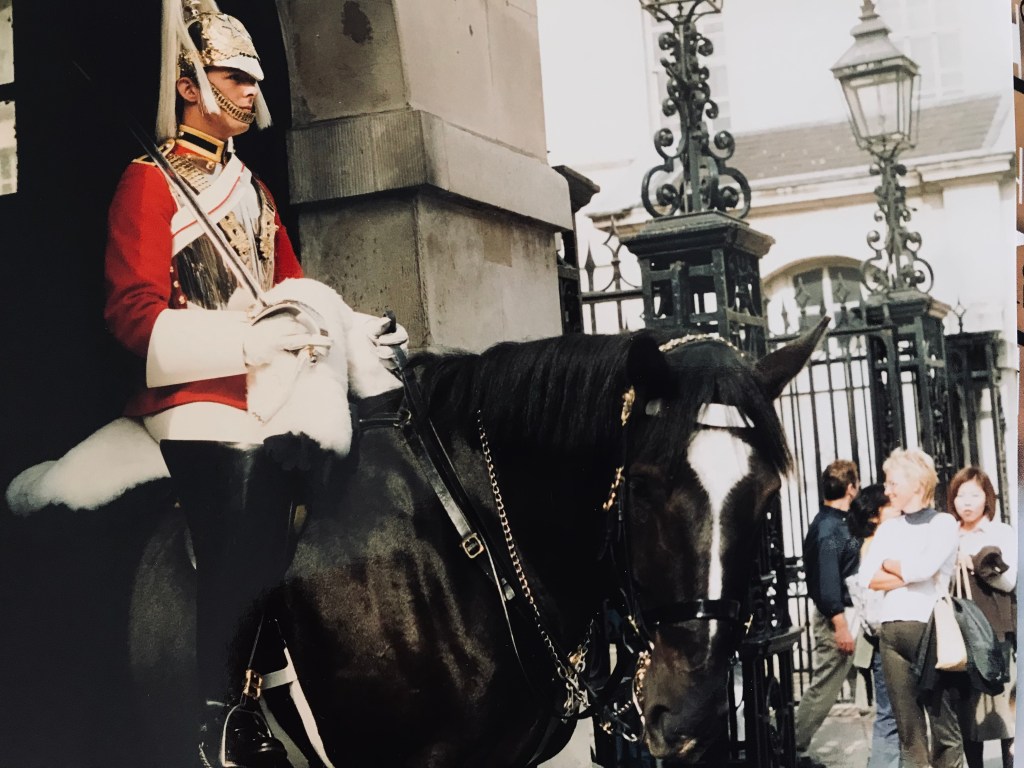
REVIEW Essay

Dante’s Creative Personality and Wayne McGregor’s Ballet, The Dante Project (2021)

By Elena Vassilieva

“L’amor che move il sole e l’altre stelle.” – Dante. On the photo: Edward Watson after his glorious performance. The image was taken by E.V. during the livestream from the Royal Opera House on 20 December 2021, © The ROH.

In 2014 Wayne McGregor turned to Thomas Adès, kindly asking him to write music for his new ballet. The British composer, haunted since childhood by the prodigious gruesomeness of the Divine Comedy’s imagery, must have thought then that it was his best chance to get rid of the fright he had acquired from reading the great poem in the young age, but also to bury those striking impressions inside the score for McGregor’s three-act ballet. He also must have believed that, after 30 years of creating “the poetry of the foot,”* the world-renowned choreographer wouldn’t fail to do justice to Dante who died on 14 September 1321. Adès’ logic didn’t mislead him, as Wayne McGregor had also been very much impressed by Dante’s poem, although it wasn’t the fright that moved him most deeply, but the beauty of Dante’s poetical word, which he initially feared not to be able to translate into the language of dance, but that natural fear lived one moment only; Dante’s overwhelming aesthetics and his creative genius commanded every single dance move in the new ballet triumphantly, leaving no trace of that conundrum the choreographer had in the very beginning.

There are others beside Wayne McGregor and Thomas Adès who are pivotal in the creation of the ballet: Tacita Dean was appointed as a set and costume designer, Lucy Carter and her assistant, Simon Bennison, as light designers, Uzma Hameed as a dramaturg, McGregor’s all-time collaborators. The ballet, somewhat drily called The Dante Project, a co-production with the Paris Opera Ballet (L.A. Philharmonic, a co-commissioner of Adès’ score), premiered on 14 October 2021 and was generously shown by the Royal Opera House to the audiences across the globe in December 2021. The world premiere was a very special and memorable event for several reasons. Firstly, the ballet lovers had already been aware of the tremendous success of the Inferno, performed by the Royal Ballet in July of 2019 in Los Angeles, and were eager to see all three parts of the new work, especially after the pandemic interruption. Secondly, the tragic consequences of the pandemic reminded us harshly how thin the line between life and death is, in fact, and how important it is, as was the case in the Classical Antiquity and then especially in the Middle Ages, not to forget the motto, memento mori, and do the right thing while here on Earth. Thirdly, it was an immensely courageous and significant most recent artistic creation that commemorated 7th centennial of Dante’s death.

Dante’s poem is not just a pleasing and at once repelling all senses colossal piece of artistry and a lengthy exposition of human nature that is prone to mistakes and flaws per se, but it is also a monument to a creative personality, whose role was fulfilled in the Divine Comedy with such an authority and wisdom by Virgil, whom Dante addresses affectionately as “my true Guide, my sweet Friend, my sweet Father, my Master, my good Master, my prompt Master, My Lord, My Leader, My wise Leader, My Virgil.” One can really feel the love and such an endless admiration Dante had for the Roman poet. The regrettable to Dante fact that both poets lived in different historical epochs and couldn’t possibly have arranged a meeting, was overcome in the reality of his poem, and Dante cherished and appreciated every second of it.

At the same time, it is also a monument to a woman, the beloved woman, Beatrice, who was neither Dante’s wife nor his lover, yet, she is the one who had captured his imagination ever since he had first seen her as a 9-year-old child. There are many scholarly speculations among Dantists on why Dante chose to place Beatrice and not anyone else on the very top of that otherworldly reality which he created according to the Christian code of ethics, but, alas, there isn’t one definitive answer to it. Some believe that it was just Amour Courtois which was a common thing in the upper classes in the Middle Ages, just think of all the troubadours who were writing the most dazzling poetry lines for their Dames of heart. But most of them stayed on the very surface of that highly coded pursuit. In fact, this much that the code and the codex itself ultimately mattered more than the essence of the relationship, e.g. the true feelings or the lack of them. Therefore, such strictly coded relationships often seemed to be driven by a game-like ardour rather than a deep-rooted feeling.

Although I agree that Dante might have been influenced by this cultural tradition indeed, for he mentions the French troubadour, Bertran de Born, in Inferno (Canto XXVIII), and it might well be a proof of that, but, in my view, Dante’s poetic explorations are much more captivating and fervent than those of the troubadours. He shares with us a profoundly touching experience of his life-long spiritual attachment to the woman he happened to see just twice, without selfishly reducing her, say, to a mere object of temporary fondness. Instead, he idealises, even deifies, and immortalises her, because she had had such an enormous power over him and had been an irreplaceable source of inspiration and creative energy throughout his life, and not only for writing poetry, but also for making him resilient and giving his life a higher purpose.

His everyday was far from being ordinary and was marked by turbulent political upheavals in his native Firenze where, in 1302, his property was seized, and he was condemned to death by fire, shall he ever be caught there. These circumstances forced him into exile, entirely separating him from his family, and Beatrice, the mistress of his soul, kept his spirits and hopes high. So in this context, Dante may be regarded even as one of the very first feminists who believed that it is crucial for an artist to have that special female presence in his life, which doesn’t have to be necessarily physical, but, rather, metaphysical. Eventually, as a wanderer throughout Italy, he could survive without his fortune, but he would hardly have done so without Beatrice’s spiritual guidance and support. It is thus the book that offers an incredible insight into man’s struggles and solace within the two realities, the one on the Earth, and the other one someplace else, depending on man’s deeds. In both realities, eternal dichotomies such as God and Satan, good and evil, beauty and ugliness, love and hatred, kindness and hostility, suffering and blissfulness, are central for Dante’s universe.

That’s true that his narrative is perceived foremost as theological, but it is by far not limited to it. On the contrary, Dante’s critique of the societal norms of that time is rather audacious and admirable, e.g. it is hard to miss his sympathy for the Florentine poet and philosopher, Brunetto Latini, whom Dante and Virgil encounter in the Seventh Circle of the Inferno (Canto XV) and who was sent there for just being a homosexual. The unfairness of Latini’s and his companion’s punishment leave Dante deeply disappointed and dismayed: “Ah, had I all my wish, […], you would not yet be banished from the world in which you were a radiance among men…” Latini himself says that it is hard to fathom for him why he and his troop (“all clerks, great scholars, and of great renown, by one same crime on earth defiled”), condemned and punished that unfairly and severely. He adds that, luckily, his life continues in his book, Livre dou Tresor: “I would say more but there across the sand a new smoke rises and new people come, and I must run to be with my own band. Remember my Treasure, in which I shall live on: I ask no more.” And Dante fully agrees with him. Moreover, he is grateful to Latini for teaching him the art of becoming eternal, meaning his creative pursuits. To Dante, Ser Brunetto remains dignified and victorious even in the Seventh Circle. Another of the many instances of his harsh critique is the scene in the Purgatorio (Canto XVI) where Dante and Virgil are moving “through that foul and acrid air” and one of the spirits, Marco Lombardo, complains about growing corruption and loss of spirituality in the circles of the Church.

These two examples throw light on Dante’s personality with his sentiments, viewpoints, and judgement. To many readers, he is first of all a prophetic poet, but I would also stress that, besides being a creator and a visionary, he is a remarkably compassionate and tolerant human being. Neither judgmental nor pious, he impresses us with his humanism, which is so much ahead of the medieval Zeitgeist. Dante is more congenial to a Renaissance man rather than to a man of the late Middle Ages, no wonder that he had chosen Virgil as his guide. With his humane values, sound ethics, and utter interest in man, the Italian poet appears to us surprisingly contemporary as for his worldviews, and that is what Wayne McGregor highlighted in his ballet so astonishingly well. He reconstructed the poet’s creative personality in such a beautiful and sensible way for us. To show Dante as a human being and not only to concentrate on the picturesque narrative of his poem is one of the strongest intentions in the ballet, in my view. And it turned out to be immensely advantageous to the conceptual side of The Dante Project. I could even forgive the dryness of the ballet title, as it shifts the focus to Dante’s personality and his inner life with all its struggles and hopes. The ballet does paint a very fair and colourful psychological portrait of the Italian poet genius, and this is doubtless a huge achievement by all those who had worked on it.

The first act, the Inferno with its nine circles, is the most spectacular one. Everything in this act is spellbinding: the music, deep and dark, had clearly inspired the intricacy and complexity of the choreographic movements, complimented by the austerity and elegance of Tacita Dean’s setting and costumes, and Lucy Carter’s and Simon Bennison’s very fine lighting design. The dancers seem to live in every movement and move, each playing his or her part superbly. One really delights in the usual sophistication of McGregor’s choreographic style. Edward Watson (Dante) and Gary Avis (Virgil) have a great rapport with each other while interpreting the Divine Comedy’s most glorious literary friendship on stage so movingly. Francesca Hayward and Matthew Ball portray the adulterous lovers (Inferno, Canto V), expressing the Divine Comedy’s passions so convincingly, one wishes their pas de deux lasted longer. Calvin Richardson’s Ulysses is adventurous in his sublime confidence and worldliness, as is his sharp wit, in the Inferno (Canto XXVI). Ulysses’ vivid and garlanded storytelling doesn’t escape Wayne McGregor’s notice. A very curious and unexpected dialogue between Dante and Satan (Fumi Kaneko) captivates one’s mind the minute we see them converse, and even more so, because Satan is being portrayed here as an attractive and dangerous female seductress, but Satan’s charms hold no allure for Dante.

The second act, the Purgatorio, surprises the audience with its postmodern touch and rather interesting musical and geographical solutions. The mountain of Purgatory is said to be located in the middle of the ocean in the Southern Hemisphere, just the opposite of Jerusalem, which is in the center of the Northern Hemisphere; Thomas Adès unites both geographical locations on stage: while Dante is reminiscing on his life during his Purgatory journey, psalms are being sung in Hebrew in the Adès Synagogue in Jerusalem. Tacita Dean also finds an unordinary way to connect Dante’s personality to our everyday, placing the picture of an enormous jacaranda tree on a car-jammed L.A. street that serves as a background for the ballet scenes of the second act. Lucy Carter uses the symbolism of illuminating the jacaranda tree in different colours, from greenish-yellow to violet or purple. The musical canvas has a folkloric base. Nearly in all its entirety the second act consists of the group dances typical of festive occasions.

Two scenes stood out here in particular. The first one when both poets reach the Garden of Eden (Canto XXVII) and Virgil has to leave Dante, as Beatrice is there to guide him further on; and when the two pilgrims say goodbye to each other, the farewell truly breaks one’s heart, Edward Watson and Gary Avis presented the painful moment so well. The second scene with Dante, who is, finally, able to see Beatrice, will make the audience recall it again and again, as Edward Watson and Sarah Lamb, while on their journey high up, to the Paradiso, made the pas de deux unforgettable. They both looked as if not only did their bodies dance but also their souls in this love scene. “Now be celestial!” Wayne McGregor commanded like a god during rehearsals, and such they truly were. That gorgeous is the choreography and its fulfillment in this scene. Tacita Dean thought of a traditional red gown for Dante and of a gauzy, spring-like dress for Beatrice, emphasising will, desire, and love of Dante’s, a newcomer to the Garden of Eden, and purity, grace, and repose of his beloved. The role of Dante was extremely difficult to dance and act, it required so many skills from the dancer: stamina, knowledge, emotional intelligence, and incredible technique, given how complicated McGregor’s dance vocabulary and stylistic are. Clearly, it’s hard to cast a better artist than Edward Watson for this role, which he danced with such vividness and brilliance. It’s a pity that it was his swan song because of his retirement, and his presence on stage will be missed greatly in the future.

I had imagined the third act, the Paradiso, to be the most striking one, but after having seen the ballet, I would still prefer the Inferno. As for the musical qualities, it seemed to me that music wasn’t leading the choreography in the third act; it was too autonomous, and, therefore, quite difficult to follow choreographically. Of course, it is an enormous challenge to create something we don’t really know what it is. All we know it must be a certain state of being, say, a bliss, but what exactly is that bliss, we are left speculating. It is hard to compose the paradisaical blissfulness and the purity of the spirits on a musical canvas, anyway. But one assumes, nonetheless, that a musical bliss should lift up the soul of man who is still here, on Earth, offering him something that would make him believe that he is in Paradise, whatever the latter might be. Alas, a rare living composer has been granted that gift. However, Tacita Dean and Lucy Carter did a magnificent job of (re)creating the image of the Paradise. I admired a great deal their choice of colours and hues and geometrical patterns. They both concentrated on the Light of the Paradiso, and that was the secret of their extremely successful setting. The elegant pearly white costumes reminded me of Frederick Ashton’s contemplative serenity of his classic, Monotones II, choreographed to the music by Erik Satie, Gymnopédies. Wayne McGregor accentuated the euphoria of the Paradiso in his choreography, and it was as complex as the Inferno, but for all the Royal Ballet artists it seemed to be a breeze. They made it look as if their bodies were happily dissolving in this Heaven on stage.

Thus, it wouldn’t be an exaggeration to say that the Dante Project team presented a creative piece of an extraordinary beauty and effort to the world. On 26 December 2021, on Instagram, Wayne McGregor said that “[c]oming back into the Royal Opera House to create, produce and perform a huge new 3 Act Ballet (after such covid havoc) was a massive challenge. All of the teams, across the house had to dig deep, working insanely hard to pull this off. Together we achieved so much and are very grateful for the reminder that each and everyone plays their individual part to manifest the whole. Collaboration at the heart of all that we do.”

It was a joy to see how carefully and sensibly Dante’s genius was treated in this work. The team’s decision to place his personality rather than the narrative of his poem in the foreground seems to be more challenging, but most appropriate. Not only aesthetic pleasure one finds in this work, but also solace and hope that unfavourable personal circumstances can eventually be overcome (just think of Dante’s life!), and so can the collective tragic circumstances that have recently sadly affected every single one of us. This makes all of us, not only the ballet lovers, appreciate this ballet greatly. Congratulations to the Dante Project team on such a brilliant work and many thanks to the Royal Opera House for the livestream of the ballet!  

Excerpts from the following editions of The Divine Comedy by Dante Alighieri were cited here: The Carlyle-Wicksteed Translation. The Modern Library, 1932; Random House, 1944, p. 83. And The Divine Comedy, translated by John Ciardi. New American Library, 1954, pp. 122f; 1957, p. 420. *John Dryden (1664): The Rival Ladies.

Written on the night before Good Friday, 2022, in the Sky Control Room, on Cape Cod. Copyright © 2022 by Elena Vassilieva. All rights reserved.

Essay Review

Wagner and the Secret of Success of the Australian “Walküre“

Notes on Die Walküre premiered at Her Majesty’s Theatre in Melbourne on 9 February 2022

By Elena Vassilieva

Die Götter machen auch Fehler und deswegen leiden… Ach, übrigens – was hat für Sie mehr wert: Tugend oder Reichtum? – Words by Elena Vassilieva. The image was taken from the livestream of the opera from Her Majesty’s Theatre, © Melbourne Opera.

On 14 January 1870, King Ludwig II of Bavaria wrote to his beloved composer that Das Rheingold and Die Walküre might be onstage in Munich that year. Indeed, despite the King’s doubts, on 26 June 1870, Die Walküre had the world premiere at the National Theatre in Munich, leaving Wagner in a gloomy mood. Wagner, that Master of the Masters on Earth, was notorious for his capriciousness and rigorousness as for the production of his own works. He was very particular about how his music dramas should be mounted, and every single detail mattered to him a good deal. And if something in the production happened not to coincide with his fancy, he would fall into the bleakness of utter despair at once. He dreaded to be misunderstood and misrepresented. Therefore, every time, when as a spectator, I have a chance and privilege to participate in an event honouring the glorious heritage of Wagner’s, I keep this fact in mind and always play an imaginary guessing game during the event, wondering whether the Master himself would have loved the spectacle or not? And, suppose, he loved it, what would his words be? And if he didn’t, what would he be saying, then? But that’s a rather silly game, of course, pursued by the naïve and unwary mind of mine.

The skeptical Wagnerian in me would probably argue that it makes no sense at all to play such futile games, as it’s all about interpretation and reception of Wagner’s work, which, naturally, largely depends on the will, desire, and talent of those who are preparing the masterpiece for the audience. By no means it’s about his, a priori assumed, approval or disapproval. For goodness’ sake, and alas, the great man isn’t here anymore as a man of flesh and blood for more than a century, that same Wagnerian in me would rage. Why should it still matter what he would have thought or said? In any case, we can only speculate about his possible reaction, based on his writings. I don’t know, I would still disagree. It just matters to me, perhaps, because, like everyone else who loves him dearly, I know perfectly well how much he cared for the nuanced precision of the articulation of his artistic ideas. When one is working on his operatic masterpieces, one had better be mindful of that fact, in order not to upset his spirit. For this very reason, until now I had never uttered a word, not in exhaustive detail, anyway, on any production of his gems, fearing the responsibility of the whole endeavour, although I consider myself fortunate enough to have been able to see his work performed on the most interesting, old and young, stages.

One may remember how disappointed and crestfallen Wagner was after he had read an article about his music by Hector Berlioz, where the latter praised the German titan, but made a costly mistake ascribing to Wagner the notion of la musique de l’avenir in the sense of school in music, which Wagner denied harshly and offendedly, as he believed the term didn’t mirror his philosophy at all. On the contrary, it was misleading and misconstruing his very ideas of Das Kunstwerk der Zukunft (1849), which, for this reason, he regretted having published at all. Besides, he complained that the notion of la musique de l’avenir was not his invention, but Professor Bischoff’s, a music critic from Cologne and Ferdinand Hiller’s friend. The outrage led Wagner to dedicate many hours of his time to a thorough and exasperated letter to Berlioz in February 1860, in which he had not only scolded the French composer for being inaccurate and even gullible, while using the phrase coined by Bischoff, but also for lacking artistic understanding of the conceptual side of Wagner’s works and his artistic vision. He feared his texts could really be grasped only if read in original, which might have prevented Berlioz from the accurate and full comprehension of Wagnerian aesthetics. In his letter, Wagner tried to explain to Berlioz what his concepts were based upon. He had a great admiration for Berlioz, especially after a closer encounter in London in 1855 where Wagner had some concerts at the Philharmonic Society. One of them even included the Queen Victoria in the audience, who thought highly of his music and made an entry of the occasion in her diary.

Wagner said personal unhappy circumstances and his creative quest for a most wholesome and rounded art led him to the key concepts of his Das Kunstwerk der Zukunft, a manifest of the philosophical ideas based on the inevitable and necessary interdependence of life and art. On the other hand, Wagner was tremendously bothered by the triviality and lack of depth of the performed pieces at the opera houses throughout the Old World at that time. He believed the theatres had distanced themselves from the genuine art that, like the classical Greek tragedies, is supposed to overwhelm (erschüttern) the audience on so many levels and make theatregoers want to connect to this art and consequently reflect on it on their own, without the help of critics. Das Kunstwerk der Zukunft, or das Gesamtkunstwerk, should not be lowered and degraded by the artist to the trivial mentality and frivolous taste of the “Publikums großer Städte” (read bourgeoisie), he insisted, but instead be desirous and desirable, even by the above mentioned audience, cultivating a taste for a much finer and deeper art than the one this audience is used to.

He desperately wanted to avoid the superficial quality of the artistic piece. Therefore, the seeming simplicity of such a multifaceted Gesamtkunstwerk would appeal not only to a connoisseur of music, but also to an inexperienced spectator or even a simpleton without repelling and leaving the latter in need of a translator or a critic. The emotional and intellectual Erschütterung of the audience by the Gesamtkunstwerk’s aesthetics, so much relatable to any man’s life experience, can only be achieved through the synthesis of different arts, as he wrote it in the letter to Berlioz, “so frug ich mich auch, welches die Mittel zur Hervorbringung jener außerordentlichen Wirkungen waren, und ich erkannte, daß sie eben in der Vereinigung aller Künste zu dem einzig waren, großen Kunstwerke lagen.“ Aristotle’s notion of catharsis, obviously, was very important for him. The main purpose of his famous letter was to be understood by Berlioz the way he meant it, but by everyone else as well, as the context suggests.

I often, therefore, wonder if a performing success of Wagner’s work depends much on the prioritising of his immense desire to be interpreted the way he imagined it? It may well be the case with the most recent Australian production of Die Walküre which turned out to be victorious just because they seemed to have followed closely the Master’s script. Contrary to what Wagner’s music dramas may seem to require, say, grandeur and opulence of space, of décor and of costumes, Her Majesty’s Theatre’s modest size accommodated the opera so well that not for a second the audience missed the larger spatial scale of the setting. The proportions seemed to be just right, whether it’s the material and symbolic centrality of the giant ash tree in the opera, or the magical place where the gorgeous Valkyries dwell and fear no one but their powerful and yet vulnerable father, a victim of self-inflicted curse. The set designer (Andrew Bailey) even thought of a very clever trick to make the Valkyries look as if they were really riding, bravely crossing the stormy sky to and fro. Luckily, the real horses were left in their stables, but the ones they used so splendidly, featuring the two lovely sway pole performers, Emily Ryan and Ashlee Grunberg, not only made the space appear much larger, but also very multidimensional, where realism and magic blend so harmoniously.

‘Less is more’ seemed to prevail in the style of the Australian Walküre. I didn’t notice any unnecessary or superfluous details in the ornamental stylistics of the production. Every single thing seemed to justify the music and libretto of the opera. The lighting design (Rob Sowinski) was very smart, stressing the symbolism of the few main colours in the opera: the dark blue along with the imagined pitch black with the contrasting paleness of the characters’ faces and the red flame in the end. The only thing that might have been avoided, and whose absence wouldn’t have been noticed, was the occasional neon light thrown on the sword, Nothung, on the ash tree; the neon was a tiny drop of tackiness to my eyes. The costumes, designed by Harriet Oxley with great care and love for the libretto, accentuated the characters’ main traits, yet did not seem to overburden and weigh the opera singers down. For instance, Fricka’s fanciful dress reflected her attractiveness behind which wickedness was hiding. The Valkyries’ dresses were tremendously handsome with the right amount of gold and silver not to be considered gaudy or tacky, let alone the most charming headpieces. In fact, the costumes and accessories in the production, slightly reminiscent of the Pre-Raphaelite style, were so elegant that I would love to wear them as a spectator to Wagner’s event myself if I could. No doubt, the decorative part of the production, aside to the plot, must have inspired the singers’ acting which was such a convincing and organic affair that it moved one to tears (speaking from my own experience), be it the first act when the twins (Lee Abrahmsen and Bradley Daley) exchange tender glances with each other and share love at first sight, or the second act where Wotan (Warwick Fyfe) and Fricka (the marvellous Sarah Sweeting) have their fateful argument, or the scenes with Wotan’s and Brünnhilde’s (Zara Barrett) tumultuous personal matters in the second and third acts. Those were very memorable moments.

It is a well-known fact that Wagner was a passionate perfectionist to the degree of being a rather intense and trying person at times, and he certainly knew how to move passions in his masterpieces as well. The subtle and romantic eroticism is another significant attribute of his music dramas, which certainly wasn’t overlooked in this production, but fulfilled with superb acting, both dramatic and vocal. The love duet, Sieglinde (Lee Abrahmsen) and Siegmund (Bradley Daley), excelled at it. Lee Abrahmsen effortlessly repeated her dazzling success of the last year’s Rheingold. The ease and beautiful crystal-clear freshness of her vocal style, complimented so nicely by Bradley Daley’s very attractive nervous sensibility, was great pleasure to watch. Sieglinde’s husband, Hunding, that insufferable exemplar of Wagnerian machohood, was portrayed very skillfully and brightly by Steven Gallop; he added so much dramatic energy to it. Wotan (Warwick Fyfe) and Brünnhilde (Zara Barrett), both immensely strong and perspicacious performers, impressed the operagoers a great deal, breaking their hearts with their remarkable vocal dialogue. The brilliance of the famous Ride of Valkyries (Walkürenritt) will stay with the audience long after they had left the theatre. Everything in this scene seemed to excite the spectator’s imagination to no end. Brünnhilde and the eight Valkyries (Rosamund Illing, Eleanor Greenwood, Jordan Kahler, Olivia Cranwell, Naomi Flatman, Caroline Vercoe, Sally-Anne Russell, and Dimity Shepherd), that captivating troop of the most sprightful warrior maidens, brilliantly showcased their mythological qualities with such an awe-inspiring singing and acting. The orchestra, led so gracefully and expertly by Maestro Anthony Negus, who today, after so many years of engagement with the German composer, probably knows every whim of Wagner’s as well as his own, did carry Die Walküre on their wings unfailingly and securely, producing an astonishingly genuine dramatic soundscape. The chosen tempo throughout this tempestuous and passionate music drama seemed highly suitable and desirable, keeping the operatic tension on stage appropriately high, yet, under control. Energising everyone, the singers and the audience alike, the orchestra played breathlessly from beginning to end.

Given his utter strictness, one is left guessing, of course, whether Wagner would have been as pleased as I, member of the lucky audience, was. On the other hand, his passionate nature might have been tremendously satisfied and thrilled, as this production was by no means short of delivering human emotions so tastefully wrapped in the right attire of the sound and spectacle. Besides, the opera seems to have been produced according to his precious ideas of Das Kunstwerk der Zukunft, keeping his heritage as much intact as possible, and that is the key for a successful performance of his masterpieces, in my – some would argue rather conservative – view. Also, it is a laudable, heroic even, achievement by Melbourne Opera to manage to raise funds for the production of the opera independently, from private sponsors, in such challenging times (Henkell Brothers, Lady Potter, Dr Alastair Jackson, The Ian Potter Foundation, The Angior Family Foundation, The Robert Salzer Foundation, The Sylvia Fisher Fund, Dr Douglas and Mrs Monica Mitchell, Roy Morgan). Thus, Wagner’s opera in Melbourne, with Suzanne Chaundy as a director and Greg Hocking as a producer and with all Australian cast, crew and creative team, is a Gesamtkunstwerk, a truly moving piece of art, but also a formidable team of talented and enthusiastic people.

One thing is certain: the audience left home wanting more. Luckily, we have something to look forward to in the future. Siegfried will already be onstage in September this year. And as Lady Primrose Potter, Melbourne Opera’s patron-in-chief and one of the principal sponsors, said, there are plans for three full Ring Cycles for March and April 2023. This is a marvel that would lure a whole lot of Wagnerians to Australia. For those who are unable to travel, I hope a livestream will be graciously offered by Melbourne Opera to the audiences around the globe, just like last (the spectacular Das Rheingold) and this year, for which we all are very grateful.

An excerpt from Wagner’s letter to Hector Berlioz from February 1860 was cited here from Wagner, R. (1871) Gesammelte Schriften und Dichtungen, Leipzig, E.W. Fritzsch, p. 118.

Written on the windy night of Saturday, 12 March 2022, in the Sky Control Room on Cape Cod.

Copyright © 2022 by Elena Vassilieva. All Rights Reserved.    
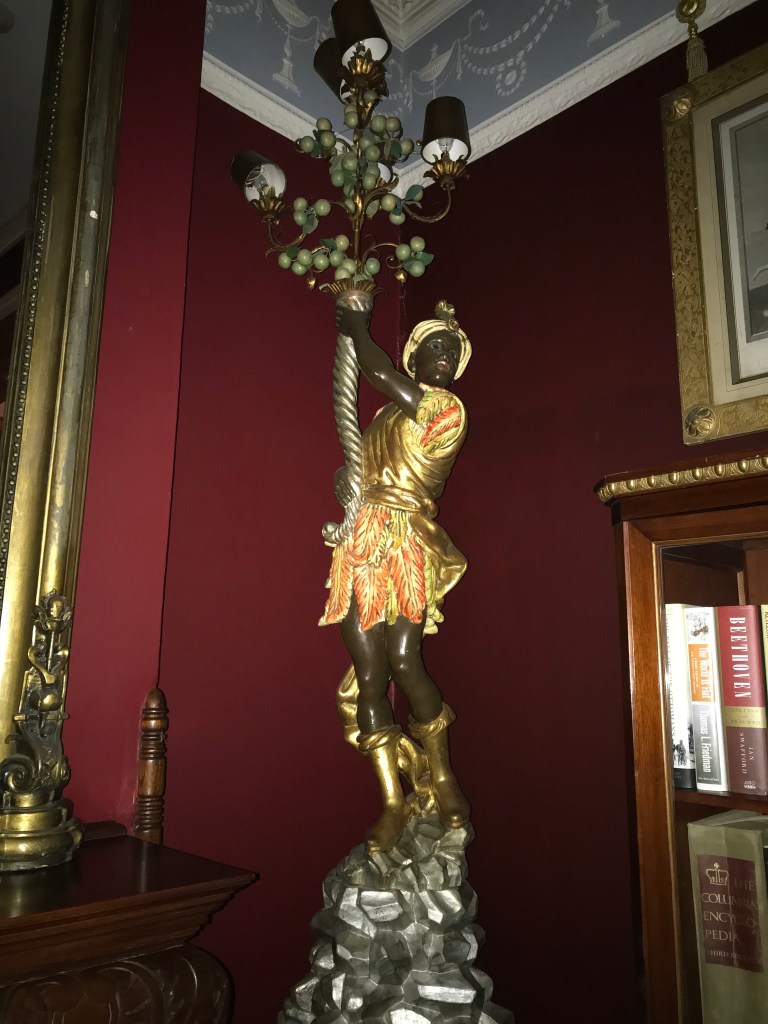
The England’s Odyssey and the Dazzling Triumph of Australia

Reminiscing the Ashes 2021-22 from the spectator’s point of view.

By Elena Vassilieva

“Oh, the Ashes, you always lure and you always break hearts!” – The super wolf blood Moon, 21 January 2019. Image and words by Elena Vassilieva

Many cricket lovers might still be sitting and ruminating on what exactly prevented England from performing as well as during the Ashes on their home soil in 2019, when they found themselves as fit as their Australian rivals, or maybe even slightly better? This time, the quest to regain the Ashes turned out to be a series of unfortunate events for England, alas. It started when the English cricketers declared an interest in bringing their families along. Australia, unattainable to the rest of the world, allowing only very few Australians at a time to return to the continent, miraculously (and thank God!) had granted entry to the British cricketers and their families. Briefly, it became a matter of debate and controversy. I wonder whether the wives had ever been in the ‘should I stay or should I go’ quandary? In retrospect, it must have been helpful for the cricketers to have their loved ones nearby to console them, but I fear it was also very difficult for the wives to see their husbands suffer like never before. On the other hand, had they decided to stay at home, they would’ve been a true Penelope and her friends, praying and waiting impatiently for their husbands to return, no matter with the trophy in their hands or without. Perhaps it would’ve been even better this way, as their other halves would have concentrated solely on the series with no concerns for their families because of the constant threat of the virus, but with a stronger motivation to win the Ashes instead. Of course, it’s a private matter and it should stay private, after all, it was the cricketers’ own decision. All things considered, it went exactly the way, mitgegangen – mitgefangen (think of the then coach Silverwood); under the circumstances, the support Penelope and her female friends might have provided was invaluable. But had I been a Penelope, I would have refused to join Odysseus on his journey, out of fear to distract my beloved husband from already a difficult task. But I’m not the Penelope, so the worry is not mine, and thus irrelevant.

Once settled in Australia, it had been decided, as if by the one and only voice (Vox populi? Vox Dei? Guess whose?), that the best bowlers in the team, James Anderson and Stuart Broad, should be omitted in the first test. Whether they might have been saved for the later matches because of the injuries, wasn’t entirely clear. But the fact that in Melbourne, Jimmy fought like a tiger who had been kept in a cage for too long made it clear that he definitely should have been selected for the game already in the earlier test. Although Jimmy Anderson appeared at the very right moment of urgency, particularly at the Melbourne Cricket Ground, even his magic couldn’t spare England from losing the test. Stuart Broad felt sorrow about not having been able to influence the course of the game as much as he could or would have, had he been engaged in the game from the very beginning. “We’ve got a couple of caged tigers coming into this [Sydney] match, Ben being one of them and Stuart Broad is another,” the then assistant coach Graham Thorpe said. Eventually, Broad was able to apply all the preserved energy and impatience of his, flying over the field like a very dangerous osprey, handsomely supported by Jimmy Anderson, known as the King of Swing and the Burnley Express. It was a delight to see their elegant synchronicity.

The next unfortunate event came when the then head coach, Chris Silverwood, and his family had tested COVID-19-positive and were immediately sent into isolation in Melbourne, leaving the burden of logistics and tactics on the shoulders of Graham Thorpe and the captain. Thus England test captain was multitasking, very often taking a role of a coach and helping his teammates prepare for the next two tests, in Sydney and Hobart. I don’t think he or anyone else in the team had ever experienced anything of the sort, one blow after another, something that was completely out of their control, as if what they had been through at home during the pandemic weren’t enough, the circumstance that severely and fatally impaired their training, preparation and mindset for the series. For instance, the fast bowler Jofra Archer couldn’t join the expedition because of the injury, and everyone fondly remembers his swiftness and the diamond-cut precision of his throw in the last Ashes in England. He was as dangerous and unpredictable then, as he could have been here, and, of course, he was much missed during this Ashes.

Quite a few England cricketers came to Australia whilst still recovering from injuries and pandemic-induced maladies, yet hoping fully to contribute, even if it would cost them dearly in the end. Despite it, they managed to make a notable and respectable contribution. Think of Ben Stokes, who fought heroically, completely forgetting himself, despite his knee and badly strained side, in Sydney. “People will have seen me rubbing my knee from time to time when I was in the field, but rest assured I’m fine,” he said to The Mirror. No wonder the England skipper regards him as a superhero, which he is indeed. That fellow with the Hercules’ physique is always fun to watch, even when he’s just standing there and wondering how on earth the Kookaburra ball had just touched the stumps, but missed to upset the bails, while the astonished Steve Smith and David Warner had been inspecting the stumps, in case the bails had been glued onto them? Eventually, everyone decided it was Fortuna who had played a lovely trick on Ben that day in Sydney, lifting up his and his mates’ spirits. Think of Jonny Bairstow and his right thumb, that fellow had showcased a majestic century to such astonishment that many began to wonder whether his specialty shouldn’t be batting from now on? Think of Jos Buttler and his broken left index finger, Buttler had been in such an excruciating pain and with worries about his future before heading home after his devastating injury. And I’m not mentioning England captain here, as this topic deserves its own chapter. For now, one thing only: The captain had been there for his teammates, rain or shine, always the first to board the ship and the last to leave it.   

But despite all the misfortune and dark mood, England stoically continued to play, often engaging in truly beautiful and sparkling moments of joy with their rivals during the tests. At one point, Stuart Broad daringly confronted the roaming about FoxSports camera, then ran to the deep end and dived in, as if turning the pitch into the pool and making the stadium roar with laughter. The lustrous and agile Marnus Labuschagne, who is ordinarily focused to a T, decided to try a new idea of his, some intricate pas de chat, right in the middle of his batting, bringing himself out this way. Or when Steve Smith with a solemn expression on his face and a concentration of a gladiator did strike a pose, as if warning his opponent: “Now, you dare to slay me, you really do!”, cheering everyone up. Interestingly, the Kookaburra ball had been immensely attracted to Joe Root’s lower body this Ashes. He even was reported to have had a minor injury in his abdominal, yet was there to fight soon afterwards. And he really had to guard himself vigilantly, as the red ball kept flying into the forbidden zone. Mark Wood did his best to play breathlessly, driving the usually inaccessible Marnus Labuschagne three times, the seasoned Steve Smith twice and the canny tough cookie David Warner once out of the field. Wood impressed everyone in Hobart with a haul of the 6 wickets.

Not surprising at all that their strong opponents greatly appreciated England’s courage, persistence, healthy self-esteem, and unselfishness. “They’ve sacrificed quite a lot to come over here. Two weeks of quarantine, time away from families, some restrictions on what they can do, opposed to pre-pandemic. They’ve had some positive cases, the coach being away from this game, it’s been really tough for them. We are really thankful they are out here as part of the series.” The Australia new captain, Pat Cummins, commented after the game. I don’t think Australia could’ve dreamt of a more suitable captain than Cummins. The optimism and pragmatism of his response to any situation on the field is quite astonishing, and so are his ardour and firmness as leader. Not to say that the England captain is no good, on the contrary, as good as it gets: rational, resourceful, liberal, thoughtful, and sanguine. He is a dreamboat for any team. Throughout the years, Joe Root has established himself as an excellent and generous leader. During this Ashes, he had to endure so much criticism on top of everything else, yet remained faithful to himself and his teammates. Not everyone would be able to withstand such a storm of viciousness without being crushed, it requires enormous will and strength of character not to. But he had handled the difficult situation with pride and dignity. Judging by his actions, his motto seems to be “Here to help!” which means placing the needs of others before those of his own. At times, it might be too dangerous for such a generous personality, as it may easily distract him from the very priorities of his. Shall he decide to add some toughness of steel to his captain’s armoury, that would do, and it wouldn’t turn him overnight into a despotic beast, whose shadow is lurking in the minds of those who ruthlessly shredded Joe Root for his captaincy during the Ashes.

I wish all those who are given a voice in the media had kept silent, at least till the end of the series, in order not to demoralise and dispirit the team even more than they already had been by misfortune. Clearly, the critics are thirsty for a despot, an autocrat, a big macho tough guy-ruler, who, naturally, despises democracy, as if there were no other way of winning the next game. But that cruel captain wouldn’t do for the England cricketers or be the right man for me, the spectator. The England test players are too individualistic, they require a dialogue, a collaboration, not a monologue or slavery with orders given to them. On the other hand, the head coach might have been delegated too much power at the moment. That needs urgent reforming, so that he isn’t the only one to blame for the wrong selection of players or any other awkward moves on and off the field. He too needs good collaborators with clarity of their minds and positive attitudes. The appropriate work ethic in times of the pandemic should also be sought desperately. Australia may be a source of inspiration in that regard.   

And now back to the very beginning of the series of the unfortunate events. The preferred batting upon the toss win in Brisbane, is another thing, that was perceived by all the experts as a serious mistake, given the external conditions (e.g. heat and humidity about to kill) that appeared to be disagreeable to England. And thus it didn’t do at all, causing a chain reaction for the future events which prevented England from playing the game the way they did play in the 2019 Ashes, for example, and having as a result Melbourne Cricket Ground, one of the most prestigious and legendary arenas in the world, their final coup de grâce. Filled with so many Australian cricket lovers, the MCG sounded like a great hive of bees with the deafening noise. One can only imagine psychological hardship of playing there as a visitor. Supported by the thousands of their fans, Australia took over the field almost immediately, bringing onto the field, as if straight out of the magical chest, some really frightful game changers, terminators, if you will, e.g. the debutant, Scott Boland, who must have meticulously studied the technique of the England cricketers, including their finest batsman. In fact, so much that Joe Root must have been on his mind even when Boland was sleeping like an angel after a hard day of training. This impressive and intimidating his aggression had been. He did attack his opponents, one after another, Bairstow, Root, Wood, and Robinson, with the might of Polyphemus who stood in the Odysseus’ and his men’s way. Even the usually very collected, sensible and steely, with the light footfall of his and with the air of the divine unreachableness around himself, Joe Root seemed to have been taken off guard. He also seemed to have been depleted of his mellow and well-balanced, pulsating and inspiring energy, as if he were battling insomnia, when not on the field, and that, sadly, affected his game, not allowing him to play fully to his capacity and known brilliance. He, nevertheless, played solidly well, and towards the end of the series, especially in Hobart, he had definitely found the right key how to respond to Boland’s bold attack and how to resist his almost cyclopean aggression. No doubt, Joe is going to work hard on that in the meantime.

After all, Boland is not as much a threat technically as psychologically. His style of bowling is very heavy, yet precise, and it seems as if he were throwing a cannon ball at his opponent. But once Joe goes through his routine with Boland strategically, the tactical moves will come on their own, and Joe Root’s air of magnificence will reign over the wicket and the field again in the future. It will be a pleasure to see them fight again. Amazing is how quickly Root had grasped Boland, that seemed certainly to have shaken Scott’s confidence in Hobart; at least, the England captain had tested the waters before the end of the series, and his memory won’t fail him to practice the defense in a proper fashion until it’s polished to become a reflex, let’s name it the Boland reflex for the next Ashes. Usman Khawaja, another very strong and interesting Australia player, straight out of the magical chest, made it look so easy to bat two centuries for his team. He looked as if he came there not out of necessity but out of idleness. He seemed to have surprised even himself. He and Joe Root had shared pleasant and funny moments together, when Root was in a really playful sort of mood, bowling the rockets. To his credit, Khawaja, even if not sure whether he would be selected for the Ashes, did his homework diligently, and it didn’t fail to pay off.

The new Australia cricketers must have staggered England quite a bit. But in turn Australia old-timers, e.g. Pat Cummins, Steve Smith, David Warner, Mitchell Starc, and Nathan Lyon, must have been equally startled by the difference of England’s preparedness and armoury for the game, compared to the Ashes two years ago, when England appeared to be, in my view, more confident than Australia, both technically and psychologically. Unlike this time, when not only the new skillful players had been put on display by Australia, but also how quickly they retained the Ashes, practically in the middle of the series, despite all the sincere efforts of resistance from the English side. Playing in the Ashes in Australia must be for England teams at all times quite a traumatic experience anyway, let alone in time of trouble, the pandemic. By no means am I an expert in the game of cricket and therefore have no right to give any advice on the matter, but as a spectator I believe the path to victory lies not only in a great deal of tiresome drilling with the red ball and in rejuvenating the traditional side of the cricket game in England, especially with the younger players, as it was suggested by the England captain and some other experts as well, but also with the focus on a mental readiness, which should eliminate any Angst of failure and any anxiety of error. A thorough and close examination of all the strategic tricks of their opponents and spending more time together as a team are the basic elements required for success which the pandemic has obviously prohibited them from practicing more intensely. On the other hand, I’m quite puzzled and amazed how on earth Australia were able to do all this, as they too had many months of restrictions for the very same reason? How wonderful it would be to see both teams equally fit, splendid and victorious again. The good news is that England exhibited their ability and talent to be competitive and zealous, they just seem to be in need of more confidence, togetherness, steadiness, and somehow find a way to have uninterrupted and focused training and haptic experience with the traditional red ball before the next Ashes, the finest form of cricket game that has ever existed. It’s very soon, and all I can say: “Godspeed, my dearest cricketers! There is no time to lose. Per aspera ad astra!”

Written on Sunday, January 30, 2022, the day of the snow storm, in the Sky Control Room on Cape Cod.

Copyright © 2022 by Elena Vassilieva. All Rights Reserved.