OPINION

THE HOUSE OF WINDSOR

Catherine’s September Message and Her Video,

the “Midsummer Night’s Dream” in Norfolk

Late notes on the margins

By Elena Vassilieva
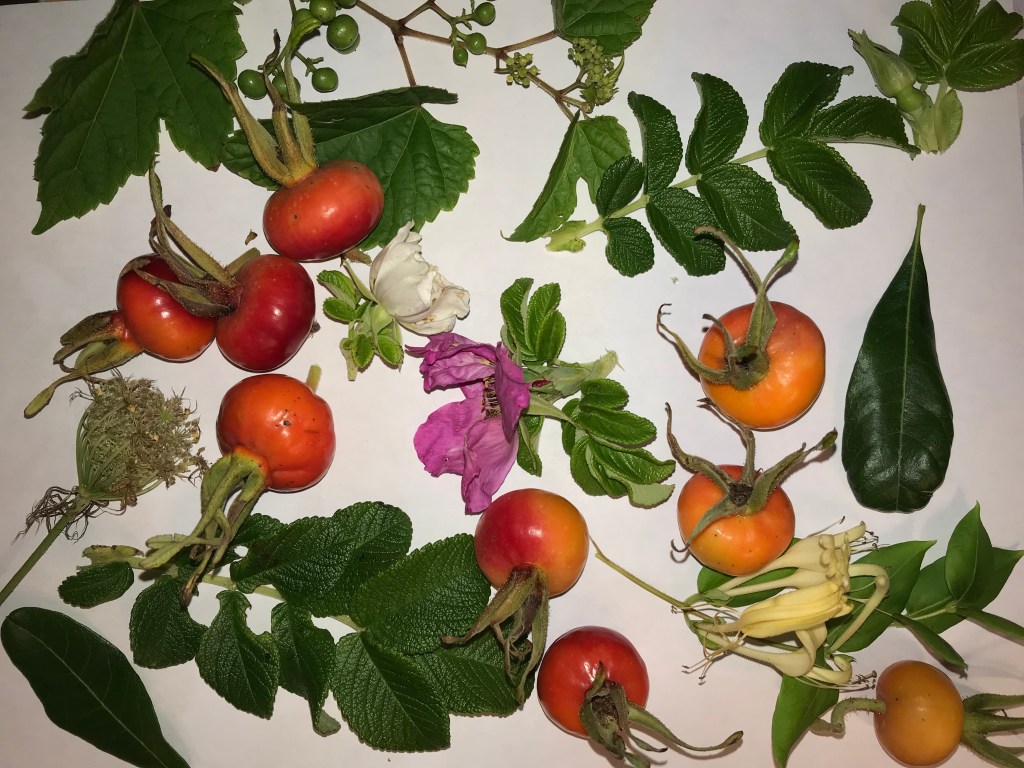
The Midsummer Night’s Love Potion Ingredients. Words and image by Elena Vassilieva

On Monday, September 9, 2024, at tea time, Greenwich Mean Time, Catherine, the earnest wife of Windsor, sent a long-awaited message to the world. Although her supporters had the pleasure of seeing her at Wimbledon this past summer, they didn’t think they would hear from her again that soon. On July 14, 2024, to everyone’s delight, she radiated joy and freshness, smiling and waving to the Wimbledon crowd which in turn greeted her with standing ovations. Her purple tailored dress flattered her sporty figure, and she seemed to have gained weight, but that was only to her advantage. Her long chestnut locks framed her tanned face in her usual fashion. So, when, in September, her lengthy message arrived, it was expected that she would be as fit as in July, and she didn’t disappoint.

Catherine’s recent message on Twitter/X was accompanied by a three-minute video which came as a great surprise and, to some, as a bit of a shock. The good news was: she had just finished her chemotherapy and from now on planned to stay focused on being cancer-free. It was not quite clear whether she got rid of cancer altogether. But the ambiguity around it had been there from the very start. In March, she announced in her first video that she had cancer, yet, the chemotherapy was preventive, she said. Now, in most languages, the word ‘preventive’ is used in the context when something dangerous is still not there, but there is a risk that it might come unless some preventive measures are taken. So, let’s hope that was exactly the case.

Her March video message was filmed in the sunny garden at their Windsor home. She was sitting there alone, on the bench, with chirping birds and blooming flowers in the background. Life in her garden went on as usual, according to the rhythm of springtime. Her pale and makeup-free face betrayed wistfulness, and her casual striped jumper signaled to the viewer that she cared little how she looked and that more serious things were on her mind. The March video struck and saddened everyone. I don’t think there was a single soul who was left untouched. Many thought, myself included, that delivering the sorrowful news directly and by herself was very brave, let alone unprecedented. However, I wondered why she would do that, what for? She could have just followed the usual Royal, ‘never complain, never explain,’ tradition, and that would’ve given her more air to breathe and made her less anxious. The video announcement must have added even more stress to already a very stressful situation, especially because she makes an impression of being an introvert, who is a rather shy public speaker.

The decision to disclose her malady this untypical for the Royal Family way was very likely dictated by her PR team, who may have believed that this tactical move would be an appropriate antidote to the insanity of some vicious cliques on social media, who kept themselves busy circulating falsehoods. Alas, it didn’t stop all the fantastical theories about her which continued to trend on Twitter/X. Therefore, it was her PR team’s huge miscalculation, in my view. They should have known better, but, alas, it seemed like the biblical wisdom, “Answer not a fool according to his folly, lest you be like him yourself,” had escaped their minds completely at that particular moment. Another peculiarity was that she didn’t say what type of cancer she had, while mentioning her preventive chemotherapy treatment. Privacy is everyone’s right, of course, and she stood her ground.

I assumed then, she would give a more detailed account of what has happened to her after she will have finished her treatment, otherwise her disclosure about the illness would make no sense at all, not on a large scale, anyway, other than to satisfy public curiosity about her whereabouts for one minute and to give the bloodthirsty hyenas on social media more food for speculation and fabrication, which should be of no importance to her at all. But having a social media platform with millions of followers from around the globe, and since this, however agonizing, circumstance presented itself, she shouldn’t shy away from it, as this is about the most significant and far-reaching public service she could ever do. Her first-hand experience and her insights would be invaluable to all other sufferers who look for hope and moral support.

Considering this, even her main project about the importance of early years of childhood appears to be rather redundant, especially if one takes into account the material side of her own personal circumstances. Growing up in a sufficiently well-off middle-class family, and, unlike Princess Diana, not working a day in a kindergarten or any other child care facility, and marrying into one of the most prominent families on Earth who can afford a nanny or two and who can invest into their children par excellence, all this makes her very poorly qualified for propagating the idea of a happy childhood for every child. In its hypocrisy, it is malodorous at best and no more than a hollow sound whose only purpose is a glossy presentation. Had she run an experimental school for poor children, the way Count Leo Tolstoy did for all the peasant children on his estate at Yasnaya Polyana, for instance, where she, like Count Tolstoy, would implement all her ideas about happy childhood, it would be different and it would be more than just words. Right now, her project might resonate with the upper echelons of the middle class and well-to-do aristocracy, who traditionally send their children to boarding schools and not rarely leave their offspring scarred for life with this, just read Earl Spencer’s recent memoirs about his harrowing childhood experience. However, ordinary people wouldn’t buy into a single word of the emptiness of her message unless it is solidly grounded. Shortly after she launched her campaign on January 30, 2023, at the BAFTA, in London, she published her op-ed article on the subject in the Financial Times, in March of 2023. I had to read it at least three times in order to fully comprehend the message, and I was still left guessing what it was all about.

Despite the good news that her chemotherapy dark days are behind her, Catherine’s message didn’t contain a single word as for what type of cancer she was fighting and what remedies she used. It must have been very disappointing to all the cancer fighters who have been following her and who have hoped to hear something more concrete for themselves than just the abstract “to love and being loved” and “I remain with you, side by side, hand in hand. Out of darkness, can come light, so let that light shine bright.” Although doubtless good words, those are not enough to win the battle. After people had watched the video, bewilderment was added to their disappointment. With the accent of the pU(r)fect pU(r)son (perfect person), she read her message with care and labor of the Matron of Great Britain, as if her only mission had been to dress all the words into her posh-accented pronunciation, as if it mattered much to cancer sufferers. While she read it, a pleasant music was playing in the background, and one was offered a rare glimpse into an absolute euphoria of the Waleses’ private life in the countryside, or shall I rather say, an idyll? Their jolly children provided the loveliness of the captured moments, but, oddly enough, they weren’t the pièce de résistance. The camera focused on Catherine instead. As if she hadn’t been going through the hardship all this time, she appeared in the movie as a fresh-looking and dazzling star, with her ever infectious laughter and her gorgeous hair flowing in the wind. If only everyone came out of the woods, I dare use her own words, as rejuvenated as she did.

The euphoria that may have overpowered her after, I assume, a successful treatment and nine strenuous and hardest months of her life, is perfectly understandable and justifiable, but nevertheless if one views it in the context of her job as a princess whose main and primary purpose is public service and whose husband’s motto, Ich dien, implies the same meaning, the movie is somewhat bold and transgressive, given all the intimacies thrown into the public eye. And, à propos, the Prince of Wales’ Ich dien should also be considered in the context of the Royal hierarchy, which goes as following in this case: Their Majesties the King and the Queen Consort (thank goodness, they didn’t take part in the movie, either turning down the roles or not being invited), the state and the public, and only then his immediate family and his in-laws who played an important role in the film and, undoubtedly, in the process of Catherine’s healing. Only Uncle Gary, крикун и хвастун, was missing there, at the game table. The in-laws have no formal role as such within the hierarchy of the Royal Family, unlike his wife, with whom the Prince shares his public service and duties.

By no means, Their Royal Highnesses are obligated by their official duties to open the curtains and make the set of their private life bare, and there is no need in it, in fact, not even when illness strikes. Not for fear of losing the Royal mystique, as some would argue, not at all, but for the simple reason of showing poor manners and being inconsiderate. After all, there are so many out there who also suffer from the same illness, but can’t afford the same care, and, very often, have to be waitlisted. Aside to this sensitive issue, isn’t it deemed rather disrespectful and even rude towards their supporters and well-wishers to display their affection for each other in public in such a way that they appear rather exhibitionistic, making, in turn, their viewers almost voyeuristic? No, no, no, Your Royal Highnesses, we do not need your invitation to your private party, thank you very much. Enjoy yourselves, but please be kind, do not involve us!

I also felt quite sorry for all the Prince of Wales’ admirers who had always flirted with him, that is, with his images on social media. I doubt very much that his fans felt particularly good about seeing their beloved prince in such intimate, nearly erotic, scenes, even if he was there with his wife. The Prince of Wales has been playfully, with lots of affectionate emojis, regarded as ‘handsome’, ‘cute’, ‘adorable’, ‘hot’, ‘sexy,’ etc., in the comments on social media. Of course, he wouldn’t know about it and he wouldn’t care about it, but his PR team would and should. How on earth would they not warn him that it’s not princely, but ungentleman-like to offer something like that to his admirers? Not noble at all and rather cruel, I’d say, neither Princess Diana’s boy nor His Majesty the King’s, but whose then? Mrs. Middleton’s, perhaps? It is being often reported how dearly she has ‘mothered’ him throughout the years (for more details see Robert Jobson and Richard Eden). And why wouldn’t Catherine herself think about his fans, and hers as well, especially when she is using the words ‘with humility’? What does she think humility is? Making their well-wishers jealous and even belittled? Or was she trying to tell her husband’s fans that they’d better not forget that he is a married man before they allow themselves such an impossible frivolity on social media? But who would take their perfectly harmless and lighthearted flirting with their own imagination seriously? I bet not even they themselves, yet, the Prince must have hurt their feelings considerably, shutting down their imagination but also love for him, because Love goes hand in hand with imagination, remember?  

Isn’t it in the Royal Family’s best interest to keep their private life well-hidden from their fans, in order not to irritate or hurt them? And the monarchy needs its supporters quite badly, more, in fact, than Royal movies filled with distasteful bourgeois intimacies. I didn’t think there was a threat, other than the illness, to the Waleses’ marriage, did you? And if there were, what might it be? Who would dare to break into the golden cage that is under seven locks? Hardly anyone, unless it is Love, of course, as l’amour force toutes les serrures. Or would either of them dare to escape from the golden cage? I don’t know about Catherine, but I think this Prince of Wales wouldn’t even contemplate the nonsensical idea, as the former ones did dare to break free from the cage, but they didn’t fare very well afterwards. Or is the situation, despite Catherine’s healthy appearance, this dire that they have to hire William Warr to document their relationship for posterity? But, happy with the results, on a whim, they decide to let the public see the film now, so that everyone would sigh and say, weeping: “Oh, poor things, oh, poor sweethearts, how much in love they are! Twenty (more or less?) years together, and they are still such lovebirds, as if they were just married”? Releasing the video now, instead of fifty years later, they did quite a disservice to themselves. Today, it just doesn’t feel authentic and, above all, doesn’t make much sense. One can’t stop wondering: what was the reason for staging it all? Why? Maybe they found inspiration in Shakespeare’s “A Midsummer Night’s Dream?” Others on social media thought whoever directed the film had watched quite a bit of “The Gladiator” and “The Twilight Saga.” I haven’t seen those, so I can’t comment on the accuracy of their intertextual relationship. 

But it doesn’t matter who or what inspired them, because what matters more is modesty which seems more and more to be missing from the arsenal of virtues and values of this princess. Or maybe she just let all the Royal restraints go away and let the public see her casual Kate Middleton’s side, again? And why not, one cynical voice would say, she is human, after all, isn’t she? Everyone does it, you do it, too, even if only occasionally, don’t be such an insufferable prude, it’s the age of selfies and ‘me-me-mes,’ even in the Royal circles, and sexiness sells better than primness, don’t tell me, you don’t know that. The Royals are free to do whatever they please, especially when the Queen Elizabeth II’s time with her moral compass seems to be an era long gone. Hardly convincing an argument, I would say, because that’s the opposite of what is expected from the Royal Family as guardians of traditional values. They aren’t supposed to follow trends of any kind. How about creating trends? And that depends on the trends.  

It is Catherine’s phrase ‘with humility’ that is particularly bothersome, because this Norfolkian idyll and Kate Middleton’s euphoria do come across as a slap in the face for all those who are still going through hell and maybe aren’t seeing the light at the end of the tunnel. Modesty, humility, and kind reservation would’ve been more appropriate than the flowing hair that evoked an herbal essence shampoo advertisement in some viewers, let alone the laughing-their-heads-off scene in the movie, the very scene that boldly adorns Their Royal Highnesses’ Twitter/X account now. And I wish I didn’t see that clumsiness in the scene where the Prince of Wales is, in a sort of religious ritual, finding himself on his knees and kissing his wife, as it appears, on the neck (!), with their confused children sitting around. Those are especially tone-deaf and incongruous with the circumstances, but also aesthetically not very eye-pleasing scenes, as this kind of romantic scenery is traditionally reserved for a certain age, say, Romeo and Juliet’s age, shall one wish to go public.

The best thing they could do was making their children the focal point, as they both seem to excel as parents. They would let the viewers feel the love through their children while showing us how much they enjoy parenthood. Had they done it, I would’ve been the first to admire and praise them immensely. To other parents, their parental experience is of greater interest than their intimacy, as there is nothing trickier than to rear a child in these difficult times, whereas the quasi-erotic desire filmed in the dunes is not only superfluous, but also very immodest and, frankly, quite laughable. Love, if it lives in a family or between two people, doesn’t have to be on display at all, as Love can be seen and heard and felt without it. But if it’s not there, nothing, not even a midsummer night’s love potion, and definitely not a movie that advertises a certain lifestyle, would bring it back for one. Had they posted their video on their private social media account, however, I would’ve just said: “Wonderful news! Congratulations to Catherine on completing her treatment successfully! What a cute movie! Great and audacious (!) acting in front of the camera! It’s a true idyll, isn’t it?!” And as a postscriptum I would add: “Hmm, apparently the matrimonial idylls exist in this world, and I thought that all marriages happen in Heaven. In Heaven only.”

Written on September 24, 2024 in the Sky Control Room, on Little Harbor, on Cape Cod.

Copyright © 2024 by Elena Vassilieva. All Rights Reserved.

THE HOUSE OF WINDSOR

The Queen Elizabeth II and Her Platinum Jubilee

by Elena Vassilieva

“Honestus rumor alterum est patrimonium.” – Publilius Syrus. The photo collage by Elena Vassilieva.

“It almost frightens me that the people should love her so much. I suppose it is a good thing, and I hope that she will be worthy of it, poor little darling.” – The Duchess of York to Queen Mary, autumn 1928.

Her Majesty the Queen has just set a record of being on the throne for seventy years. To reign successfully for such a long period of time requires good health, sound judgement and the mutual love and respect the Queen and her subjects feel for one another. Her Majesty has easily fulfilled all these requirements ever since she, still a twenty-one-year-old princess then, gave her famous birthday speech at the BBC in Cape Town, South Africa, on 21 April 1947: “I declare before you all that my whole life whether it be long or short shall be devoted to your service.”

Later, after the death of her father, King George VI, on 8 February 1952, at St James’ Palace, she repeated her vow: “By the sudden death of my dear father, I am called to assume the duty and responsibility of sovereignty. […] My heart is too full for me to say more to you today than that I shall always work, as my father did throughout his reign, to uphold the constitutional government and to advance the happiness and prosperity of my peoples, spread as they are all the world over. […] I pray that God will help me to discharge worthily this heavy task that has been laid upon me so early in my life.” That was a solemn promise to be a good queen, but also a circumstance forced by destiny that made both the young princess and the global audience experience her heartfelt new responsibility mixed with a touch of trepidation. One can sense here not only deep sorrow but also worry whether at such a young age she would be capable of doing the job the way it was expected. But in spite of it, she demonstrated bravely her steely determination to be a conscientious and devoted sovereign.

Today, if one were asked to describe her reign in just a few words and one were to say that it has been an act of selfless devotion, that wouldn’t be an erroneous statement at all. In fact, it is an exemplary devotion of the monarch who takes most seriously her duty rather than herself in this hereditary position, let alone her own persona, so much surrounded by an aura of the House of Windsor’s grandeur and mystique. In 1952 people must also have thought of her great-great grandmother, the Queen Victoria, who acceded to the throne even at an earlier age; she was just an eighteen-year-old, albeit very opinionated, teenager who consequently had been the Queen and Empress for sixty-three years which formed the Victorian era. If she could do it at eighteen, why wouldn’t the Queen Elizabeth II do it at twenty-five? – An obvious and logical reasoning must have been, not that the young Queen had much of a choice and not that she was the only British Queen who would be a monarch at twenty-five. The first Queen Elizabeth was also twenty-five when she became Regina in 1558.

Nevertheless, even her own grandson, Prince William, suggested in 2011, when in conversation with the Queen’s biographer, Robert Hardman, that “[i]t must have been very daunting,” indeed. He continued then, clearly awed and fascinated by his grandmother’s talent as a public servant: “And I think how loads of twenty-five-year-olds – myself, my brother and lots of people included – didn’t have anything like that. And we didn’t have the extra pressure put on us at that age. It’s amazing that she didn’t crack. She just carried on and kept going. And that’s the thing about her. You present a challenge in front of her and she’ll climb it. And I think that to be doing for sixty years – it’s incredible.” Well, the Queen has been doing it for seventy years now.

But seven decades ago, when the Prime Minister Winston Churchill was given the news, he gloomily said that he didn’t know her well and that she was only a child, the utterance that has now been quoted most often. However, Churchill’s first encounter with the then-Princess Elizabeth happened on 25 September 1928 at Balmoral. He wrote to his wife from there that “[t]here is no one here at all except the family, the Household & Queen & Elizabeth – age two. The last is a character. She has an air of authority & reflectiveness astonishing in an infant.”

The Queen has preserved the air of authority and reflectiveness to this day. And Churchill soon changed his view on her, after he had met her again in person in 1952. Afterwards, she had only won praise from the Prime Minister, and the feelings of great respect and fondness were mutual. According to Jock Colville, Churchill’s Joint Principal Private Secretary, the Prime Minister “was madly in love with the Queen and she got more fun out of her audiences with Churchill than with any of his successors.” (winstonchurchill.org)

Naturally, the Queen was deeply saddened when Churchill, perhaps her best and most valuable mentor, had to retire in 1955 due to his failing health. Born in 1874, Churchill was a child of the Victorian era and a national hero, who happened to have an enormously positive and formative influence on the young Queen in her role of head of state. The Queen was so much in awe of the Prime Minister that when he died, she broke the protocol by rushing to his funeral as the first mourning visitor, not the last one as it should have been according to the rule.  

Equally and rightly so, Queen Victoria’s great-great granddaughter’s reign is now regarded as the second Elizabethan era, which is hallmarked by the Queen Elizabeth II’s impeccable work ethic and her very tolerant and, despite the air of some mysteriousness around her, or, maybe precisely because of this, loveable personality. No wonder that she is perceived by so many around the globe as the epitome of stoical reliability and British goodness, a leader who has never put a foot wrong. But before that, in the very beginning of her reign, it was her youth and innocent and fresh outlook on the world that had charmed people in all corners of the Earth. Her great sense of duty, quick wit, genial equanimity, and a total lack of haughtiness and arrogance have touched people in a very profound way.

“We grew up loving the Queen. To us, teenagers, she was a babe,” reminisced Sir Paul McCartney. Just recently, in January 2022, a certain Winfield Scott, @LtGenScott on Twitter, echoed this sentiment, saying that “she was a babe back in the day.” And I replied to him playfully that she still is! Once a babe, always a babe. At her noble age still riding, walking with her beloved corgis, wearing her dresses better than any other woman who is as much photographed as she is, and delivering her Christmas message (2021) full of love and warmth in the striking red outfit, looking radiant. At that respectable age, to the envy of many, even much younger, women, she is still displaying best complexion in town. The babe of the babes! Mr Scott seemed to approve of my laudatory, good-humoured remark.

But the Queen also inspires and motivates much younger generations. Not that long ago, after the Ashes 2021-22 were over, I did run into a tweet by Sam Billings, the English cricketer, who regarded the Queen as his inspiration. Similar moods prevailed on the crowded Londoner streets on the bank holiday weekend of the Queen’s Platinum Jubilee, 2-5 June 2022. “She is my Queen,” said one very proud woman in the crowd during the festivities. One can be certain that this sentiment is not singular, the majority would say the same or something similar. Regarding the festivities, the Queen replied:

“When it comes to how to mark seventy years as your Queen, there is no guidebook to follow. It really is a first. But I have been humbled and deeply touched that so many people have taken to the streets to celebrate my Platinum Jubilee. While I may not have attended every event in person, my heart has been with you all; and I remain committed to serving you to the best of my ability, supported by my family. I have been inspired by the kindness, joy and kinship that has been so evident in recent days, and I hope this renewed sense of togetherness will be felt for many years to come. I thank you most sincerely for your good wishes and for the part you have all played in these happy celebrations.”

Historically speaking, her only competitor is her own great-great grandmother, the Queen Victoria. Although their similarities start and end with a very young age of accession to the throne, their longevity on the throne, excellent reigning skills, and their happy marriages to their handsome cousins, they still invite comparison, particularly because they seem to be such strikingly opposing each other grand historical figures. When the Princess Elizabeth was about to turn eighteen, Lady Airlie, Queen Mary’s dear friend, quite charmed by the Princess, said that there was “something about her, that indescribable something which Queen Victoria had.” (Kate Williams, 2012, p. 184f) Queen Victoria was an expansive Royal entity, who, at the age of fourteen, after having learned that eventually she will be a queen, quite self-confidently announced: “I will be good.” (Britannica) She was the Empress, who didn’t shy away from glorifying her own regal persona and from commanding respect and control over her subjects, which, of course, coincided with the social and cultural norms of her era, whereas the Queen Elizabeth II is by nature a thoughtful, open-minded, tactful, and unassuming person, without sacrificing her love of tradition and heritage.

She had been fully aware of her social standing when she was already a little girl, and it might have induced a spirit of conceit and vanity in her childish imagination, but only until her prudent grandmother, Queen Mary, intervened. Thus, her biographer, Kate Williams (2012, p. 74f), recounts the following amusing story: ‘“Good morning, little lady,” the Lord Chamberlain said, encountering the Princess in the corridors. “I’m not a little lady,” she replied imperiously. “I’m Princess Elizabeth.” Later that day Queen Mary arrived in his rooms with Lilibet, announcing, “This is Princess Elizabeth who hopes one day to be a lady.’” And this unfavourable trait had disappeared without leaving a trace in the Queen Elizabeth II’s character ever since.

At the BBC, in 2005, Prince William described her ruling style as “more of a soft, influencing, modest kind of guidance.” She won the hearts of her subjects and those of the rest of the world precisely because of her humbleness, her utter wish to be enthusiastic and dutiful, yet unglorified, placing others into the limelight instead. “She cares not for celebrity, that’s for sure. That’s not what monarchy’s about. It’s about setting examples. It’s about doing one’s duty, as she would say. It’s about using your position for the good. It’s about serving the country – and that’s really the crux of it,” said Prince William.

She is also hardly ever judgemental or disgruntled, even when an arrow is aimed at her family and her institution by a close relative of hers, say, her own grandson, Prince Harry. Once widely popular, he has chosen the road well-travelled by the King Edward VIII, who foolishly abdicated the throne for the sake of his personal caprice or, as he claimed, his personal happiness with Wallis Simpson, in 1936. But even the Duke of Windsor and his arrogant and manipulative wife hadn’t been as viciously selfish and cruel as the Duke of Sussex and his self-obsessed and aspirational wife have been. It might have taken the Queen Elizabeth years to cease to think of her Uncle David’s act of the highest egotism, but it may have taken only a minute for those unpleasant memories of the childhood to be retrieved when the Duke of Sussex and his spouse had engaged their PR machine that would condemn and trash the Royal Household ruthlessly. Something the Duke of Windsor had never done, despite his bitter criticism of the establishment and especially the key political figures of the time.   

Now, imagine, how the Queen Victoria, after a similar peripeteia, would have reacted? She may have uttered in dismay that “recollections may vary,” but would she have ever graciously said: “I am pleased that together we have found a constructive and supportive way forward for my grandson and his family. Harry, Meghan and Archie will always be much loved members of my family”, adding, “my whole family’s hope that today’s agreement allows them to start building a happy and peaceful new life?” Very doubtful, she would have. Some are even flagrantly tempted to exploit the Queen Elizabeth II’s delicate approach and heartwarming kindness.

Not only the Royal Family matters are being handled by her tactfully and with sympathy, but also those of the Commonwealth. She would never insist on being a queen or a head in a country that wouldn’t wish it, granting freedom of decision and choice to her subjects. The Queen Victoria might have never even contemplated this style of ruling, depriving her subjects of the freedom to choose. But those were different times, of course, colonialism was perceived not only as a form of the ubiquitous imperial power, but, unlike today, also as a means of gaining political authority on the global scene. Even to entertain any imperial ideas, let alone pursue them, is rightly regarded as very retrograde and uncivilised today, and the Queen is, naturally, far from such ideas. It is very modern and wise of her to wholly omit the norm and ambition of the far past.

But she is also not complaining at all about certain things that had been removed from her jurisdiction during her reign. Although the crown had begun to shift from a political role to an ambassadorial and ceremonial one already during the Queen Victoria’s reign, today, the crown’s political power has diminished even more. For instance, the Queen may no longer choose her prime ministers, and although, de jure, she has the right to dissolve Parliament, de facto she has little power over it. Similarly, in 1968 the Lord Chamberlain’s role as a censor of all theatrical works was abolished after the Theatres Act 1968 had been passed.

While political influence of the Queen is not as strong as it used to be in the times of her great-great-grandmother, the Queen’s influence as a moral compass and ambassador of good will, kindness and British heritage is stronger than ever. Some of the Royal Family’s younger members pursue very important and ambitious projects. Prince William’s Earthshot Prize has been an immensely impressive and successful endeavour to help heal the wounds the Earth is suffering from right now. The most remarkable thing is that it’s a continuation of the Royal Family’s tradition of caring for the environment. Both the Duke of Edinburgh and Prince of Wales have been untiring advocates for the nature and environment for decades.

At the same time and sadly, the Royal Family have been ascribed by society via mass and social media (understandably, to great annoyance of the Royal Family members) an additional role of some sort of forced entertainers. And since they are perceived as celebrities, the relentless and obnoxious media hunt for the Royal Family’s private moments has been an ongoing malpractice. In his book, Robert Jobson (2021) writes that already in 1947, when Prince Philip was courting Princess Elizabeth and when the glamorous couple were out for a ride in Prince Philip’s two-seat MG, one paparazzi photographer had been persistently following them. At that time, according to Kate Williams (2012, p. 202), the teenage Princess Margaret commented: “Poor Lil. Nothing of your own. Not even your love affair!” But the paparazzi hunt and social media pernicious and libellous fabrications had never been as intense and unpleasant as they are now. One can only sympathise and praise the Royal Family for enduring stoically this stressful ordeal. And one wishes the Royals would be granted their human and natural right to privacy and therefore normalcy.

It must also not be forgotten that the Queen’s incredibly successful reign is the fruit of collaboration, as she stressed it herself in her thank-you-speech during the Jubilee weekend festivities. The Queen and the House of Windsor are unimaginable without the support of the Royal Family’s members. With or without Prince Philip, the Queen would have been a splendid sovereign in any case, but the energy, optimism, wisdom, and authenticity of the longest-serving consort in British history and the oldest serving partner of a reigning monarch, enabled the Queen to blossom into a self-confident and self-reliant woman. He gave up his own brilliant career in the Royal Navy for the Queen. With his perpetual intellectual curiosity and good humour, the Duke of Edinburgh made the Queen’s strenuous job so much pleasanter, and she has always been very grateful to him for that. Having lost the Duke last year, the Queen is fortunate enough to rely on the Princess Royal, Prince Charles and the Duchess of Cornwall, who all have acquired the Queen’s high standards of public service. But she can also count at any time on the Duke and Duchess of Cambridge, who have been tremendously active and diligent in the past years. Prince Edward and Countess of Wessex are willing to join as well whenever the Queen is in need of their help.

The Queen isn’t thus worried about the crown being transferred later to Prince Charles who, along with the help of the Duchess of Cornwall, has convinced the British pro-monarchy population that the monarchy will continue to remain in good hands. Although it is too early to predict anything right now, but it does seem more and more that Prince William would particularly excel at running the House of Windsor and at being an outstanding Head of State and Commander-in-Chief, given the fact that his cultural and moral values strongly coincide with those of the Queen. On the other hand, all the people who have been behind the scenes, yet helping the Queen run the Royal Household throughout the years, have also contributed enormously to her success. Just think of the Queen’s private secretaries and hardworking ladies-in-waiting, it seems that Lady Susan Hussey, also Prince William’s godmother, has never left the Queen’s side for a minute, she has always been there for her.

Or the Queen’s dresser and fashion designer, Angela Kelly, whose creativity and loyalty since 1994 have been astonishing. Needless to say how much the Queen, at her noble age, is still dazzling the crowd with her very unique style and her very independent sense of fashion. Moreover, the Queen beautifully encouraged Ms Kelly to apply her talent in the role of the Queen’s first ever in-house designer. This is an example of how the Queen graciously lets other people elevate themselves to the highest point of their abilities and then shine. Little wonder that in her book, Angela Kelly (2019) wrote that “[e]ven now, after twenty-five years, I still admire The Queen as a strong, powerful woman and I find great inspiration not only in her courage, but also in her humility and gentle humour. She has taught me so much over the years and has always encouraged me to stay true to myself while being open to the opinions of others, even if I don’t share them. I know that her guidance made me a better person, and for that I am eternally grateful.” Those are undoubtedly lauding notes the Queen’s designer is offering here, and I do share them with her wholeheartedly. Queen Elizabeth II’s unparalleled and superb work during seventy years of her reign can’t possibly be overstated. It is a most notable and extraordinary achievement by the ninety-six-year-old woman who has been inspiring people for the good for seven decades. Q.E.D.

The following books have been consulted here:

Bedell Smith, Sally (2012). Elizabeth The Queen. The Life of a Modern Monarch. New York: Random House.

Hardman, Robert (2022). Queen of Our Times: The Life of Elizabeth II. New York: Pegasus Books.

Hibbert, Christopher (2000). Queen Victoria. A Personal History. New York: Basic Books.

Howard, Alathea Fitzalan (2021). The Windsor Diaries 1940-45. My Childhood with the Princesses Elizabeth and Margaret. New York, London, Toronto, Sydney, New Delhi: Atria Books.

Jobson, Robert (2021). Prince Philip’s Century 1921-2021: The Extraordinary Life of the Duke of Edinburgh. Boldwood Books.

Kelly, Angela, LVO (2019). The Other Side of the Coin: The Queen, the Dresser and the Wardrobe. New York: HarperCollins Books.

Shawcross, William (2009). Queen Elizabeth: The Queen Mother. London: Macmillan.

Williams, Kate (2012). Young Elizabeth. The Making of Our Queen. London: Weidenfeld & Nicholson.

Written in my garden of lilies on Cape Cod, on 10 July 2022.

Copyright © 2022 by Elena Vassilieva. All Rights Reserved.

OPINION

Not Diana, the Princess of Wales, We Had Known, and It’s Hard Lines on Us

Notes on the Diana-statue unveiled on 1 July 2021 in the Sunken Garden at Kensington Palace

By Elena Vassilieva

Rosa est pulchra. Sequor te. Iuvo te. © Elena Vassilieva; Photo by Richard Young from “Princess” by © Robert Lacey and © Michael Rand, NYTimes Books (1982).

“Omnes ita perterriti erant, ut nemo resistere auderet. Alle waren so erschreckt, daß niemand Widerstand zu leisten wagte.” – August Waldeck (1891)

The ancient secret to a triumphantly successful sculpture is hidden in time, space, and divine afflatus. While I was catching glimpses of the first Royal Family-commissioned statue of the Princess Diana, I couldn’t stop wondering, why some artists are capable of curving quasi-fetishistic pieces that would be looked at with adoration and veneration, whereas others, although having skills, reputation, and accolades, are nonetheless losing the game? I realised that those breathless ones, who sculpt their pieces with zeal and love, forgetting themselves, must possess the power of turning lifeless material into something that would transcend the boundaries of its own space and influence a human being in such a profound way that the latter would believe indeed the statue empowers him with strength, gives him hope, and galvanizes him into action.

For instance, I still remember when I had stepped inside the garden of the Rodin Museum in Paris for the first time. It was in the morning, after the rain, and all the statues were covered with raindrops, the place was filled with the aroma of roses; I was instantly spellbound and couldn’t leave the garden for a very long time. All the statues there seemed to breath and exude that mysterious something that is called inspiration which brings you utter joy. I thought I would burst into a thousand pieces, that overwhelmed I was by the whole splendor of Rodin at that particular moment. A similar effect I had been expecting from the Diana-statue in the Sunken Garden at her home, while contemplating my future visits there.

High expectations? Not at all. When one thinks that it is Diana, the supernal woman with the air of being once the Roman goddess, from whose image a statue was made, say, of the Diana of Versailles, Diane a la biche, at the Louvre. All of a sudden, magically, she seemed to have stepped down from the pedestal, and then began to live among us. The Roman goddess in appearance and a rather bashful, humble young woman in her demeanour, she started captivating hearts even before she became the Princess of Wales, but when she did, everyone thought that she adorned the title and not the other way around. Now, who would dare to be called the Princess of Wales again? The Duchess of Cornwall, an intelligent woman, turned the title down quite adamantly, kudos to her for this! Perhaps, in one hundred years there will be someone in the House of Windsor who would resemble Diana and will be given the title again.

And perhaps, one day, there will be a sculptor who will be able to capture Diana’s spirit and her unforgettable beauty that was so generously supported by her kind, bright, conscientious, honest, passionate, effervescent, and romantic nature. The nature that is similar to that of goddess in classical mythology: to be a god or goddess but be devoid of the sanctimonious saintliness, in the sense of uprightness and self-righteousness (in classical culture, I find it difficult to name at least one god or goddess, let alone simple mortals, who would have it), little wonder, she had such a strong and complex personality of a perfectionist. The way, for example, she greeted the Italians in flawless and accent-free Italian, while on honeymoon on board the legendary Royal Yacht Britannia in the summer of 1981, reveals a lot about her character, her sense of duty, and her attitude towards the people. One can easily see that she made her best effort preparing this excellent greeting speech in the language of the people she was visiting. One can also guess that when she loved, she loved wholeheartedly and passionately, expecting reciprocity. Another important thing that manifested, I dare say, in her nature of a goddess, was her intolerance to any kind of betrayal, especially by those who were/are brazen enough to claim they knew her that well they were/are allowed, to this day, to judge her public and particularly her private life, be it her former best friend or employee, e.g., the butler, equerry, biographer, or journalist as if desperate to diminish her persona and to steal a piece of the glory and love she has received from the people all around the globe, not knowing that this way they only belittle themselves. There was no dissonance between the external and internal side of her personality, and if there were, then her beauty would’ve been fleeting. But it wasn’t the case.

Depiction of her face and body in the statue in an exact, realistic, manner, as the Princes might have wished, is a task that is per se relatively easy, given that Diana is a classical beauty, and therefore any idealisation of her image is superfluous. One just must go to Paris and spend days and nights at the Louvre, with the Diana of Versailles, copying her boldly; afterwards, one may want to add some refinement and the finishing touches that would make the Princess of Wales recognisable. There is no other way to do it if the precise physical likeness to the Princess Diana is sought, and if the artistic style of sculpting should be realism (naturalism), and if the sculptor doesn’t want to stumble. When one was born with divine looks, one can’t possibly be deprived of them, for the simplest reason that looks are a fact, the truth. Remember what Gertrude Stein once famously said: “Rose is a rose is a rose is a rose?” This fact matters a great deal here. Every single part of her figure should be studied carefully in order to avoid postmodern kitsch and the effect of “the Diana in name only.” For any experienced and classically trained artist with good logical, spatial, and mathematical skills, it shouldn’t be very difficult to do it at all, particularly because of the initial striking resemblance between the two Dianas. Also, the Princess Diana as a statue shouldn’t be necessarily wearing what she wore in real life, even if the Princes insisted (they aren’t sculptors, after all, and how I wish they were!). Instead selecting an attire that would mirror her spirit and accentuate her personality would be much wiser. Her real clothes are not going to make the statue look like Diana, anyway, if the “it” that brings her back to us sculpturally isn’t there. No doubt, it’s the luxury to know an artist you could trust blindly, only then he can be given full creative freedom, and only then you are going to delight in his creation. But if one has no luxury of the sort at one’s disposal, then the commissioner ought to guide the artist through the process with his approval or disapproval of what is going on in the studio. It’s worth being vigilant to ensure that the artistic vision doesn’t divorce from the commissioner’s vision.

Of course, there are many other ways how the Princess could be portrayed. I shall take the liberty of imagining at least one of them, which might be a marble sculpture of the Princess, inspired by her image on the photo, taken superbly by Richard Young, when Diana and the Prince of Wales were on their summer voyage on Britannia in 1981. It may have also been one of the happiest moments of her life, because she radiates as much happiness there as later, when she is in the company of her beloved Princes, William and Harry. On that photograph, she wears an oversized white blazer and a triple strand pearl choker with a turquoise and pearl flower clasp, a present from the Spencer family on her 18th birthday (see the photo above). It’s hard to say what time of the day it is, but the exquisite airiness of her face has that fragile freshness of the morning and reflects her grace with such an elegant ease. The colours, including the light, are not only gorgeously right here, they are also incredibly harmonious with her whole being, creating an impression of the unity between the Princess and Nature, the space around her, that is. The composition and perspective are so successful that there is the fluidity of the contours and lines between the space of the Princess’ figure and the surroundings. And one thing one simply can’t miss here is the poetic nature of the Princess and the fineness of the moment. Should the sculptor decide that the Diana’s blazer in this marble statue shall be a line diffused into the pedestal, that will do, but should s/he think that the legs are necessary, that’ll do, too. But only if those will be the Princess Diana’s legs, not someone else’s. I would give preference to the first version, simply out of fear that the sculptor won’t be able to curve her legs in a proper fashion. In the end, it doesn’t matter at all which version it is, the sculpture just ought to entrance the spectator and give him aesthetic pleasure.

The statue in the Sunken Garden is executed in the style of realism, yet, it is not the Princess Diana. I don’t know who it is. It does remind me a little of one of the faces Mr Rank-Broadley had sculpted in the past, and did it very well, splendidly, in fact, but the handsome face of the Opening the Lock Gate’s character has little to do with Diana. And whose idea was it to politicise the sculpture by adding children who aren’t her sons? Diana’s personality needn’t be squeezed into any ideological frame and be peppered with the momentous messages of political correctness, for she was, still is, the epitome of kindness and compassion herself. Who would forget her as one of the most public-spirited human beings who ever walked on this planet? As a result, the sculptural ensemble is so inept in its composition, so intimidating in its nearly Herculean size and proportions, and the overt political editing/messaging only adds to its absolute soullessness and sad detachment, all of which is upsetting to a viewer like myself. And had the Princes decided not to unveil the statue on her birthday this year, the world wouldn’t have lost anything, on the contrary, we would’ve been still nursing hopes for THE statue of Diana, the one that would do justice to her. On that note, did I interpret it correctly, Earl Spencer, that you might have been as baffled as many of us upon seeing the unveiled statue in the Sunken Garden? There was a moment on one of the photos where you looked as if you just had a bite of the sourest apple you had ever tasted. Or was it just a wink caused by the sun?

One may wonder who is going to venture to sculpt the Princess Diana next? George Herbert Tyson Smith would have been best, of course, given his deep interest in ancient Egyptian and Romano-Greek culture. Alas, he is on the other side. Nigel Boonham perhaps then? He created a fairly good bust of the Princess and got her gracious approval despite the fact that he aged her mercilessly, in my view. Lesley Pover, a very interesting and fine artist, got Diana’s bones and bashfulness quite well, but lacked the desired likeness. Tom Murphy, a very thoughtful and skillful sculptor with such a sparkling enthusiasm, he might give it a try, since he has already been experimenting with a few Diana-sculptures. Besides, his Above Us Only Sky-John Lennon-statue (2002) at the Liverpool airport is such a successful work that it had received high praise from Her Majesty the Queen and Yoko Ono. If Mr Murphy could repeat this triumph of his with the Princess as well, that would be a dream come true. However, other talented sculptors may also reside and create outside of Great Britain.

P.S. Oh, but I still have to come and see all the flowers in the Sunken Garden redesigned by Pip Morrison.

(Written on 9 July 2021 in my white clover garden on Cape Cod.)

Copyright © 2021 by Elena Vassilieva. All rights reserved.

The Books and the Duchesses of the House of Windsor

Books for sale! Books for sale! Or the Royal case of assorted goods.

By Elena Vassilieva

Image: The Honeymooning Couple: “What are you in the mood to do next, honey?” “I just feel like whining again.” “Me, too.” © Elena Vassilieva

All those, who are interested in Royal affairs, have been offered so much food for thought lately by some of the duchesses of the House of Windsor that I don’t know where to begin. The hard-working women had to transform themselves, even if temporarily, into true Cinderellas, probably sacrificing their beauty sleep, matcha cocktails, tea with homemade cookies, and God knows what else, in order to add a check on the list of their deeds and to dazzle millions of their loyal social media followers and fans with… the books. Yes, the duchesses nowadays seem to be quite preoccupied with the books, no, not reading, but writing them. I wish they did read first, at least the books, written by their Royal predecessors and relatives, say, HRH Prince of Wales, before taking a daring journey into little-known waters. Had they read, some of them would have known better as for the quality standards set up by their family members.

Of course, some are weathered in the business already, Sarah Ferguson, for instance, as she has so many books of various genres in her collection. The Duchess of York is conquering a new genre now. She is busying herself with royal historical romances. “Her Heart for a Compass” will see the light in a couple of months. But I wonder whether her “The Enchanted Oak Tree” (2020) had inspired the Duchess of Sussex to produce her aspirational, but ill-fitting “The Bench?” There will be more on her book later.

Firstly, a few words about “Hold Still,” a book, curated by the Duchess of Cambridge, who, being the most conservative out of the three duchesses, chose the safest road, taking on a role more of an organiser and curator rather than a creator in a joint venture project with the National Portrait Gallery. Also, “Hold Still” is not a work of fiction or art, but a photo documentary, “[a] Portrait of Our Nation in 2020,” filled with the moments wonderfully captured by the people of diverse background during the pandemic. Conceptually, the book is a reflection of the ordinary people’s emotions and circumstances at that or this instant during the challenging year. To her credit, the Duchess had also interviewed them, showcasing organisational skills of a businesswoman. No wonder that the book turned out to be a solid and soul-stirring photo album. Another notable and laudable fact is that the proceeds from the sales will go to charities. The only disappointing and very puzzling thing is the title. Why would anyone think of the title that had already been taken? The same title belongs to Sally Mann’s memoir book with photographs (2015). I know that musicians steal titles from each other occasionally, often from their commercially more successful fellows, presumably, to draw attention, and although I cringe every time I see it, I can understand them. But the Duchess of Cambridge’s project isn’t seeking commercial success. Instead, the book’s social message, to document how people cope and support each other in hard times, is the main purpose of this endeavour. So it’s hard to follow the logic and logistics behind such a rushed and inexplicable decision, especially when one considers the seriousness of the project’s theme. Of course, there is no copyright for titles, but, nevertheless, there shall be nearly a natural desire to avoid the sameness at any cost. After all, the prospect of earning a reputation of copycats, God forbid, is quite daunting.

Now, back to the duchess who, unlike her sister-in-law, is as unpredictable as a loose cannon, and exhibits the most erratic and contradictory behaviour to the degree that at times it seems that ‘that woman’ is driven entirely by her impulses. Her drive to compete and overshadow the other duchess, to daze the public and to make profit is so strong and overwhelming that I wouldn’t be surprised if she hasn’t been able to sleep well at all lately. There is also much ado about her noble title, which she doesn’t want to lose, after all, it’s her ‘Pushmi-Pullyi’ that opens the doors for her to all kind of lucrative enterprises, but also a sacred cow (thanks so much for reminding me of this, YRH Prince Philip!) that shelters her, at least, on her home soil from dire straits of criticism. In a frenzy, during her many PR actions, Ms Markle often forgets that shamelessly using her Royal title and displaying it like the ‘Pushmi-Pullyi’ in a circus for self-advertising purposes requires certain social obligations as for her behavioural style in public, even when under American sky. It’s about time that she gets reprimanded by the Firm’s “grey men in suits” whom she mistrusts and despises so much as she had admitted herself in the interview with her friend Oprah Winfrey. Perhaps, it isn’t a bad idea either to ask her for the royalties for exploiting the Royal title, which adorns her opus and which is, in my view, the only extraordinary and remarkable thing in the whole book.  

The Bench” is written for children of age 3-7, according to Ms Markel, but its social messages are so aggressively promulgated here that the book doesn’t come across as a children’s book at all. She says one of the main ideas of the book is “inclusivity,” and that is, no doubt, an honourable idea, but this is exactly where the book as a children’s book becomes fatally flawed. The author proclaims equality and the feministic stance of the father, but she fails so miserably to include the main reader, a child, that is, for whom the book was made for. The book doesn’t seem to excite the child’s imagination at all, nor does it awaken his curiosity. And since it lacks humour, imaginativeness, and playfulness, the key features that define a good children’s book, I doubt it will circulate for a long time, if at all. Although the illustrator made efforts to revive it, the lack of the literary input from the author leaves the book very disengaging and non-organic.

As a side note, today, in my archive, I’ve found some silly poems by Fiona, a relative of mine, who was 7 years old when she wrote it at school. I’d like to cite one of her poems here in order to illustrate what kind of rhymes a child of this age finds fanciful, even if it’s only a case of one particular child. And although Fiona isn’t a little girl anymore, she’s a teenager now, her lovely rhymes still make me laugh.

The Bees

Do bees wish they were trees?

Do they want to jiggle like keys?

Do they want to be green like leaves?

Do they hate to be yellow?

Do they have a nice fellow?

Have you noticed the colours, sounds, and even a tiny bit of philosophy and social critique in her poem? I wish Ms Markle took a field trip to school in order to learn how to write for children and what exactly children of that age prefer, if she had failed to read the most inspiring Scottish tale “The Old Man of Lochnagar” (1980) by the Prince of Wales. The tale that has withstood the test of time.

While she offers a catalogue of different benches and fathers with their children in the book, one bench remains in focus, the one Ms Markle had gifted to Prince Harry and their son, with a very daring inscription-poem: “This is your bench/ Where life will begin/ For you and our son/ Our baby, our kin.” It’s hard to miss her self-importance, resentfulness, and an instructive tone of a prophecy-monger here. ‘Where life will begin’: might it be that she implies her Prince had no life before they had met? Most likely. Given that Harry hadn’t had the foggiest idea that he was a poor prisoner, trapped inside the House of Windsor, until his saviour, Meghan Markle, arrived on the scene, falling from the sky, out of the blue. And thus, beyond the shadow of a doubt, Prince Harry got the surprise of his life. We all heard that in the Oprah-interview. Now we also know that many statements from those friendly conversations contained numerous inaccuracies and lies. Hence, everything that had happened to Prince Harry before his ‘saviour’ appeared shall be erased? That, too, we had displeasure to witness in one of his other public faux-pas-moves. In any event, Ms Markle is taking a lot of risky responsibility on her shoulders. It’s her nearly maniacal desire to emaciate the Prince’s memory of everything that doesn’t have to do with her and give him instead tabula rasa. There is something deeply and frighteningly Shakespearean in this strategy of hers, remember how some of the heroes in “A Midsummer-Night’s Dream” woke up and had no clue how on earth they were able to change overnight that much that they couldn’t recognise themselves? Therefore, the Prince’s past shall be deleted and replaced with everything that refers to ‘our kin,’ Ms Markle probably decided. Out of all words to use such a heavily loaded word ‘kin’ can only be dictated by resentfulness towards Harry’s former home. She is saying that she is giving him a new home where she will be the ruler and Commander-in-Chief and where Harry will be a liberated, happy-go-lucky father-babysitter and occasionally a businessman. Luckily, the ‘Pushmi-Pullyi’ won’t let the Duke and Duchess dine with Duke Humphrey too often.

The striking oddity of this poem upsets and unsettles the reader’s humour (at least mine) because benches are usually given in memory of those who had already departed for the other side. And that subconscious association is so unwelcome and incongruous in this children’s book. However, the bench in the poem symbolises their departure from the Royal Household. In the heaviness of the word ‘kin,’ she inserts all her expectations and ideals, e.g., of their cloudless and dazzling future as a family that ought, in her view, to overshadow all other Royal family members and thus incite their jealousy, a sort of vengeful and spiteful move. And although this deeply personal matter becomes public good, thanks to their own relentless publicity efforts, the conspicuous impudence of this whole enterprise finds its roots in utter hypocrisy on so many levels.

How else to explain the contradicting behaviour of the Duke and Duchess of Sussex when they show their bitterness and utter displeasure about the Royal Family and the Firm, accusing them of many things that have never occurred, and yet, they aren’t shy to take advantage of their Royal affiliation and benefit handsomely from it? Frankly, how many writers who submit such a low-quality work would get published? The only answer is no one, I sincerely hope. Of course, now every other writer must think he is a genius, after having read this awkward piece. The fact that by publishing the work of such a substandard quality the publisher automatically lowers literary standards and devalues the work by other writers, and that is quite disturbing. Many aspiring children’s writers would probably find such practice appalling and very exclusive. So much for the inclusivity the Duchess of Sussex is trying to preach. But most importantly, why shall we let our children read books written by the people who, instead of introducing literary work of outstanding merits to us, bring double standards and exhibit unscrupulous behaviour? The people who let their phantasy go wild in their interviews and have no single ounce of phantasy in their work of fiction. Yes, most certainly, we are blessed with the freedom of speech here, and anyone can utter whatever s/he pleases, but it doesn’t mean that it gives them the (moral) right to make us witness how they follow their gold-digging instincts so blatantly, at the expense of others, in front of our children, in such an aggressive way. The hypocritical neutrality of some of the media and even support (e.g., I was appalled by the NPR piece on “The Bench”) for her project is disheartening, as if the whole thing weren’t about children, culture, and our society in general. Are you telling me, Ms Markle, that the snow is black, the grass is blue, and that this is all true? It reminds me of “The Emperor’s New Clothes” by Hans Christian Andersen where the little child perplexedly gasps right in the midst of the bogus praises from the crowd: “But he hasn’t got anything on.”

(Written on 25th June 2021 in the Sky Control Room on Cape Cod.)

“The Bee” by Fiona Trumbull was cited here with her permission.

Copyright © 2021 by Elena Vassilieva. All rights reserved.