The Pitchforkian 100- and 50-layer Cake and the Belated Note to Moses

By Elena Vassilieva

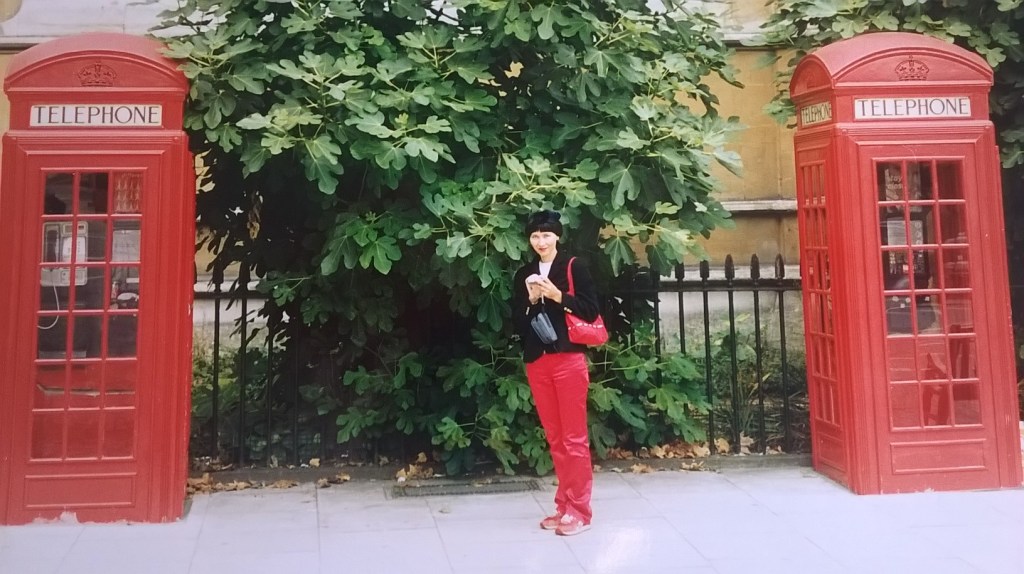
Photo: © Elena Vassilieva « Qui a mangé le gâteau? Pas moi. »

Today, finally, I was going to congratulate Moses Sumney on his landing on the Pitchfork’s list of (arguably!) best songs and albums of 2020. The list flew to me on Twitter from the ecstatic Moses himself on the day he had spotted his name there, but I was too busy to pay close attention to it then. And when I glanced at it a few days later, I was so flushed with puzzlement and crashed with disappointment that it escaped me completely to send my congratulatory note to Moses. In fact, his position at #3 didn’t seem to me satisfactory either, given how good his double album græ is, culturally and politically motivated, handsomely produced, and adorned with his musing and soul-touching vocals. He should have been #1 among their musical choices, I thought. The laboriously arranged list of their crème de la crème made me wince, however, as it appeared to be, naturally, extremely subjective (read: endorsed by the Pitchfork cartel, of course, strictly figuratively speaking! God forbid!), but also very equivocal as for what criteria they had in mind whilst compiling it? Political message perhaps? Gender or race maybe? Emotional stability vs. instability, no? The pandemic mood? Commercial success? And what about the quality of the product itself, say, originality? Most names on the list are familiar faces, some are mainstream oriented, some are indie with a strong fandom. You would think the selection should be guided by the quality of the product in the first place, leaving all other factors off the radar, or not? I thought I’d still give it a shot, at least, to a handful of their 100.

I started with the #100, Ela Minus’ dominique, a rather pretty song about the exhausted self of the lonely insomniac, very neatly produced by Ela herself, with a terrific beat of the ex-drummer and a gracefully moving techno sound of the machine lover, with simple lyrics and pleasant vocals of “the half-human/half-machine” (Ela) that are eerily reminiscent of Still Corners’ Tessa Murray, particularly in the very beginning of the song. Whether it was a conscious homage to the Still Corners’ goddess of sensuality or a pure coincidence, is hard to say (the homage hasn’t been acknowledged; let me know if it has), but the startling likeness, obviously achieved through Ela’s beloved machines, didn’t agree with my taste. What is wrong with her own lovely voice, I couldn’t stop wondering, and gave another listen to her à la Sylvan Esso volcán (2016). I wish she would deploy her vocals the way they would become recognisable and associated with her artistic persona only. Alternatively, why not simply to hire the fancied vocalist herself? But the machine-cloned vocals that would remind the listener of a different (pretty much alive!) vocalist should hardly be encouraged. This is why dominique didn’t seem to be the most interesting choice from Minus’ very well-crafted “Acts of Rebellion” where she cleverly connected all the 10 pieces with the same sound thread.  

After that I felt myself being catapulted into the #1 position, right to Fiona Apple, the topping of the Pitchfork’s cake. The intriguing percussion and piano intro of her I Want You to Love Me pleased my ear, but right after that song, I wished I had stopped someplace else before flying into this raging tempest. For instance, at the Weeknd’s Blinding Lights, everyone’s darling (although I prefer the Chromatics’ version of the song, so elegantly done by Johnny Jewel), or Helado Negro’s unpretentious and delicate I Fell in Love, or Fleet Foxes’ melodious and ubiquitous Sunblind (I only wish the production were less busy and more colourful here), or at Arca’s capriciously dashing Mequetrefe, or at the 1975’s uninspired and sarcastic If You Are Too Shy (Let Me Know), or at Drake’s sincere and reality-driven Laugh Now Cry Later, but a stop at Run the Jewels’ Just (ft. Pharrell Williams and Zack de la Rocha) is a must if you aren’t escaping the societal peripeteia and want to have an admiring look at how little it requires to send a very strong social message that is also very convincing and ear-pleasing aesthetically.

Fiona Apple, the topping, however, turned out to be a cacophonous theatre of one (I dare say bitter!) woman. In her own words, she is “pissed off, funny and warm.” The state of being “pissed off” seems to be the conceptual framework for her album “Fetch the Bolt Cutters” where you will hardly find any fun or warmth, but you will witness the show of flying indulgently into a temper. And you would also bombard yourself continuously with the dilemma-like questions: If you love yourself, will you be loved? If you love people, will they also love you? But if you fall in love with someone, Cupid knows whether s/he will fall in love with you, too. You will have to take your chances. If you beg for forgiveness, can you also beg for love? No, it probably won’t do, not in the long run. On the other hand, you don’t want to run from love, it also won’t do, it will eventually haunt you like mad. All these heartbreaking banalities were circulating in my head while I was desperately trying to understand what her theatre is about and why on earth she tops the list?

Perhaps her character’s resentfulness and anger, presented here deliberately with such a bewildering aesthetical rawness, make her eligible for the crown of their list? The album has a striking similarity to her folksy Hot Knife (2013). Kudos to those artists who make efforts not to be self-repetitive, although it’s inevitable to repeat oneself, but if the repetitions are moderate and tasteful, they can be beneficial to both the listener and the artist. That peculiar ‘something’ that gives the listener pleasure and makes that particular sound identifiable and longed for, matters a great deal. There should be more to it than just an unrequited love wrapped in a cursed sand paper, I kept speculating as for Fiona Apple. Can it be that it’s just like Edvard Munck’s Der Schrei der Natur? Hmm. The sort of cabaret genre she had chosen for her album requires very good vocal acting, which, alas, isn’t offered here, in my view. The unconvincing acting simply ages her character prematurely, making it appear so uncontrollably vengeful and angry that it’s repelling. But maybe that was the aim?

Also, unlike the Pitchfork reviewer, except for the line “Running up the hill,” I’m not finding Kate Bush here, not even for a second and not even when inebriated by love or absinthe. But she must have listened to the music by Paul McCartney, The Beatles, XTC, and Tori Amos while working on the album as I hear them there, especially in I Want You to Love Me, and they are big shoes to fit. If her album is “boarding on literature,” as the Pitchfork reviewer said, then I’d like to scream louder than Fiona Apple and the Munck’s hero together: “Help! Help! Je n’y entends rien, cela me passe.” But, refusing to give up, my ultimate thought was that perhaps Fiona Apple decided to reflect on the Trumpian America with its frustrated, upset, resented, demoralised, depressed, and hysteria-clad democracy? But had she decided to impersonate America with all its frictions and self-inflicted wounds, wouldn’t it be there, in the lyrics? All the harsh words (“bang it, bite it, bruise it, kick me, evil,” e.g.) are pretty much limited to her personal space of disillusionment. (See Moses Sumney’s piece Cut for comparison.) To place her opus therefore in a political paradigm would’ve been too far from the truth, it would’ve been just my interpretive projection a priori, without a single proof found in her lyrics. Aesthetically, to the listener like myself, her album seems to be an enormously disappointing puzzle on the taste-maker’s (?) list, the Pitchfork cartel, that is. And what is to be done? To bake your own cake.

As for Moses, I couldn’t locate him anywhere in the Twitter space, not lately. Hmm, he must have vanished into thin air? After all that loud banging and screaming right above you, I’m not suprised, Moses. “In the meantime, we’ll get it straight. I hope our friendship can recuperate,” as you said it so well in your In Bloom.

(written in the Sky Control room, on the night of the winter solstice and the Great Conjunction, December 21, 2020)

Copyright © Elena Vassilieva 2021. All rights reserved.

Tuning to the Sylvan Esso Frequency

By Elena Vassilieva  

On Sylvan Esso’s feminism and activism, “Radio” and “Free Love.”

Photo: © Elena Vassilieva, The Playground Free Love, 2020

It’s March of 2015, and the Tiny Desk concert at NPR’s headquarters in Washington, D.C., has just begun. The young woman with a funny bun on the very top of her head seems to have no bones at all when she is making waves-like dance moves. I’m curious how on earth she is able to be so rhythmically precise and light as a feather while wearing her bulky white platform sneakers? “But if you, guys, want it to, like, do a little moving together, just imagine you are the seaweed in the Ursula’s cave,” she urges the audience to join her, making everyone laugh at once. Who is that whimsical beauty, the Moominvalley’s Little My-like character she is portraying, who can be affable and bold, smart and naughty, kind and subversive?

For a very long time, I thought Sylvan Esso equals Amelia Meath solely. Oddly enough, I could only hear her (en)chanting, with morning crispiness, voice that was singing about the everyday of a woman that is down-to-earth and yet full of daydreams: “I’m the song that you can’t get out of your head.” A woman that is yearning for the simplest pleasures on Earth, say, a warm embrace of the one she is in love, or a cup of very strong coffee brewed in a percolator in the middle of an ordinary and busy day. That level-headed woman would rather confront than break things and flee, or inflict self-harm. “Oh if my ears were as big as the ocean, I could hear all your devotion. Play it right!” She would run away in her imagination only, just for the sake of her self-indulgent playfulness, provided, she has a worthy company. She is a young woman of an independent spirit. At least, these are the clues I gathered from the raw, stream-of-consciousness-like lyrics on Sylvan Esso’s earlier albums.

When I discovered Sylvan Esso through that NPR Tiny Desk Concert series, I had been a passionate Wagnerian, but a novice in the territory of electronic music, let alone its subgenre of folktronica. Thanks to their introduction, I immediately became quite a devoted lover of that genre, expanding my cultural horizon further. Nearly right after I got acquainted with Sylvan Esso, I also dared to step inside the magical musical box of the celebrated and influential Australian electronica artists Cut Copy who have been on the musical scene since 2001. Only then, I began to see and hear Amelia’s partner, the talented Nicholas Sanborn, the man behind another music project, Made of Oak. Of course, one may find it perplexing, but the truth is that Sanborn’s sound arrived to my ears through the Cut Copy’s founder and adventurous talent, Dan Whitford. Nick and Dan share a very similar taste for rhythmic textures and beats, very often exotic in the best sense of the word, say, African and Aboriginal. Needless to say, what a delightful surprise and joy it was to have Cut Copy’s remix of Sylvan Esso’s Radio in the early June of 2018.

The song’s harsh critique of the political maneuvering inside the music industry resonated well with fans, fellow musicians, and, ironically, even radio DJs. The main idea of the song was to show the music industry’s demanding and very often unfair attitude towards musicians, and also to highlight the fact that the mainstream music is being played on radio stations much more often than independent music. Sylvan Esso protested strongly at the situation of injustice and inequality. Although Cut Copy didn’t say anywhere explicitly that they were driven by the same idea of unfairness, one still may interpret their willingness to make a remix of the song as their wish to join the protest. Moreover, the remix is anything but a mainstream piece, displaying a smart attire of attractive hooks and unexpected turns. Just recently, Dan Whitford continued the topic by questioning Spotify’s position towards the artists in terms of their economic wellbeing, let alone Spotify’s CEO’s reasoning behind it. Daniel Ek gave a surprisingly preposterous suggestion to musicians for improving the situation: Make more songs, and you’ll earn more money. It does sound nearly exactly as the first line and the chorus of Radio: “Gimme a new single! Make me a new baby! Slave to the radio!” The most brazen words in the song had to be bleeped/edited, of course, in order to be played by radio stations freely, without getting complaints from all the puritanical listeners. Should the artists take the ill-fitting advice from Spotify’s CEO, it is inevitable that the quality of their songwriting would suffer tremendously, argues Dan Whitford, and the platform will be flooded by the substandard or derivative product in no time at all.

Political or apolitical Cut Copy’s remix of Radio might be, at any rate, it succeeded in making me as a listener to have another fresh look at the original version of the song and Nick Sanborn as a dexterous and very engaging producer. His minimalism, combined with his feminism (in a similar way John Lennon famously declared that he was a feminist) and egalitarian philosophical outlook, is quite impressive. Yes, it is, once one realizes how careful and smart his production technique and style towards Amelia’s vocals and lyrics are. No wonder the naïve listener (at least, in myself) sees and hears only Amelia at first because Sanborn as a producer deliberately and fully focuses his attention on her, in order to highlight the conceptual side of their songs. Even when he opts for some experiments, e.g., making a track sound as if it were being played on an antique pathephone, he is approaching it with great care and consideration so that it wouldn’t interfere with the colorful palette of Amelia’s voice, but also with her rhythm, tone, and intonation. After all, it’s still a nonconformist frontwoman’s repertoire, nearly always showcasing its daring and anti-puritan aesthetics that stretches easily even to her own body image. The “folk girl” who would like you to take off guard with her unshaved armpits, a ring in her nose, Spice Girls’ shoes, sex-appealing dance moves, and the free spirit of Sylvan Esso.   

“I’ve always been interested in breaking binaries,” said Amelia in the recent conversation with Bob Boilen during presentation of their new album Free Love at NPR. She also not that long ago bravely made her bisexuality publicly known, the fact that gives an additional meaning to their, as they stated themselves, polysemic Free Love which is about “the anxiety of being in the world and how to love freer,” echoes Sanborn supportively. “But it can mean so many things depending on your mood,” adds Amelia. Each out of the ten songs composed under the conceptual umbrella of Free Love has its own message, be it a social or environmental one, such as a speculative vision of the fragile and cruel world in What If or complicated human relations in Free, the lifestyle of an artist in Train. Or a message about one’s emotional state, where one is flirtatiously encouraging the other to open the heart in “the unapologetically hooky and catchy” (Nick) Ferris Wheel or about the uncertainty and anxiousness of the falling and being in love in Ring when the relationship turns out to be a trap. Or another, this time amorous, nod to radio in Frequency where the character, while being in the woods and among flowers, in the middle of nowhere, is romantically longing for the other who is thousands miles away and with whom she isn’t acquainted at all, but who excites her imagination so much that she happily lives fully immersed in that desirous fantasy. Sylvan Esso’s long-time friend and a true renaissance man, Moses Sumney, directed a video for the song, in which he beautifully translated the relationship into the interracial and same-gender interplay. Or the message can simply be a contemplative state of being with a good dose of silliness, such as the mischievous heroine in Runaway, Make It Easy, and in the joyous ode to NYC Rooftop Dancing.

Although both Amelia and Nick admitted that they have matured over the years, especially in how they make choices for encrypting different messages in their songs, they are still very fond of the youthfulness and bashfulness of the character they are creating. It has that feel to it of the “Victorian teenage, letter writing, romance”, says Amelia self-deprecatingly. It’s a character that is interested in the daily life, its societal, political, and emotional experiences, and is exhibiting an “emotional range of our lives,” as Nick succinctly describes it during their conversation with TJ Morgan on KEXP. “We are feeling the rhythm of the day,” he continues, even “the mood of the weather is influencing our songwriting, but we also inspire each other.” “It’s like that with us,” says Amelia, putting her hands one into another, showing how intimate their creative process in the studio is. “Feelings first,” she laughs. “We have developed our own language in the studio,” adds Nick, “right to the point when it may appear completely incomprehensible to the outsider, but we understand each other just by looking at each other.” “It’s a lot of back and forth about what’s working and what’s not working. And if something is not working, it’s us arguing and then figuring out why it’s not working, and what the song actually wants. It’s almost like the song becomes its own other person in the room that we are trying to discover.” Aside to their close creative partnership, they are inspired by their newly built studio in the North Carolina woods filled with toads and blue-tailed skinks, but also by as “simple” an instrument as Nick’s modular synthesizer, which never stops surprising him.

No wonder the production on Free Love is a splendid and curious piece of boldly crafted work that gives you an impression of one long and venturesome day in the character’s life. The admirable thing is that the lyrics, melody, and production don’t divorce here at all at any instance, but instead coincide in their purpose to illustrate the heroine’s feelings and thoughts. All songs contain tiny different quotes, references or discursive fragments, be it from a (sub)genre of the House music or just a short dialogue such as in Train, or a monologic declaration “I love you” in Free, the song that is very evocative of Joni Mitchell’s aesthetic. The vocal style in the sparkling and bubbly “Look at – look at – look at – I can see everything” line in Rooftop Dancing is a gracious nod to an Australian artist Elle Graham from Woodes, who was supporting Sylvan Esso on their tour in Melbourne in January of 2018. The children’s laughter and rhyming in the song, a sample taken from the archives at the Smithsonian, reminds the listener of the future to which we as a society strive, where there is a chance for everyone to have a happy childhood and equal rights. “Sunlight beaming out over the bridge / We’re all running, outrunning death.” The Sylvan Esso’s character is a rebellious and justice seeking American girl who finds it utterly unbearable to stand at the side. It isn’t therefore surprising at all that today’s problems in American society are being reflected in their songwriting. Like their character, Amelia and Nick aren’t shy to join public protests to support equal rights for LGBTQ community or to encourage people to vote for change. As it happened this year, on October 31, when they took part in the “I Am Change” march in Graham, NC, where, to their horror and dismay, the police pepper-sprayed the peaceful rally that included small children. They also expressed their skepticism about digital platforms, e.g., Spotify, “owned by terrifying conglomerates” (Amelia) that are exploiting artists and their fans. “I’m rethinking my relationship to capitalism right now,” she sighs. The keynote that will probably find place in the everyday of their fearless and freethinking American girl on their next album.

(written on October 4, 2020 in the middle of Atlantic, on my way to Martha’s Vineyard)

© Copyright 2020 Elena Vassilieva. All Rights Reserved.

“But lately now, the other night,

Upon my bed I sat upright,

And bade someone bring me a book,

A romance, and this I took

To read and drive the night away,

Since I thought it better, I say,

Than chess or backgammon tables.

And in this book were written fables…”

Geoffrey Chaucer, The Book of the Duchess, trans. by A. S. Kline, 2007.

Mostly random thoughts on some cultural events and creative personalities.

Photo: The London Plane Tree. © Starbuck Trumbull

P.S. I keep a book of dreams where I lead a parallel life and where you are often my heroes.

“La piraña. La naranja. Tú.” – C. B. P. de M.

© Elena Vassilieva. Copyright 2020. All rights reserved.